The One Question that Changed My Approach to Writing

By Laura Oles

wrong or right ethical question

What’s the answer?

While attending a recent Writer’s League of Texas course, Karleen Koen, the talented historical novelist and our instructor, asked a question so simple yet so important, it changed my approach to writing.

“What is the one thing you wish you had known earlier about writing?”

After sitting silently with the question for a few minutes, the answer came to me, and its appearance brought with it contrasting pangs of relief and sadness.

“I wish I had understood earlier the importance of touching my project every day.”

Like many working on a novel (or two), I have several legitimate reasons for not connecting with my work each day. We’re all juggling jobs, kids (who play a maddening number of sports!), community activities and the daily grind of household chores. We have a hundred reasons why we can’t get to our novel in progress, and these are darn good reasons, too.

But…

These excuses offer little comfort when we realize our page count remains in the same stuck location each week. I know– I’ve been there–carrying the disappointment of wanting to create and yet unable to figure out how to fit it into my daily routine. I struggle with this issue and I’m a working writer in the photographic industry, so I do write each day.

I write a lot.

But not fiction.

And therein lies the problem.

I would lump my writing time into the same space, not realizing that fiction writing and nonfiction writing each needed to have a distinct time slot, a specific area in my mind and in my day. My client work always takes priority, because it has to, but I would then fail to figure out how to protect a separate space for fiction.

Jerry Seinfeld, when asked in an interview about he managed to write so much material in a short period of time, stated that it’s not how much you write but how often. I think this advice stretches across all forms of writing. It’s better to touch your project for fifteen minutes than not at all because each tiny effort creates a modicum of momentum, and momentum is a powerful force in getting to THE END.

I can’t profess my mastery of this skill because, although I’ve been far better at fitting in fiction, I still have off days (sometimes several in a row) and it takes me longer to find that groove. Once I find it, I am more resolved to keep going. And then real life intervenes once again.

For me, smaller steps are best. When I have ideas of cranking out 2,000 words in a stretch, I set myself up for failure. Some random event will conspire to cut into my writing time so that finishing 500 words feels like a failure. My goal for the remainder of the year is to be small but consistent in my efforts, and I mark an X on my calendar for each day that I’ve worked on my fiction. Seeing those Xs add up is a cheap trick to help me keep that momentum. I’ll take whatever I can get during those days when kids are going all directions and work is piling up. I remind myself that small steps matter, they all add up to a finished draft. I know because I’ve done it.

What about you? How do you make time to write when daily life seems destined to keep you from creating?

When Books Were Love

by Gale Albright

IMG_3110

Aunt Marjorie Nell was a big fan of mine.

That’s why I figure she may have embellished stories about my alleged brilliance when I was a tot. She taught me to read when I was just three years old, because I told her “I want to read like you do, Jaumie.”

She was thirteen years old when I was born and she spent every minute away from school taking care of me. She was the only one I allowed to wash my hair (without squalling), and apparently, teach me to read.

I don’t know if I was really that young when I learned to read. I think Aunt Marjorie gave me too much credit, but I learned early and fast. I loved words. All kinds of words. I talked them, sang them, heard them on the radio. I found them in conversations and I found them in books.

Books were magic. Books were love. Books meant I was sitting on Jaumie’s lap while she read to me with her gentle East Texas twang. They took me to magic, foreign places while I was cuddled and safe with my biggest fan.

When I got big enough to read books by myself, I rode my bicycle to the Carnegie Library in Tyler, Texas. I loved the smell of the library. There was a sun-dappled holiness about the place. People spoke in hushed whispers as light streamed through the windows, illuminating the ivy plants perched on the windowsills.

Books—their touch, their smell, their heft–meant I was immersed a safe, happy place where you could fly to the moon; go on adventures with Freddy, the talking pig; witness the struggles of Black Beauty; go on the run with Tom Canty down the mean streets of Tudor London; and travel with Doctor Dolittle.

Fast-forward about a million years or Time Marches On.

My lifetime love affair with books turned me into a true Luddite, scoffing at electronic readers, literally clasping hard copies of books to my heaving bosom, filled with the sweetness of self-righteous indignation. I swore, repeatedly, that never would any &%$*# electronic reading device darken my door (you get my drift).

Until I listened to Mindy Reed speak about containers versus content.

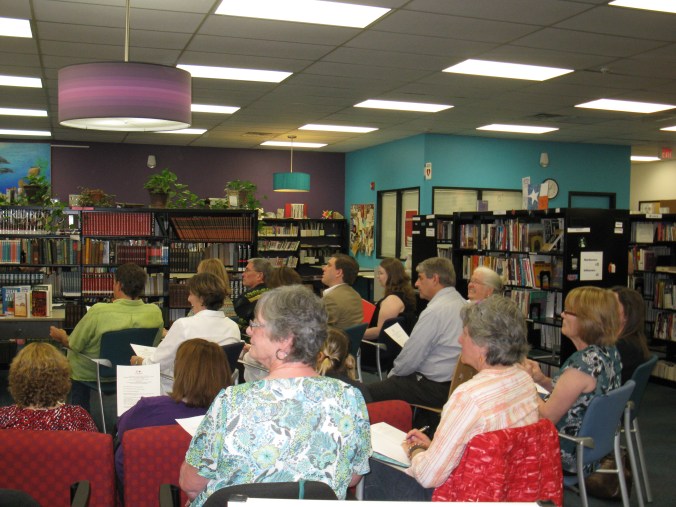
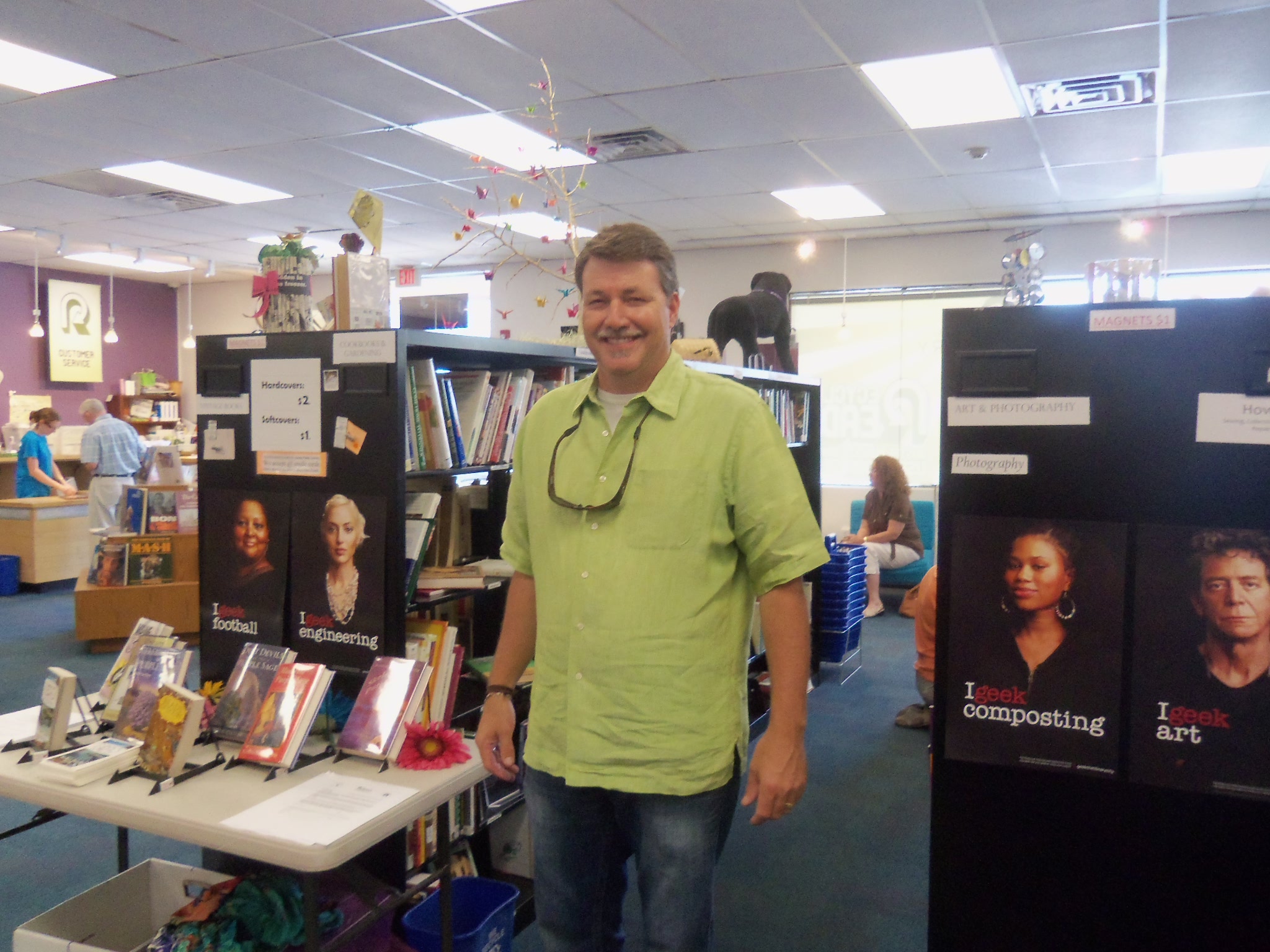
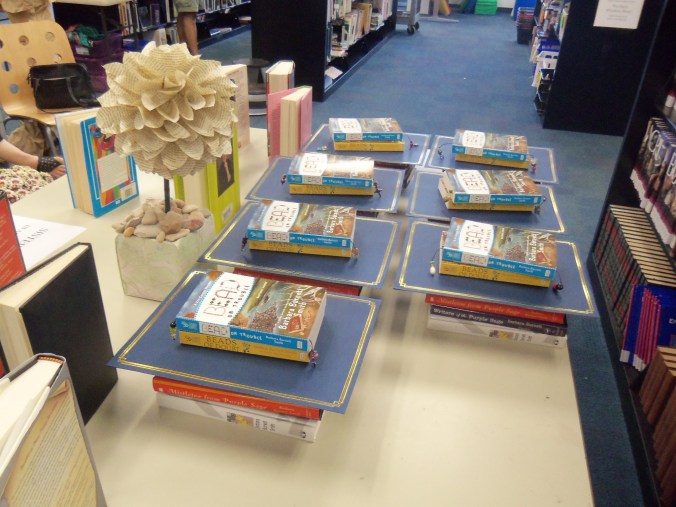
Ms. Reed was the featured speaker at the June 8 Sisters in Crime: Heart of Texas program on current publishing trends. The meeting place was Recycled Reads, a part of the Austin Public Library. Recycled Reads keeps books and other materials out of landfills once libraries have weeded them from their shelves. It is part of Austin’s Zero Waste Initiative.IMG_3097

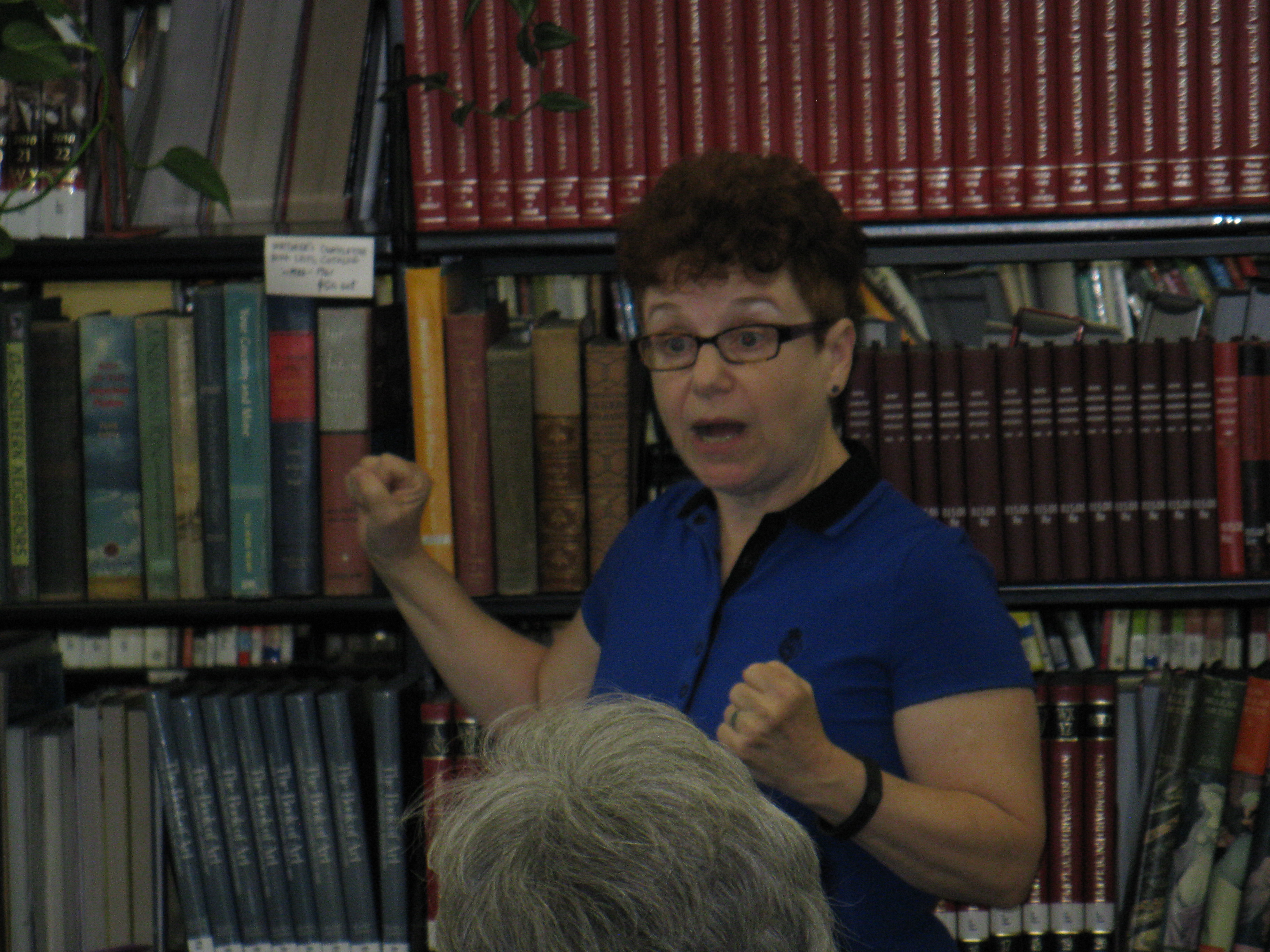
Ms. Reed, Recycled Reads manager, librarian, editor, and co-proprietor of The Authors’ Assistant, said readers have had a “romance with the book. There’s a romantic connection with books–we love them. But you can’t love all of the many donations of bestsellers that go out of style.”

The store recycles between twelve and fifteen tons of material a month. It has recycled 865 tons in the six years since its inception. How, you may ask, do we get so many recycled books?

According to Ms. Read, look to the New York Times bestseller list. Publishers strong-arm book stores to pre-order books. The list is based on the numbers of pre-orders sent out to stores. Some are sold. Many others are remaindered, resulting in a colossal waste of resources. These publishing practices make a negative impact on the environment. It is a bad, old-fashioned distribution mode for books

Ms. Read pointed to a display of plastic cups, glasses, coffee cups, etc. assembled on a table in front of the audience. “If you are thirsty, you want water. You don’t care if you get it from a fountain, bottle, or glass. They all contain water that will quench your thirst. Think of that when you talk about the rise of the digital age in publishing. Does all of that need to be put in this type of container? It’s about content as opposed to container.”

I do have a romance with the book. The sight, feel, and smell of books trigger endorphins, for all I know. I associate them with escape, peace, and happiness.

E-readers don’t exercise that special magic, but they do have what kept me coming back to books all those years ago. The stories. Or, as Mindy said, content versus container.

I thought I would never give in, but I have decided (one of these days soon) to buy an e-reader. Can e-books help save the planet by making less waste for us to pour into landfills? Yes. Is that important? Yes.

I don’t feel romantic about e-readers, but, when you’re thirsty, do you care if you drink your water from a crystal goblet, bucket, dipper, or paper cup? The first priority is to get some water. Or some words.

If using e-readers will help save the planet, I can do my part by giving back some love to the universe instead of extra trash.

Where Do You Find Hope?

0kathy-blog*

*

*

Posted by Kathy Waller

*****

This isn’t a kindergarten for amateur writers. I’m sorry, Mr Kipling, but you just don’t know how to use the English language.” ~ Rejection from the editor of the San Francisco Examiner to Rudyard Kipling

*****

What makes a successful writer?

Aside from a working knowledge of the language and a certain amount of talent, answers generally include persistence, organization, initiative, professionalism, practice, vision, confidence, tolerance for criticism and rejection, vision, confidence, self-discipline, resilience, motivation, creativity, empathy, patience, courage, flexibility . . . Well, it’s a long list.

But Ralph Keyes, in The Writers’ Book of Hope, says aspiring writers need two basic things: a knowledge of how the publishing industry works, and hope.

Publishing has changed considerably since Keyes’ book was published just over ten years ago, and the Internet has made it easier to find what beginning writers want to know.

Hope is a different matter. There’s plenty of pessimism and discouragement out there. Where does a writer seeking publication acquire hope?

In my experience, much of it comes from other writers.

Last month I spent a Saturday morning in a class sponsored by the Writers’ League of Texas and taught by novelist Karleen Koen. I first met Karleen three years ago, when she taught at the WLT Summer Writing Retreat, and I’ll see her again at the WLT retreat this August. Last month’s class was a “sneak peek” at the August class: “The Damned Rough Draft: Reframing and Reimagining Your Novel in Its Beginning Stages.”

I’m not the only one of Karleen’s students who keeps coming back for one more course. She’s a good teacher. What she knows, she shares. She also acknowledges both the highs and the lows of her own writing life. (The title of this year’s class–“The Damned Rough Draft”–is evidence of her empathy with students.)

Karleen doesn’t promise the people sitting in her classes will become novelists, but she makes the possibility come alive. She is generous. She offers hope.

Who are other hope-givers?

Members of Austin Mystery Writers, and similar groups, who read and critique thirty to fifty pages every week. Beta readers, who go through entire manuscripts–hundreds of pages–to offer criticism. Strangers who read blog posts and Like or Reblog or Tweet or leave comments. All readers who tell the truth–both positive and negative–in a way that says, “I believe in you. Keep writing.”

It’s your turn now, writers: Who gives you hope?

Classic Summer Reads

Love the summer, and it’s finally here! Summer means sun block, sassy water and a good book. To me a great summer read (or poolside or hammock book) has a dreamy setting, romance, suspense, mystery and adventure. I like substance, too—I don’t want a light, forgettable story, but one that will stick with me for a while and challenge me.

Cornwall

On just such a bay in Cornwall, Rebecca De Winter drowned.

Sometimes I browse the bestseller lists for the latest beach book, but I like to read the best of the past, too. Here’s a short list of classic summer reads. Two are extremely famous and two are relatively obscure. The latter two are free for your Kindle!

Rebecca, Daphne Du Maurier’s 1938 Gothic romance, is an archetypal suspense novel with all the right ingredients. Manderley is probably the most famous mansion in all of fiction, and Maxim de Winter is the perfect brooding, rich, handsome romantic hero with a mysterious and tragic past. The climax is a real nail-biter. If you’ve already read Rebecca (like a few million other people), you can try the less well-known Progress of Julius, also a great beach read.

Lolita, by Vladimir Nabokov, ignited a firestorm when it was first published in the US in 1958. The subject is controversial, the style is highly subjective, and the book is often listed as one of the best English-language novels of the 20th century—if not one of the best novels ever written in any language, period.

Youth, Conrad

Youth, by Joseph Conrad

Summer is a novella by the great American author Edith Wharton. First published in 1917, it starts out with all the promise of a fine and atmospheric romance: a young girl living in a remote New England village meets a mysterious young man from the larger world. A romance follows, but it bears no resemblance to the modern genre. Rather, it is a stark, unflinching work of literary genius that will haunt you.

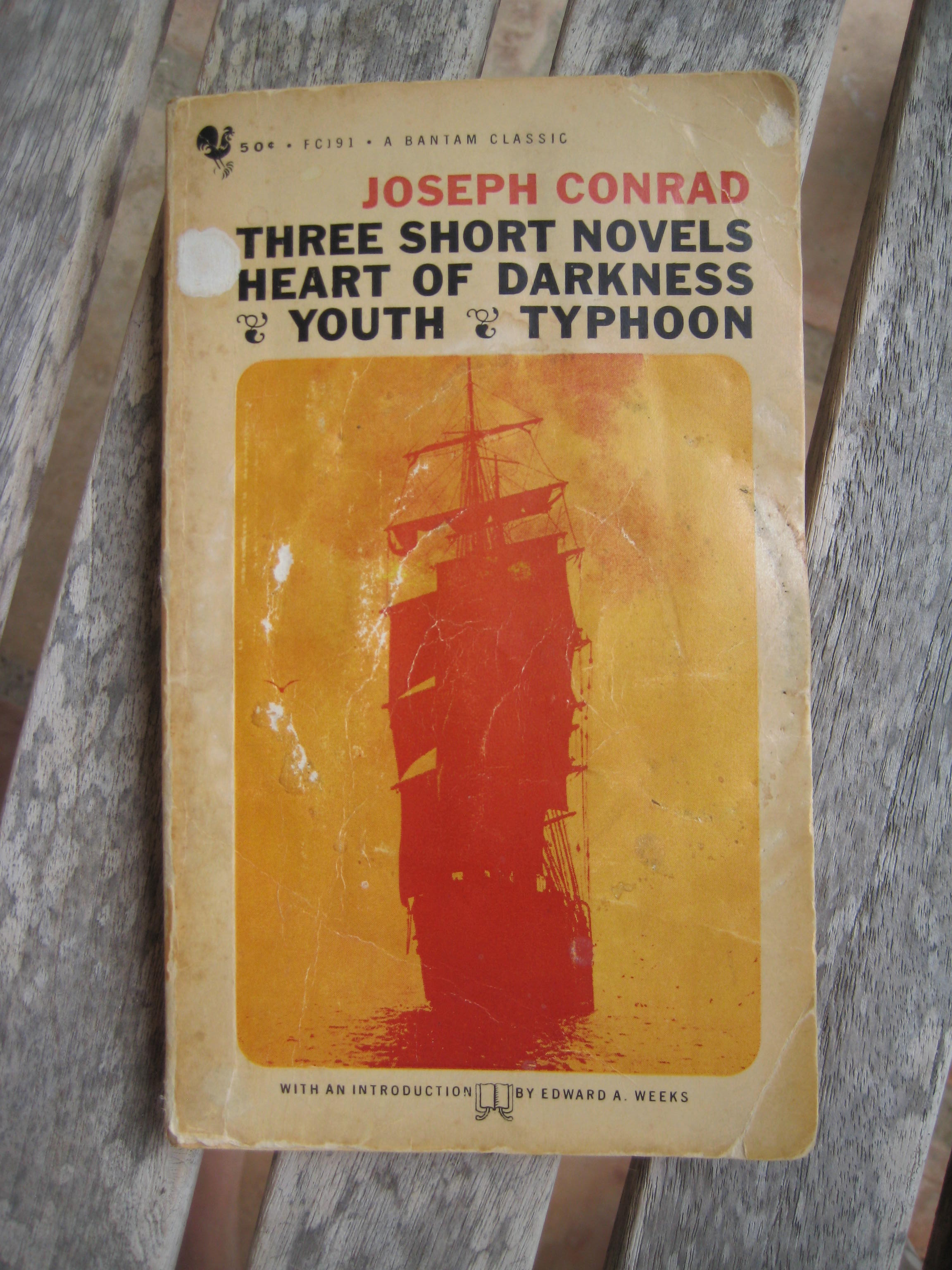
Youth, by Joseph Conrad, is also a novella. Just 70 pages, it will carry you off on a desperate and epic voyage through storms and vast emptiness at sea. Sail from London to Bangkok on the barque JudeaDo or Die! Just reading it is a magnificent adventure, and it’s short enough to finish in a single summer afternoon.

Elizabeth Buhmann

Enjoy the sunny weather! And don’t forget to take a good book with you to the beach.

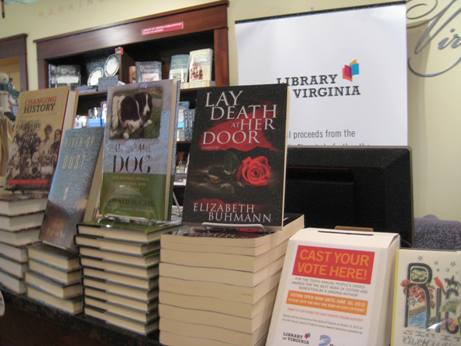
Elizabeth Buhmann is the author of Lay Death at Her Door, a mystery/suspense novel about an old murder that comes unsolved when the man who was convicted of it is exonerated.

A Good Time Was Had by All

IMG_3022By Gale Albright

There was much happiness on display at the tenth annual Barbara Burnett Smith Aspiring Writers Event (BBSAWE) on May 18 at Recycled Reads in Austin. People were talking, laughing, eating, exchanging e-mail addresses and phone numbers, eating, reading out loud, giving gifts, taking pictures–did I say eating?

The BBSAWE was created in the spring of 2005, after the tragic death of Ms. Smith, who was a published cozy mystery author. She was past president (International 1999-2000) of Sisters in Crime and was known for her helpfulness to other writers. Dynamic, energetic, and talented, her loss was greatly mourned by her family and the Austin writing community. To honor her memory, the Barbara Burnett Smith Mentoring Authors Foundation was dedicated in her honor to support and provide a mentoring community for aspiring mystery writers.

Every year Sisters in Crime: Heart of Texas chapter calls for submissions of the first 500 words of a mystery story or novel from unpublished authors. The aspiring writers are then matched up with published mystery authors for mentoring.

This tenth BBSAWE was a joyous occasion. Six mentors and seven aspiring writers were introduced to the audience. The writers read aloud the synopses and first 500 words of their submissions. We were treated to a diverse and imaginative display of literary talent.

W.D. Smith, son of Barbara Burnett Smith and head of her foundation, presented certificates to mentors and aspiring writers, as well as copies of his mother’s mystery novels. Russ Hall, prolific mystery writer and all-around Sisters in Crime volunteer, spoke about mentoring, calling on his long-term experience at the job.

“In life, you will realize there is a role for everyone you meet. Some will test you, some will use you, some will love you, and some will teach you. But the ones who are truly important are the ones who bring out the best in you. They are the rare and amazing people who remind you why it’s worth it. I’m not telling you it’s going to be easy. I’m telling you it’s going to be worth it.”bbs photos 006 IMG_2971 Sinc tx cookies sinc tx hearts

After readings were completed and gifts awarded, we adjourned to enjoy a bountiful feast of fresh fruit, raw vegetables with dip, lovely finger sandwiches and wraps, crackers, cheese, and hand-crafted desserts.

It was inspiring to see people socializing after the program, doing the aforementioned laughing, talking, conferring, and eating. Writers were networking and making plans to start critique groups.

The event took several months of work and planning to put together, but to echo Russ Hall, it was worth it. I’m looking forward to the eleventh annual BBSAWE.

Following is a list of mentors, aspiring writers and their biographies:

Elizabeth Buhmann mentored Sue Cleveland and Dixie Evatt for Shrouded.

Elizabeth Buhmann is originally from Virginia and lived several years abroad while growing up. She graduated magna cum laude from SmithCollege, Northampton, Massachusetts, and has a PhD in Philosophy from the University of Pittsburgh. For twenty years she worked for the Texas Attorney General as a researcher and writer on criminal justice and crime victim issues. Her first novel, Lay Death at Her Door, (Red Adept Publishing) reached the Amazon Top 100 bestseller list (paid Kindle) in 2013. She is currently working on her new mystery, A Monster in the Garden. Elizabeth now lives in Austin, Texas, with her husband, dog and two chickens. She is an avid gardener, loves murder mysteries, and has a black sash in Tai Chi.

Sue Cleveland was born in a hunting lodge in England. She is a widely traveled writer and award-winning artist. A member of SCBWI, Mystery Writers of America, Sisters in Crime and Writers’ League of Texas, Sue is eagerly awaiting the publication of her short story, “Decoy,” in Minerva Rising Literary Journal. She hopes to find a home for several manuscripts: Shrouded, which she wrote with Dixie Evatt, and two middle-grade mysteries.

Dixie Evatt has more than 35 years professional experience in news reporting and public relations, including experience in political and government affairs. Dr. Evatt also taught at Syracuse University, Baylor University and The University of Texas at Austin. Her academic publications include a book about communication practices of small enterprises called Thinking Big. Staying Small. Although they’ve yet to be published, she and her writing partner, Sue Cleveland, have completed two mysteries and are working on a third. One takes place in Egypt, one in Italy and another in the Southwest. They make it a point to travel to each location for research.

 Susan Rogers Cooper mentored Lindsay Carlson for The Origami Murders.

Susan Rogers Cooper has been a published mystery writer since 1988 and has had a total of 26 books published.  She’s garnered rave reviews and was nominated for an Edgar.  Her newest E.J. Pugh mystery, Gone in a Flash, is available now, and a new Milt Kovak will be out in the fall, entitled Countdown.  Her back list is now being uploaded to e-books.

Lindsay Carlson currently splits her time between being a legal drug dealer (aka pharmacist) and a writer.  In her “free time,” she feeds her fortune cookie addiction and collects books to add to her to-read pile, which currently is taller than she is.

Helen Ginger mentored Shelby O’Neill for Truth or Dare.

Helen Ginger is an author, freelance editor, and book consultant. Her first fiction book, Angel Sometimes, won a USA Best Book Award and her new mystery, Dismembering the Past, is coming out soon. Actively involved in the writing community, Helen was the Executive Director of the Writers’ League of Texas from 2003-2005. Currently, she serves as a Committee Chair for the Texas Book Festival. In February of 2012, Helen took over as the Coordinator of Story Circle Network’s Editorial Services.

Shelby O’Neill is a writer and editor who lives in Austin, Texas, with her husband and their two pets. Her first novel is currently a quarter-finalist in the Amazon Breakthrough Novel Award contest, and she is hard at work on her second book, a teen cyber-stalking mystery.

Jan Grape mentored Jane Shaughness for The Invisible Detective.

Former owner of Mysteries & More bookstore in Austin, Texas, Anthony and Macavity Award-winner Jan Grape’s first mystery novel Austin City Blue was nominated for best first novel at Bouchercon 2002. Dark Blue Death is the second in her Zoe Barrow mystery series set in Austin about a female police officer. Found Dead in Texas is Jan’s first short story collection.  She wrote a stand-alone called What Doesn’t Kill You and co-edited two anthologies with R. Barry Flowers, American Crime Writers League, Murder Here Murder There and Murder Past Murder Present and has a short story in each.  She is currently finalizing her books for Kindle and Nook.

Jane Shaughness retired from the University of Texas at Austin in 2013 where she had worked for almost thirty years in the areas of student affairs, architecture, and most recently, compliance and ethics. Last fall, after giving herself six months of “free” time in which she entirely overscheduled herself with volunteer work, Jane began to work seriously on her mystery novel. In addition to writing fiction, Jane enjoys writing for her blog “55 AND COUNTING . . .” where she highlights free events in Austin of interest to the literary autodidact. Jane lives in Hyde Park with her husband, her two dogs, Jake and Champion, and her cat Pumpkin.

Russ Hall mentored Alex Ferraro for Ramona.

Russ Hall is author of more than a dozen books and co-author of numerous other books, as well as short stories and articles. He has been an editor for major publishing companies, ranging from Harper & Row (now HarperCollins), Simon & Schuster, to Pearson. He lives in Lago Vista, where he hikes, fishes, and tends a herd of deer that visit daily to peep in the office window and help with the writing.

Alex Ferraro was born in Denver, Colorado. At the age of five, he stole a horse and rode to Texas, where he has lived ever since. In 2011, he graduated from The University of Texas at Austin with a dual degree in business and drinking. When he isn’t writing or watching entirely too much TV, he performs standup comedy in and around Austin. He also co-hosts a podcast about writing called Do the Write Thing, which can be found on iTunes and at WriteThingPodcast.com

Caroline Shearer mentored Eileen Dew for Invisible in Austin.

Caroline A. Shearer is the creator of Absolute Love Publishing. A bestselling author, Caroline’s popular books include, Dead End Date, the first book in the Adventures of a Lightworker metaphysical mystery series. In addition to her own projects, she founded Spirited Press, an assisted self-publishing imprint that operates under the umbrella of Absolute Love Publishing. Spirited Press supports authors in sharing their own messages with the world.

Eileen Dew is a former English teacher who writes about mother-daughter relationships which are unique and yet the same, regardless of the time or the location.
bbs photos 010

Much Ado About Malice Domestic 2014

photo 1Writing is often a solitary endeavor. Working alone for long stretches of time can take a toll on us and on our work.   We spend too much time chatting with our imaginary friends and not enough time with our real ones.

This is one of the reasons I believe attending a writers’ conference is so important. When you spend stretches of time in your own imagination, plotting where your perp should hide a body or debating how your protagonist will emerge victorious from her latest dilemma, it’s important to get out among others who share your love and frustration for the craft that is crime fiction

Malice Domestic 2014 was my choice this year, in part, because I had attended in 2013 andphoto 4 found the people enthusiastic and welcoming. I also wanted to cheer on our friend and Austin Mystery Writers member, Kaye George, who was nominated for an Agatha for her novel Death in the Time of Ice. While I have attended a few other conferences over the years, Malice Domestic is the first one that I attended that brings together both readers and writers. Many of the panels were directed toward reader questions, although I gleaned important tips designed to help me improve my craft as well. Overall, the experience focused more on the shared love of mysteries and the opportunity to discuss the many facets of why we love this genre.

We are members of the same tribe.

The conference sessions ranged in topics from the role of outsiders in mysteries to how to
balance murder and humor and mysteries to mysteries set on different continents. Perhaps one of my favorite sessions was Dr. Max Houck’s Crime Lab Gab. A favorite from last year’s Malice Domestic, he returned this year to share more insight into his daily life as the director of D.C.’s Department of Forensic Sciences. With a sense of humor twisted perfectly to fit the rest of us in the room, Houck provided an inside peek into what it’s like to oversee cases ranging from food poisoning to contagious diseases to the realities of processing a crime scene.

It ain’t pretty, people.

Dr. Houck tells us “your house is far cleaner than you know. However dirty you think your homMax Houcke is, it isn’t. It’s just fine.” He then shares a story of walking through the front door of a crime scene to find a hoarder’s home filled with piles of trash. And a body.
And farm animals.

Yes, farm animals in the living room.

So, ignore the dusting this week. You’re good.

Houck also discusses the prickly issue of DNA as it is used in fiction and on television. Unlike contemporary TV shows that produce forensic DNA results quicker than a fashion model denounces dessert, the reality is that the average DNA turnaround time is 78 days. That’s right–over two months. This is due mostly to backlogs, with crime labs working at 200% or higher capacity. So, Houck advises that it’s fine to play with the timeline when it comes to referring to DNA in fiction but he pleads with us to put in the effort to make it feel authentic.   He also tipped his hat to Jan Burke, who he feels is one of the most accurate authors handling the topic of forensic science.

One of Houck’s most compelling comments still sticks in my mind. “Anybody will do anything to anyone, given the right conditions.” It was a cautionary comment, a reminder that his experience has taught him that even the most virtuous among us might be pushed over the edge, given the Perfect Storm of circumstances. It is certainly the launching point for many a mystery and an observation with brutal reality at its core.

It is in these sessions, and with other passionate mystery lovers, that writers can find Hank & Laurainspiration and an opportunity to explore the many “what ifs” of a project with others who have their own work in progress. This camaraderie should not be underestimated; many a ‘stuck’ writer has found a story resolution in a hallway conversation at Malice Domestic with another writer. We are all Ping-Pong balls, bouncing ideas and character motivations off one another.

Nancy and SharonCommunity is at the heart of this conference. It is the red thread that binds the attendees and authors together, a shared love for figuring out “who did it and why.” It is commiserating over dinner to suss out why a certain plot point isn’t working out and to share with others why we love writing, why we hate it and why we simply can’t do anything else.

Sometimes you have to venture out behind your desk to find your tribe. It can be a challenge to make the time, but make the time. Juggle what you need to and live in chaos for a bit to make it happen.


Your people are waiting for you.

–Laura Oles

Opening the Study Door

By Elizabeth Buhmann, author of Lay Death at Her Door (Red Adept Publishing, 2013)

ut2Writing is a solitary occupation—up to a point. We confront the blank page alone, wresting plot from story idea, populating plot with characters, and putting words in their mouths. But you can’t get from first draft to final draft without feedback from readers.

In his popular book On Writing, Stephen King says, “You take your story through at least two drafts: the one you do with the study door closed and the one you do with it open.”

King’s advice is to finish writing down the whole story—and to let it sit for a while and then revise—before showing it to anyone. I know writers who do very well letting readers’ comments guide them early and often during the creative process, but for me, King’s way is what works best.

For me, it’s a matter of not allowing other people’s input to knock me off-course. With early feedback, I am likely to lose access to what’s coming from within. If the story is still fragile in my mind, showing it around can be like letting someone sit in a chair I’ve just assembled before the glue has dried. The chair gets busted, the reader lands on the floor, and I am left with a pile of broken sticks!

Readers’ reactions are hard to predict. My first novel was pretty smooth, I thought, by the time I took it to a manuscript class. I was completely taken by surprise when no one understood my main character’s reactions to the events at the beginning of the story.

In chapter one, she learns that a man convicted on her testimony has been exonerated. Yet she shows no surprise, no fear, no consternation. She just sort of hunkers down. My first readers said, “She can’t do that! Why isn’t she angry, why isn’t she stunned? Why isn’t she afraid?”

It made sense to me. MY MC didn’t act surprised because she knew all along that the man was innocent. I was keeping that up my sleeve! I wanted it to come as a surprise a little later in the book. I thought readers might wonder why she was acting the way she was. I thought they might have suspicions, or even guess what was going on.

I was wrong.  Instead of questioning their assumptions, my readers lost confidence that I was telling the story right. I knew how my character had to act, but my readers couldn’t accept what I was telling them. What a disaster!

Lay Death at Her DoorFinding a big weakness in a story (especially in chapter one!) can be discouraging at first. But it often leads to much greater strength. This was how it worked for me (to my immense relief, after I got over my initial panic).

Oddly enough, I didn’t even understand what my story’s real hook was until one of my critique partners–Brenda Vicars Hummel, whose wonderful YA comes out later this year!–pointed it out to me. My hook was that my main character had lied. Her reactions in chapter one made perfect sense once I let the reader in on her secret.

And once the readers knew she lied, many of them were very curious about why she would have done such a thing. To quote one five-star review: “This mystery grabbed me from the two-word second paragraph. `I lied’…the lie is the elephant in the room…I want to know why she lied! Why, why, why?!”

I still had a good surprise up my sleeve for the ending, but I might never have gotten my readers past the first chapter without what I learned from readers when I opened the study door.

Two New Mystery Events for May

DENNIS TAFOYA’S SHORT MYSTERY WRITING CLASS AT BOOKPEOPLE

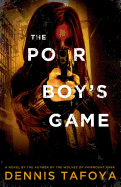
tafoya  pictureAcclaimed crime author Dennis Tafoya is teaching a short mystery writing class on May 1st, 6:30 PM on BookPeople’s third floor.

It’s a fun way to promote his new book The Poor Boy’s Game. He will teach an hour-long class on the elements of crime fiction using examples from classic and current authors as well as his own work. A fun and informative night for beginning and practicing writers as well as people who are just fans of the genre. Bring pen and paper. Admission is free.

Dennis Tafoya has also authored The Wolves of Fairmount Park and Dope Thief.

Tafoya book cover

To find out more, click on http://www.dennistafoya.com/

BookPeople is located at 603 N. Lamar Blvd., Austin, TX78703.

tafoya  dope thief

Tafoya wolves

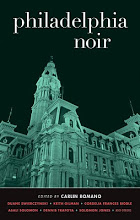
tafoya philly noir


BARBARA BURNETT SMITH ASPIRING WRITERS EVENT

On May 18, Sisters in Crime Heart of Texas Chapter will host the Barbara Burnett Smith Aspiring Writers Event (BBSAWE) at 2 p.m. at Recycled Reads in Austin.

This event will celebrate the legacy of Barbara Burnett Smith, a published mystery author who helped many writers in the Austin community. Aspiring Writers will meet with their Mentors, who are published mystery authors in the Sisters in Crime Heart of Texas Chapter.

W.D. Smith will speak about his mother’s legacy and Russ Hall will talk about mentorship. Following these remarks, the mentors will introduce their aspiring writers to the membership and the writers will read their 500 submitted words to the audience.

Following the program, a buffet supper will be served and aspiring writers will consult with their mentors.

Jan Grape mentors Jane Shaughness; Russ Hall mentors Alex Ferraro; Helen Ginger mentors Shelby O’Neill; Susan Rogers Cooper mentors Lindsay Carlson; Caroline Shearer mentors Eileen Dew; Elizabeth Buhmann mentors co-authors Sue Cleveland and Dixie Evatt.

Recycled Reads is located at 5335 Burnet Rd, Austin, TX78756.

img_1111-1


James Michener Didn’t Object

By Kathy Waller

0kathy-blog

Last week, Valerie wrote about why she writes. Here’s my take on that subject:

When I was four years old, I took a pair of scissors and a roll of red, gooey adhesive tape and wrote my name on the inside of the kitchen door. It didn’t occurred to me I shouldn’t, and my parents never said a word. I’m sure they discussed it, but I wasn’t privy to that conversation.  The crooked red letters stayed on the door for years. When they were finally removed, a heavy red stain remained.

When I was eight, my father gave me a ream of legal-sized paper. I produced a newspaper, one copy per issue, focusing on the social activities of dogs, cats, and horses in the neighborhood. I reported on the wedding of Mr. Pat Boone, my fox terrier, and Miss Bootsie, my grandfather’s cranky gray-and-white cat. Miss Bootsie was really Mr. Bootsie, but even then I knew the value of poetic license. Mr. Tommy, my cousin’s orange tabby, married someone, too, but I don’t remember whom or what gender. Or what genus and species for that matter.

For years, I loved writing—the paper, the pens, the ink, the facts, the improved facts, and the outright fiction.

The feeling lasted until high school, when I began taking courses labeled English. Writing became torture. What will I write about, how many words does it have to be, I don’t know anything about that, I don’t have anything to say. Through high school and two college degrees–in English–I produced the required papers but agonized over every word.

There were bright spots: writing the junior class prophecy, which made even the teachers laugh when I read it at the junior-senior banquet; composing a satire on life in the teachers’ lounge, issued serially on an irregular basis–whenever the Muse moved me.

Overall, however, my relationship to writing remained conflicted. I did my best to camouflage the discomfort, though. After all, I taught English.

Things began to change when I told a therapist about my early love affair with words. He responded, “I think you’d better start writing.” He suggested I join the Austin Writers’ League.

“I can’t,” I said. “James Michener belongs to the Austin Writers’ League. I can’t belong to anything James Michener belongs to.”

The next day, I joined. James Michener didn’t object. I started taking informal classes at nearby universities. An instructor invited me to a Saturday-morning writing practice group. The next weekend, I drove fifty miles, parked in front of the café where it met, watched people carry notebooks inside, backed my car out, and drove home. It took another week to build the courage to pick up my notebook to join them and become a regular.

The result of all this effort? Once again, I fell in love with writing. I also fell in love with a member of the writing practice group and, after a decent interval, married him.

In my romance with writing, I didn’t live happily ever after. I don’t have a long list of appealing topics. I don’t have a file of perfect first sentences. I still have to write to find out what I know and what I think. I still find myself writing furiously right up to the deadline. (Or slightly after, as I am now.) Starting any piece is difficult. But once I begin, the words flow.

I wouldn’t exchange that feeling for anything.

In fifteen years, I’ve come from, I can’t join the Austin Writers’ League to I’m working on a novel, attending Austin Mystery Writers critique group, writing short stories for publication in an anthology, blogging, writing every day.

And, contrary to the moans I make when asked how the writing is going, I love every second of it.

The Hidden Drama

By Elizabeth Buhmann

ut2I love a really good mystery. There is nothing I would rather read.

What I like is the discovery of a hidden reality—dark and terrible—that underlies appearance. And there is satisfaction in seeing evildoers dragged out in the open and brought to justice.

When you write a mystery novel, you invent not one but two stories. One is the hidden story of a crime. The other is a story of discovery.

You start with the hidden drama. Why might one person kill another? How exactly does it go down? How does the murderer conceal the crime?

A man might be jealous of his lover. He quarrels with her, strangles her, conceals the body, and invents an alibi. That’s what happens, but it’s hidden. Nobody knows about it.

The underlying story could be a novel in itself, but it wouldn’t be a mystery—it would be a crime drama, or a tragedy, perhaps. The mystery is about how the hidden story comes to be exposed.

The plot of the mystery begins with the first public sign of a violent reality that hides beneath the placid surface. Shots are heard, or someone disappears. A body might be found.

The first inkling of the hidden story typically leads to a detective being hired or police being called to a crime scene. The detective/protagonist then makes deductions and discoveries that lead inexorably from the first sign of violence to a full exposure of the hidden drama. Only then can justice be restored.

Somebody once asked me why I write stand-alone mysteries instead of detective stories, which can be developed into a series. It’s because the hidden drama is what intrigues me most–the dark and terrible evil underneath the surface.

Blue Ridge Mountains

Lay Death at Her Door is set in the Blue Ridge Mountains of Virginia.

My first book, Lay Death at Her Door, is not a detective story, but it still has the heart of a mystery, because it’s all about the laying bare of a hidden life. My main character Kate got herself into a situation which led to a man getting shot and Kate being beaten and raped. To protect herself, Kate lied on the stand, and an innocent man went to prison.

So in my book, an eruption of violence was initially explained away by a false solution. The wrong man took the blame. The first inkling of what really happened comes twenty years after the fact (in chapter one), when the innocent man is exonerated by new evidence.

In another departure from the usual structure of a mystery novel, I chose a main character in the hidden drama as my protagonist, rather than the detective who solves the crime. I wanted to tell the story from the inside, even though it meant my main character would be a dark one, morally complicit, however unwillingly, in the real killer’s crimes.

Mysteries are ultimately about justice. In Kate’s story, there was a very real possibility that the truth would never be revealed. What breaks the case is Kate herself. Her own character is her downfall. This to me is a compelling idea—that evil deeds destroy us from within.