And the Winner is… Still Undecided

By N.M. Cedeño

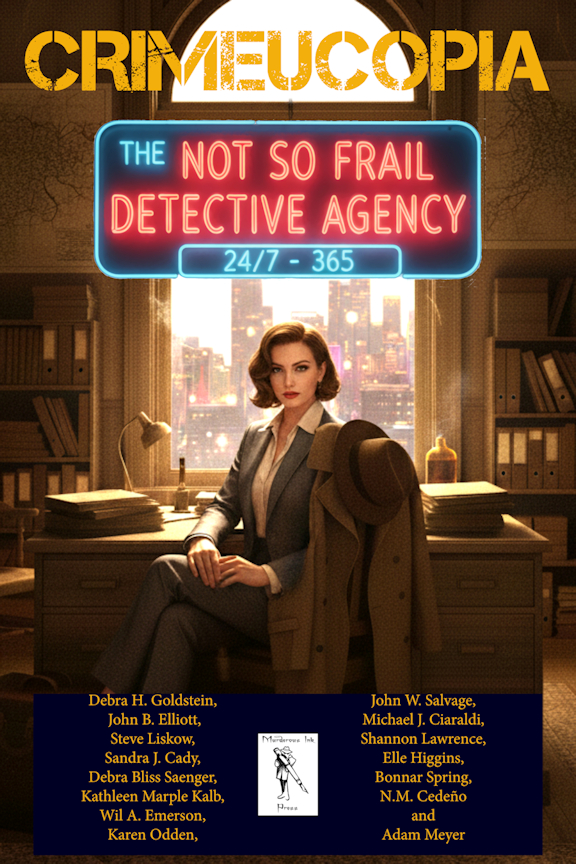
The finalists for the Derringer Award for Best Anthology have been announced by the Short Mystery Fiction Society. They are…

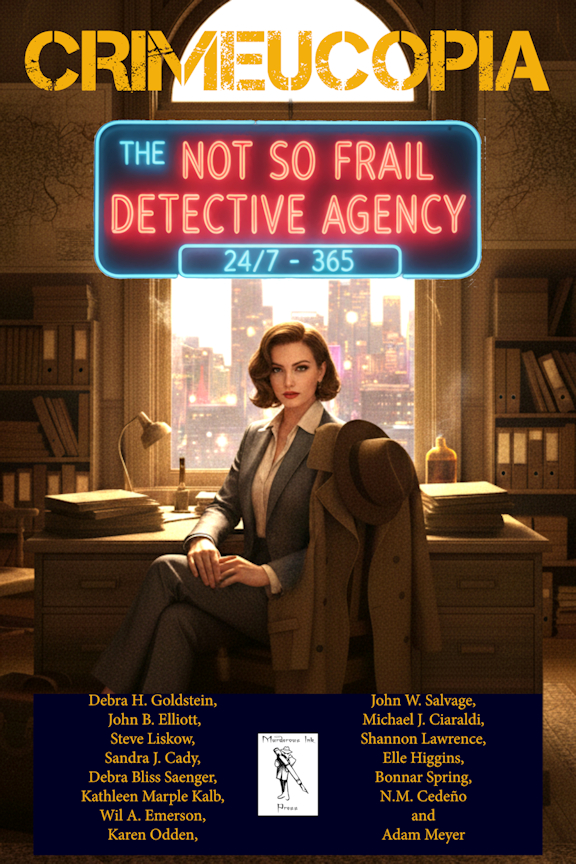
Crimeucopia: The Not So Frail Detective Agency, Edited by John Connor, Murderous Ink Press

Gone Fishin’: Crime Takes a Holiday, The Eighth Guppy Anthology, edited by James M. Jackson released by Wolf’s Echo Press

Hollywood Kills: An Anthology, edited by Adam Meyer & Alan Orloff, Level Best Books – Level Short

Midnight Schemers & Daydream Believers: 22 Stories of Mystery & Suspense: A Superior Shores Anthology, edited by Judy Penz Sheluk, Superior Shores Press

On Fire and Under Water: A Climate Change Crime Fiction Anthology, Edited by Curtis Ippolito, Rock and a Hard Place Press

SoWest: Danger Awaits! A Desert Sleuths Anthology, Edited by Claire A. Murray, Eva Eldridge, Suzanne E. Flaig, Denise Ganley, and Sarah Smith, DS Publishing

Descriptions of each book can be found on the Short Mystery Fiction Society Blog.

At this time, the members of the Short Mystery Fiction Society should be reading these books in preparation for voting for the winner in a few months.
Judges from the SMFS are also reading hundreds of anonymized story submissions in four other categories to come up with the lists of finalists in those categories. The categories are flash fiction (1000 words or less), short story (1001 to 4000 words), long story (4001 to 8000 words), and novelette (8001 to 20,000 words). Finalists in those categories will be announced April 1. Then society members will read all the finalists in order to vote for the winners during the month of April. Winners for all four individual story categories and the anthology category will be announced on May 1.

I have a stake in this vote because I have a story inCrimeucopia: The Not So Frail Detective Agency. My story, “Disappearance of an Easy Lover,” features Maya Laster, a genetic genealogy private investigator. She takes a case that appears to be simple: find out why a girl ghosted a guy. But the answer to the question is far from simple, and Maya ends up traveling all over Texas to solve it. Maya has been featured in three published stories so far. The other two stories, “Disappearance of a Serial Spouse” and “A Matter of Trust,” appeared in Black Cat Weekly issues #79 and #110. Maya is scheduled to make two more appearances soon, one currently without a publication date, and the other scheduled to be published in April if all goes well.

If you missed reading any of my stories that were published in Black Cat Weekly or in the various Crimeucopia anthologies, I have good news. Black Cat Weekly and the Crimeucopia anthologies are available via Hoopla and other library services. I discovered many of my stories were available online at my local library via Hoopla. So, if, like one of my relatives who shall remain nameless, you “don’t want to buy a whole magazine or book just to read my one story,” you can log in to your library and check them out to your personal reading device for free. Then, maybe you’ll discover the value of reading the whole book or magazine!

2025 Wrap Up and Review

By N.M. Cedeño

As many authors have noted in the last few weeks, 2025 wasn’t a great year for the short mystery fiction world. Between controversies over contracts at the major publishers and the dwindling number of markets available for short mysteries, authors have had a lot of reasons to worry. Like others, I had stories left in limbo this year by the sudden closure of a publisher, and I’ve spent an ever-increasing amount of time trying to find places to submit stories. However, I’m going to take a moment to focus on what went well for me in 2025.

One goal that I set and met in 2025 was participating in a major writing conference.  I attended Bouchercon New Orleans in September, and thoroughly enjoyed it. I planned to meet editors and other short mystery fiction writers in person and I did! I met Robert Lopresti, Daniel and K.T. Bartlett, Bonnar Spring, and Avram Lavinsky. I met Josh Pachter and spoke to Steph Cha and Linda Landrigan. I sat on a panel and discussed authorial voice with Daniel Bartlett, Mark Thielman, Warren Moore, and Carol Orange, with Catherine Tucker moderating. Being a massive introvert, the convention left me on people overload, but it was worth every minute.

I planned to submit at least two stories a month for publication in 2025. I accomplished that goal. I’d hoped to hit three a month, but that was not to be this year. While my submissions remained solid, my productivity dropped. Increasing my output of stories will be a 2026 goal.

In 2025, two of my stories appeared in Crimeucopia anthologies edited by John Connor. The first, “Murder by Alternate Facts,” was published in March in Crimeucopia: Chicka-Chicka Boomba!. The second story, “Disappearance of an Easy Lover,” was published in December in Crimeucopia: The Not So Frail Detective Agency. I ended the year with five additional stories pending publication. While I don’t have firm dates for any of the stories yet, I’m looking forward to most of them coming out in 2026.

2025 brought me one surprise accomplishment! My story “Predators and Prey,” which was published online in 2024 by Rusty Barnes on TOUGH, was selected by Steph Cha as an “Other Distinguished Story of 2024” in the list at the back of this year’s Best American Mystery and Suspense. The anthology came out in October, but I knew my story was on the list since someone forwarded a screenshot to me before I went to Bouchercon. When I spoke to series editor Steph Cha at Bouchercon, she confirmed that my story was on the list, and she remembered it! While it’s gratifying to have anyone remember one of my stories, to have Steph Cha remember it in casual conversation while walking down a hall was particularly pleasing. The story is available online to read here: Predators and Prey on TOUGH.

The end of 2025 also marked the end of the previous group blog to which I belonged. I was happy to receive an invitation to begin posting with the wonderful people here at Austin Mystery Writers. I look forward to writing along side them and learning from them in the coming year.

Happy New Year!

Letting Go

VP Chandler

by V.P. Chandler

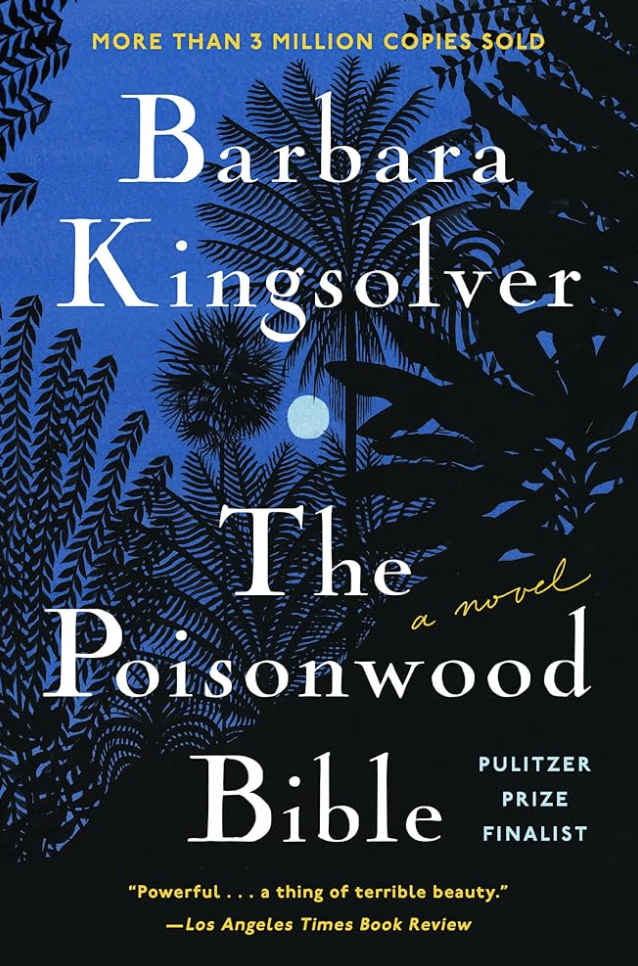
I recently read The Poisonwood Bible for the second time. It’s interesting how it’s a different experience after I’ve become a mother and after I’ve have had more life experiences. What stuck with me this time wasn’t the politics, religion, or the history as much as a mother’s fear of living in a place that doesn’t feel safe.

Years ago, we lived on a ranch where there were a lot of rattlesnakes. (I know, you’ve heard me talk about this before.) We had hundreds in the vicinity. For the first year we were there, I worried almost every single day that my small child would get bitten. And possibly die since we were far from any hospital or antivenom. I didn’t talk about it much, but it was always there in my head. Every walk outside, every noise in the grass, every moment my child was out of my sight. I truly believed that any day could be the day something terrible would happen.

After about a year, something shifted. I still knew the danger was there, but I wasn’t consumed by it anymore. I had learned where the snakes were likely to be, when to be extra careful, and when I could relax a little. The fear didn’t disappear; it just stopped running my life.

One day I told my husband how I wasn’t worrying as much. He was stunned, and frankly, kind of appalled. He couldn’t believe I had lived with that level of anxiety every day. He had no idea. We were in the same place, raising the same child, but our inner experiences were completely different.

I thought about this when reading The Poisonwood Bible. A mother, Orleanna, did the best that she could, given her circumstances, to prepare for their new life. Like bringing cake mixes for her daughter’s birthdays, only to have the mixes turn to rock in the humidity. Such a symbol of motherhood/parenthood. We do the best we can. The trials that we may face are not the ones we expected. And Nathan, so sure he was right, so focused on his mission and his authority, his divine calling, that he didn’t notice what was happening to the people around him. (Not that my husband was a tyrant or a fanatic!)

The book also made me think about living and trying to parent in an oppressive patriarchal society. A general observation, while male egos and cultures clash, it’s the citizens who pay the price. Nathan’s rigid religious authority collided with local power structures and culture. While he was so wrapped up in his zeal to save souls, trying to live by the laws in The Bible, that he missed the message of The Gospel. And he was so bent on changing the local “heathen” customs, without really looking at or connecting to the people, he was doomed to fail. No one wins when the people in power are fighting to maintain power instead of helping society. When patriarchies rule, all citizens end up paying the price. Even those in charge seem trapped by the need to dominate rather than care.

I guess I’m feeling this more than ever before. It’s what’s happening in the world. For me, The Poisonwood Bible landed as a reminder that paying attention matters and caring about people matters. And the people who notice danger, who quietly adapt, who carry the worry, so others don’t have to, are often invisible. But they’re doing the work that keeps everyone alive.

I think about that first year with the rattlesnakes sometimes. I think about how long I carried that fear alone. And reading this book helped me see that experience more clearly—not as weakness, but as awareness.

And now here is a picture of a Christmas kitten so you won’t be so bummed out.

Pixabay url

V.P Chandler writes westerns and crime fiction. Her most recent publication is found in The Mysterious Bookshop Presents the Best Mystery Stories of the Year 2025.

This post was originally posted on Substack. You can follow V.P. Chandler there.

Quiet Wins at Bouchercon

VP Chandler

by V.P. Chandler

When people talk about Bouchercon, especially in New Orleans, they usually share stories of late nights, legendary meals, bustling crowds, powdery beignets, and lots of alcohol.

That wasn’t my week.

But the funny thing is—I still accomplished exactly what I went to do.

My panel, Wide Open Spaces, with Craig Johnson, Bruce Borgos, Jeff Ayers, George Wilhite, and moderated by the lovely Sylissa Franklin was a highlight. The conversation flowed, and the audience was engaged. I made them laugh a few times and even got a gasp. So, mission accomplished. I walked away feeling like I’d contributed something worthwhile.

I also got to meet Clay Stafford in person and thank him for publishing my short story, Under The Blackjack Tree, in Killer Nashville Magazine.  (The story that was chosen by John Grisham and Otto Penzler for The Best Mystery Stories of the Year 2025, which is still surreal to me. (Coming out next week!) Stafford’s keynote, The Story That Saved Me, was “cry for crime writers and readers to remember why stories of darkness and redemption still matter—and why telling the truth on the page can save us, too.” Honestly, it was one of the most inspiring talks I’ve heard in a long while. Glad I went.

Another highlight was finally meeting Otto Penzler in person. I thanked him for the opportunity, and he graciously signed my copy of the anthology. A small moment, but one I’ll carry with me.

At the end of most days, I met up with Laura Oles in the hotel/lounge bar. (It was so noisy all of the time!) We compared notes at the end of the day—who we’d seen, what panels had sparked ideas. She was on a terrific panel herself, Dialogue Matters: Slang, Concise, or Verbose? The group dug into how dialogue can reveal character and control pacing, which is something that I’m always working on.

I also loved being in the audience for Sweet Tea with a Splash of Crime: The Southern Influence, with Ace Atkins, S.A. Cosby, and other writers who captured both the grit and taste of Southern literature, and where it’s headed. Another standout was Killing Your Darlings, with Penzler and Donald Maass, which was a sharp reminder that ego doesn’t belong in the editing room if the goal is to make the story better.

And one of my favorite unexpected moments? Donald Maass allowed me to join him for lunch one afternoon. We had a thoughtful conversation about Writer Unboxed, an organization we’re both part of, about writing in general, and drawing inspiration from real life,. It was simple but memorable, the kind of connection that lingers long after the conference ends.

So no, this wasn’t a Bouchercon of big parties or long nights on Bourbon Street. But it was a Bouchercon where I hit my goals, connected with people who matter to me, and left with a few new insights and ideas. Sometimes the quieter wins are the ones that last.

Connecting Through the Ether

VP Chandler

By V.P. Chandler

Have you ever researched something—like a purse, a computer, or even a car—only to suddenly notice it everywhere, even though you hadn’t before? Inspiration for stories works the same way.

One of the most common questions authors hear is: “Where do you get your ideas?” The answer: pretty much everywhere—news articles, books, movies, history, snippets of conversation, personal experiences… inspiration can spark from the smallest detail.

I’m currently writing a historical novella, and inspiration is coming from all directions. I feel like a goalie in a soccer match—I’m fully immersed.

Story Settings and Characters

My protagonist is a young woman named Martha. She’s married to Tom, who has moved her far from home—and life isn’t unfolding as she expected. (Isn’t that always the case? But is it simply the way things are, or is something nefarious at work?) They’re building a cabin in the East Texas woods around 1830. I imagined they’d arrived at the tail end of the Old 300, grabbing land wherever they could. (Although the story could take place anywhere from 1820 to 1880, west of Virginia in pine country, I discovered that pines aren’t as widespread as I once thought—which is why research matters.)

https://www.tshaonline.org/handbook/entries/old-three-hundred

As I write, Martha is revealing herself to me—like she exists on another plane and there’s a conduit between us through something I call “the ether,” a metaphysical space. (Is that a real thing? I don’t know—dammit, Jim, I’m a writer, not a metaphysicist!) Her voice is growing stronger. Her past and current life are becoming clearer. When she speaks, it feels like she’s speaking directly at me. I think most writers go through this—and when it happens, it’s exhilarating. To me, it means the character will have depth and feel real.

And, as in the past, there have been “signs” that I’m on the right track with characters and story. Sometimes these signs are even eerie. In the first chapter, when it was new and amorphous, I was writing a dream sequence to explain her inner thoughts, worries, and where she’s from. I imagined she came from a large family, and she had had a brown and white dog named “Peaches”.

A few days later I was on Facebook and came across this picture. It caught my attention because a cabin is a major feature of the story, and I took a screenshot for inspiration to look at details. Later I read the description. Look at what I circled. That’s right! I wasn’t too surprised by the date. But the dog in the picture was name “Peaches”! And it looks brown and white to me. It gave me inspiration that I’m on the right track with the story and characters.

(Picture from https://www.facebook.com/TracesofTexas. They post historical and modern pics taken in Texas.)

Another time, while writing my (currently unpublished) novel Gilt Ridden, I created a character in West Texas, educated and obsessed with gold, known locally as “The Professor,” living in a dugout. Years later, I came across a local-history book about Stonewall County describing a man known as “The Professor” who lived in a dugout and searched for gold. I hadn’t known he existed—but the parallels were uncanny. At first, I worried that people would think that I borrowed someone’s real story. But then it comforted me. I took it as a sign that I had created a realistic character from imaginary circumstances.

So when you’re writing—or working on any project—block out the world and tune in to the voice or idea coming from the ether. Who knows what will be revealed?


Bonus Content

I’ve been obsessed with one song lately. It’s been playing in my head nonstop for a week. I didn’t know much about it until I watched the YouTube video. The character is pregnant and contemplating life choices, just like Martha! Now it’s really stuck in my head. Hope you enjoy it:

Sara Bareilles – “She Used to Be Mine” (from Waitress)

Walking the Dark Side of Summer: A Personal Look at For Every Evil Under the Sun

VP Chandler


By V.P. Chandler

When I first sat down to write the stories that would eventually become part of For Every Evil Under the Sun, I didn’t know exactly where they would lead me—I only knew I wanted to stretch my writing skills, try new things, and be a part of a hot, cool collaboration. (Yes, I like puns.)

Now, I’m proud to announce that this collection is out in the world, published by the brand-new Fredonia Ink Publishing. I’m honored to be sharing the pages with two powerhouse writers, Alexandra Burt and Laura Oles—both of whom are not only incredibly talented but also deeply committed to telling stories that explore the dark, complex corners of the human experience.

This collection is a bit of a literary experiment. We each approached the idea of “evil” through our own unique lens—psychological thriller, family drama, crime, horror, western—and let the stories guide us. What came out of it is a collection that isn’t just eclectic, it’s electric. It shines! (Yes, another pun.)

As for me, I leaned into the grit—into crime, revenge, justice. I wanted my stories to carry that weight—to explore the consequences of violence and vengeance. And also add a little bit of fun to the mix. And the stories by Alexandra Burt and Laura Oles are equally as dark and entertaining.

And hey, if you’re in Austin this summer, I’d love to invite you to join us for a special event at Vintage Bookstore and Wine Bar (1101 E. 11th St.) on July 18 at 7pm. Alexandra, Laura, and I will be discussing short story craft, the experiences of women writing crime fiction, and what went into shaping this haunting little book. It’ll be an evening of books, wine, and maybe a few goosebumps.

So if you’re in the mood for stories that simmer under the heat of summer and explore just how far people will go—to protect, to avenge, to survive—then For Every Evil Under the Sun might just be what you’re looking for.

Hope to see you in July.

—VP Chandler
vpchandler.com


🗓️ Event Info: July 18, 7pm @ Vintage Bookstore and Wine Bar, Austin, TX
🔗 Learn more, here is the Amazon listing. Ebook now available and paperback will be soon on Amazon and bookstores everywhere: https://tinyurl.com/2tph4xcz

Just Look Around!

by HELEN CURRIE FOSTER

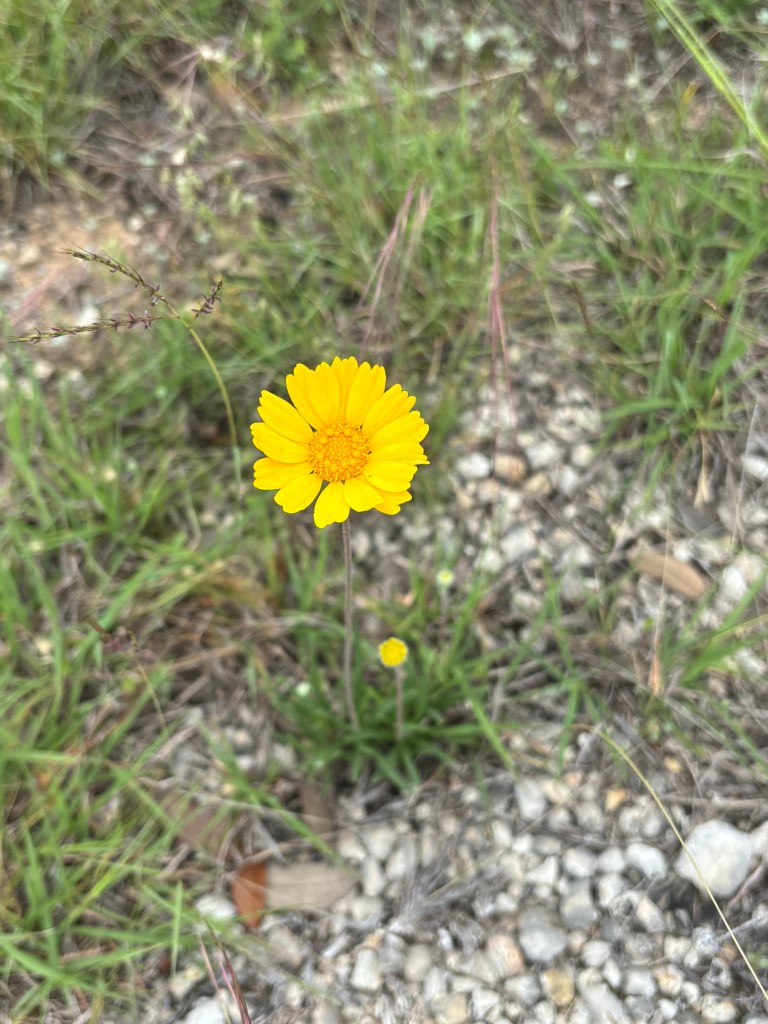
Not enough rain fell this year to allow the brilliant cerulean fields of Hill Country bluebonnets we usually expect, but the hardy lupines are busy making seedpods. “Maybe next year,” they say. Now instead we have the bright yellow coreopsis lanceolata, nodding their heads with any breeze,

the wine-cups with their indescribable color—a member of the mallow family, not quite fuchsia, not maroon, just—heart-stopping,

the milkweed flower globes beloved of monarch butter-flies, and others. Heaven includes a few prairie celestials, magically opening in early in the afternoon, then vanishing by dusk.

Also, “Sweet Mademoiselle,” planted a couple of years ago, and who has never bloomed, produced her first rose!

Meanwhile, the ever-interloping cactus hope to assuage my fury at them (remember those secretly spreading roots and the huge basal “plates” that help the Cactus Conspiracy spread?) by popping open their yellow flowers. I am not fooled. I’ll continue to battle them with shovel and hoe. And a picker-upper.

Now for some Hill Country facts.

BIG CATS?  Just in case you thought the animal that appears in my mystery Ghost Cat was, perhaps, unrealistic? Over-the-top? Mere fantasy? Couldn’t have played a part at beginning and end? Not so! https://www.statesman.com/story/news/state/2025/04/21/mountain-lion-san-marcos-trail-texas-sightings/83194256007/

See? Perfectly possible. It’s still wild out here in the Hill Country, even as suburbs press upon us. At dusk I often find myself glancing at the edge of the drop-off behind the house, wondering if I’ll see a pair of ears. You can say mountain lion, puma, cougar…they’re secretive, strong, and active in the spring.

But the big cat I once saw on Bell Springs Road west of here was likely a large bobcat. I was alone, driving home from the post office. Up ahead a golden vision, spotted, walked slowly to the edge of the asphalt. I stopped. The cat stood, gazed at me, and after a breathless (for me) interval, gracefully turned and vanished through a fence into thick cedar. A magical moment. Every time I drive that road, I hold my breath, longing for one more sighting of something looking like this:

https://images.app.goo.gl/K9VMv8bW92CpoSacA

ANCIENT BONES? I wrote about old bones in my Ghost Bones (2024)—and now have learned that our Hays County police deal with ancient bones more often than you’d think. One resident recently called to report she’d found a skull in her firepit. The skull, with its lower jaw present, was obviously fairly old, but in an unexplained death Hays County is not permitted to send a body to the Travis County Medical Examiner without including the name of the person whose skull it is. (Hays County doesn’t have its own medical examiner.) So this skull traveled instead to Texas State anthropologists who reported, after testing, that the skull apparently belonged to a long, long-ago teenager who’d gone through hard times, as was evident from the “enamel lines” (a bit like tree rings) in the teeth.

But how it wound up in that firepit? So far as I know, that’s still a mystery. We forget—until reminded by a skull in a firepit—how long humans have roamed these hills, drawn by hunger and thirst to spring water and the hunt for food.

We also forget the age and history of this landscape. Some trees have sheltered native Americans, deer, and buffalo. The Columbus Live Oak near the Colorado River in Columbus is estimated to be over 500 years old. Others may be as old as 1,000 years.

https://tfsweb.tamu.edu/websites/FamousTreesOfTexas/TreeLayout.aspx?pageid=26882https://goodcalculators.com/tree-age-calculator/

I revere the live oak in our front yard as if it were a beloved ancient relative and a symbol of stability and the power of trees. If anything were to happen to it—woe! I tried to estimate its age—using the calculator instruction to measure girth in inches at 4.5 feet, divide by pi, then multiply by a “growth factor” of 4, which gave me 127 years old. Perhaps this tree was a sapling in 1900, before either World War, before the Viet Nam war, before our current fraught politics. On a nearby hill there’s an ancient patch of even bigger live oaks. Perhaps those particular oaks depend on the odd little ribbon of wet white clay that lies about five feet underground and has been there—who knows how long. But the feeling of walking in beneath these old live oaks can confer a sense of being in the protection of one’s elders.

So, welcome to the Hill Country in spring—southeasterly winds from the Gulf, blowing the flowers back and forth; reasonably moderate temperatures; fields and trees as green as green, as far as you can see. At the bird feeder, more color! Purple house finch, yellow-throated vireo, lesser goldfinch with brilliant gold breasts, vermilion cardinals, black-crested titmouse, white-winged dove—and the shy and tiny, but utterly gorgeous, painted bunting. (Reportedly it loves millet.) They provide not just color but music, from the titmouse, the tiny but high-volume Carolina wren, plaintive doves, whistling cardinals, and, at night, chuck-will’s-widow.

Not for long, of course. In winter ice can wreak havoc on trees and people. Summer sun? Scorching. Autumn? Nothing like the colors of New England, but hey—the sumac turns red. So welcome, Spring, with your bluebonnets and live oaks, with bird music and color, and with your reminder of the power and beauty of nature!

***

Progress report: madly working on Book 10 of the Alice MacDonald Greer Mystery series, set in the Hill Country. Have ordered “Forest Bathing” by Dr. Qing Li. Would enjoy hearing what you all are reading too, and any reports of “forest bathing”!


Helen Currie Foster lives and writes the Alice MacDonald Greer Mystery series north of Dripping Springs, Texas, loosely supervised by three burros. She’s drawn to the compelling landscape and quirky characters of the Texas Hill Country. She remains deeply curious about our human history and how, uninvited, the past keeps crashing the party.

Follow Helen at http://www.helencurriefoster.com.

Merging Family History With Fiction

VP Chandler

by V.P. Chandler

Previously posted on vpchandler.com

My most recent blog post announced the publication of my short story, “Under The Blackjack Tree” in Killer Nashville magazine and now I’m now doubly thrilled to announce that the short story was also chosen by Otto Penzler and John Grisham to appear in the 2025 edition of Best Mystery Stories of the Year! (Mysterious Press)This is a huge honor. Honestly, at first I didn’t think it was true. I read the email about three times and did some online research before I believed it!

Picture of the jail that I took several years ago.

But another reason why this is so special to me is because my story is steeped with bits of my family’s history.

It began when my mother told me several years ago that one of her most cherished memories was when she got to help her grandfather feed the inmates at the Huntsville jail when she was about four. (Wait, what?) That’s when I learned that my great grandfather had been sheriff of Walker County. I later learned that it was common practice for the sheriff and his family to live on the first floor of the jailhouse while the inmates would be on the second floor.

The image of an innocent girl closely interacting with a potentially dangerous person was so intriguing to me, I was compelled to put it in a story. (I played with the timeline and instead of my mother being the little girl, I made it my grandmother. It simplified the story.) I had no idea where the story was going to go, but I knew that I needed that opening scene. It took me places that I didn’t expect!

Some of the things that were true are-

  • My great grandfather was sheriff at the time of Bonnie and Clyde. I thought that would make an interesting backdrop. A lot of tension in Texas at that time.
  • My grandmother’s first mother did die in childbirth and her loving stepmother was called “Cullie”.
  • There really was a bank robbery in Conroe at that time. (I don’t think it was ever solved.)
  • Trusted inmates often cooked the meals for the other inmates and sometimes for the family.
  • It was my mother that fell into the yard with the hunting dogs and was almost mauled.
  • My grandmother was shot in the face with a shotgun, by accident. It was a miracle that her eyes were spared, and she had not one single scar. That is such an amazing part of our family history that I had to include it.

And two things that I didn’t know until after I wrote the story.

  • My grandmother was sometimes called “Mary V” at school because there was another Mary in her class.
  • When she attended Sam Houston to get her teaching certificate, she would often cut across the cemetery when her classmates wouldn’t. She was never a squeamish person.
My grandmother, the flapper!

Although the Mary V in the story is pure fiction, I hope that my grandmother would be proud the story and that some of our family history is saved and shared with others.

Curious Animals And Recent Reads


by Helen Currie Foster

New reads! If, like me, you desperately miss John le Carré, consider A Spy Alone, the 2023 debut spy thriller by Charles Beaumont, a field operative veteran of Britain’s MI-6. https://bit.ly/3ZzHjHs His premise is fascinating: we know of the “Cambridge Five” who spied for Russia from the 1930’s to 1950’s—Kim Philby, Guy Burgess, Donald Maclean, Anthony Blunt and John Cairncross. https://en.wikipedia.org/wiki/Cambridge_Five But has there ever been, or could there be, a spy ring linked to Oxford? Beaumont’s protagonist Simon Sharman feels real, right from the first page:

“It is their shoes that give them away. As a lifelong fieldman, Simon Sharman hasn’t forgotten the lesson: walkers might change their jackets, pull on a pair of glasses, even a wig. But nobody changes their shoes on a job. Look at their shoes. 

I was hooked. Warning: Beaumont’s book is contemporary, well-written, tense, and may interfere with sleep. 

Two other recent reads: old adventure and a new “adult fantasy.” I’d never heard of The Long Ships by Frans G. Bengtsson (1954).

Set from 980 to 1010 A.D., the book recounts the wide-ranging adventures of Norseman Red Orm Tostesson, and the collision between Christian priests (the “shaven men”) and the Norse culture of Skania at the south tip of Sweden. Now I know what it meant to go “a-viking”—to go sea-raiding! 500 pages, with Red, a very engaging Norseman. Great maps, too.

The Lost Bookshop, by Evie Woods (2024), offers time travel between the 1920’s and 30’s in Britain, and the present; a search for a lost Brontë manuscript; a disappearing attic; and disappearing and reappearing characters. I confess I flipped through big chunks, relieved when true love finally won out after two women, generations apart, survive appalling treatment. The disappearing attic reminded me of Susan Cooper’s Over Sea, Under Stone, and of course the wardrobe into Narnia in The Lion, the Witch and the Wardrobe. I’m always up for secret doors.

I’m rereading a fascinating and fairly demanding study by Graham Robb, who has probably bicycled and walked further in Britain and France than most humans:

In The Search for Middle Earth: Mapping the Lost World of the Celts (2013)he describes how the Keltoi, or Celts, developed a system of surveying based on a midline transected by the lines of the summer and winter solstice to estimate travel distances and times—a feat not replicated for centuries. He maps the Heraklean Way, the path from southwestern Iberia that runs northeast across the Pyrenees to the Alps along the diagonal of the solstice sun, which Hannibal took when he invaded Italia. He describes Druid schooling (20 years to learn) and maps out protohistoric forts which turn out to lie along survey lines. He provides amazing maps. Two ongoing lessons from Robb’s devoted research: the winners write history; and humans tend to underestimate the accomplishments of earlier civilizations. 

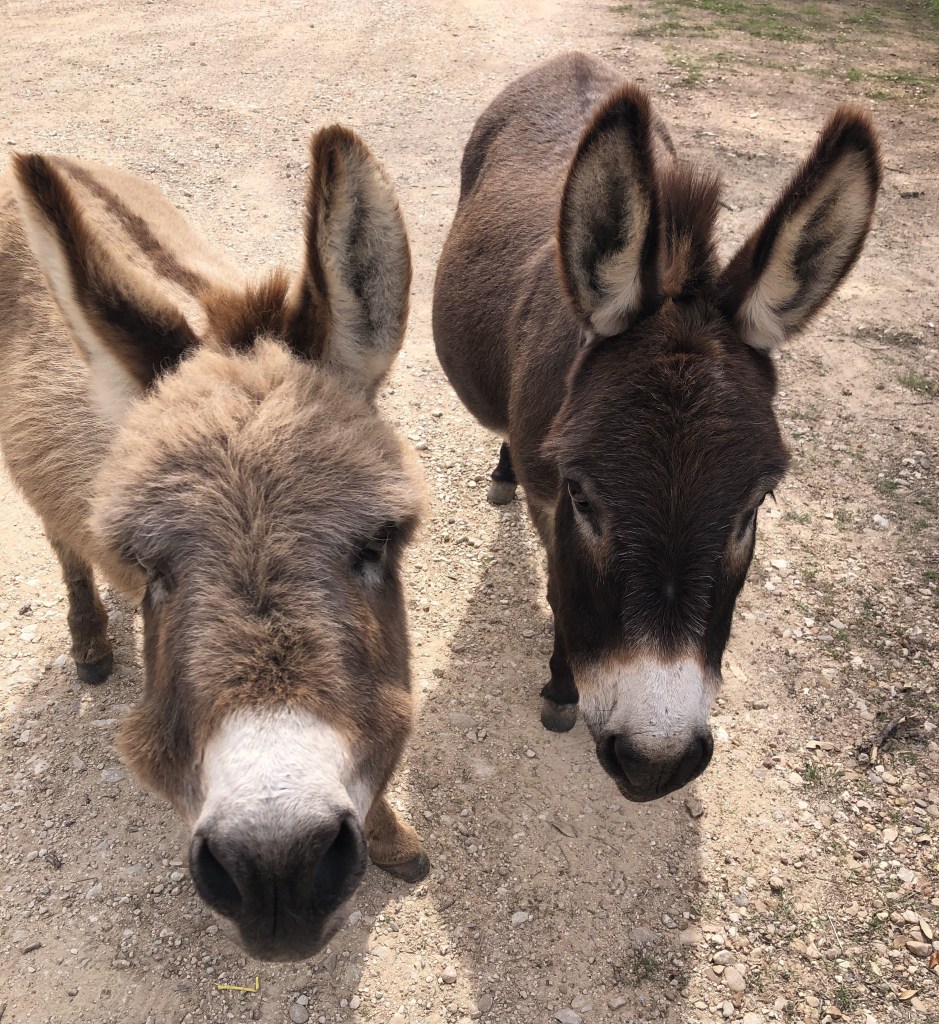
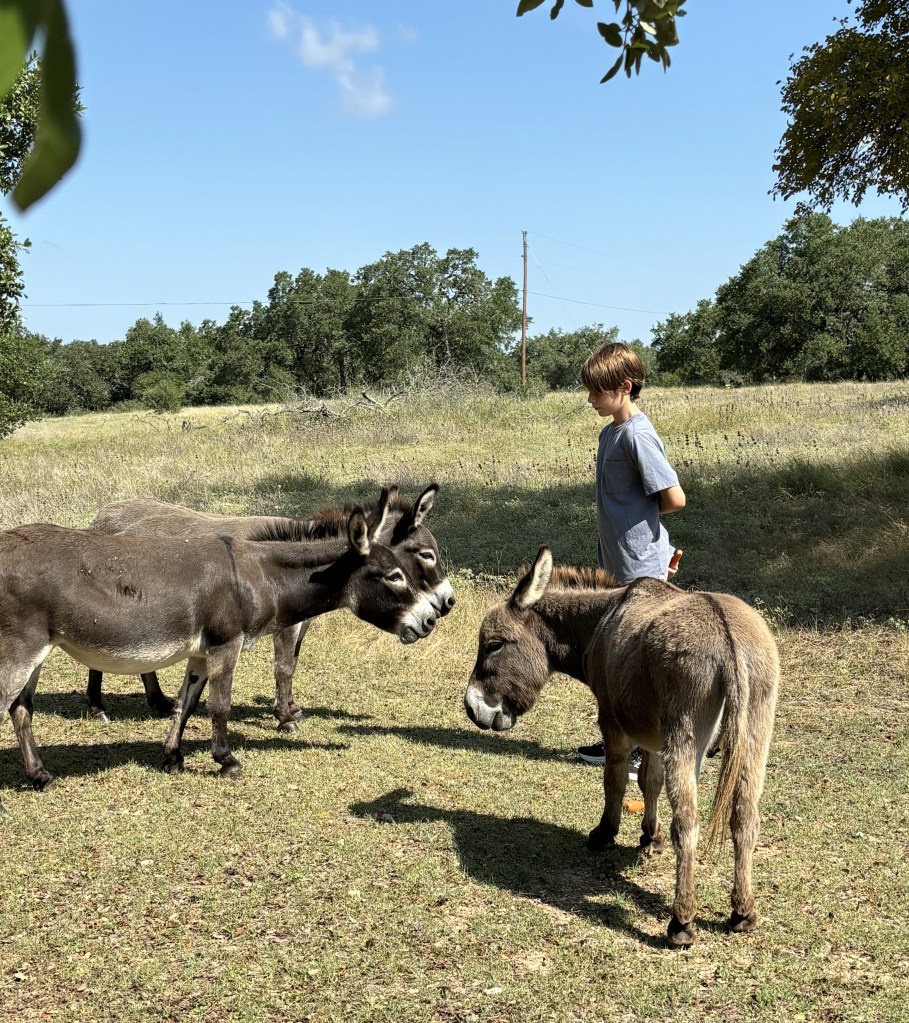
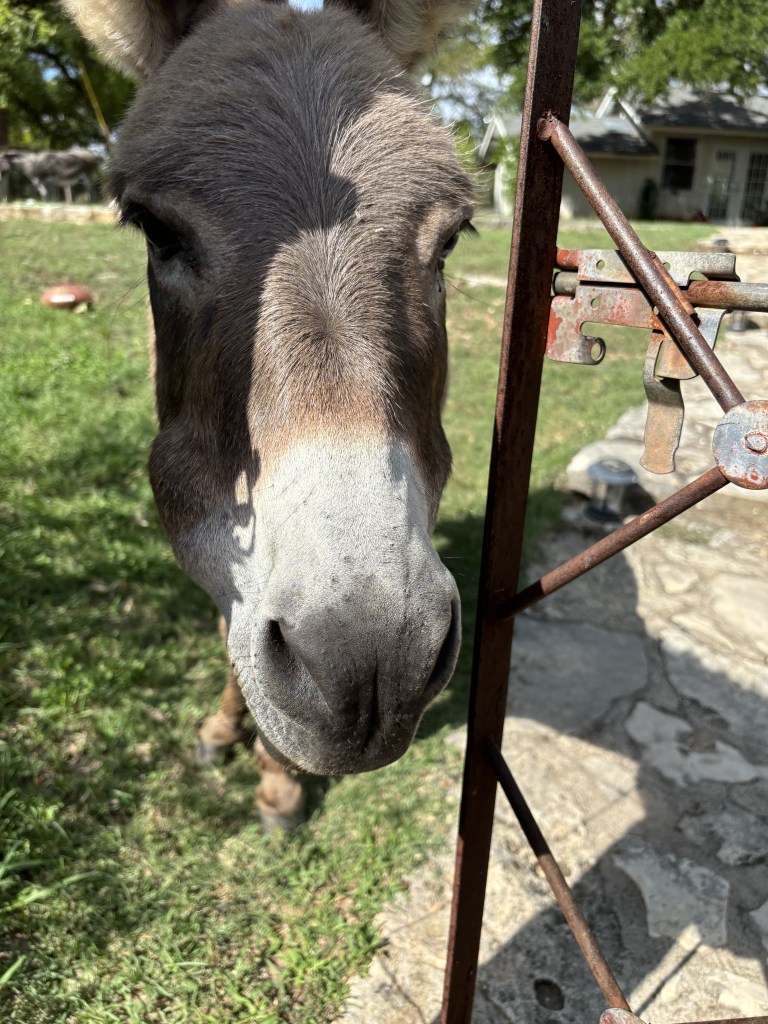
Several of you asked about the three burros, given the recent cold snap. Thank you, they’re well. Their hair’s not waterproof so in cold rain they gather on the south side of the stable, under the roof, safe from rain and the north wind. They were relieved to see green grass again after the drought broke, but they’re also eating—and rolling in––green hay. And mud!

Yet despite hay, they gather outside the gate every morning and afternoon for carrots. They consider this part of their deal.

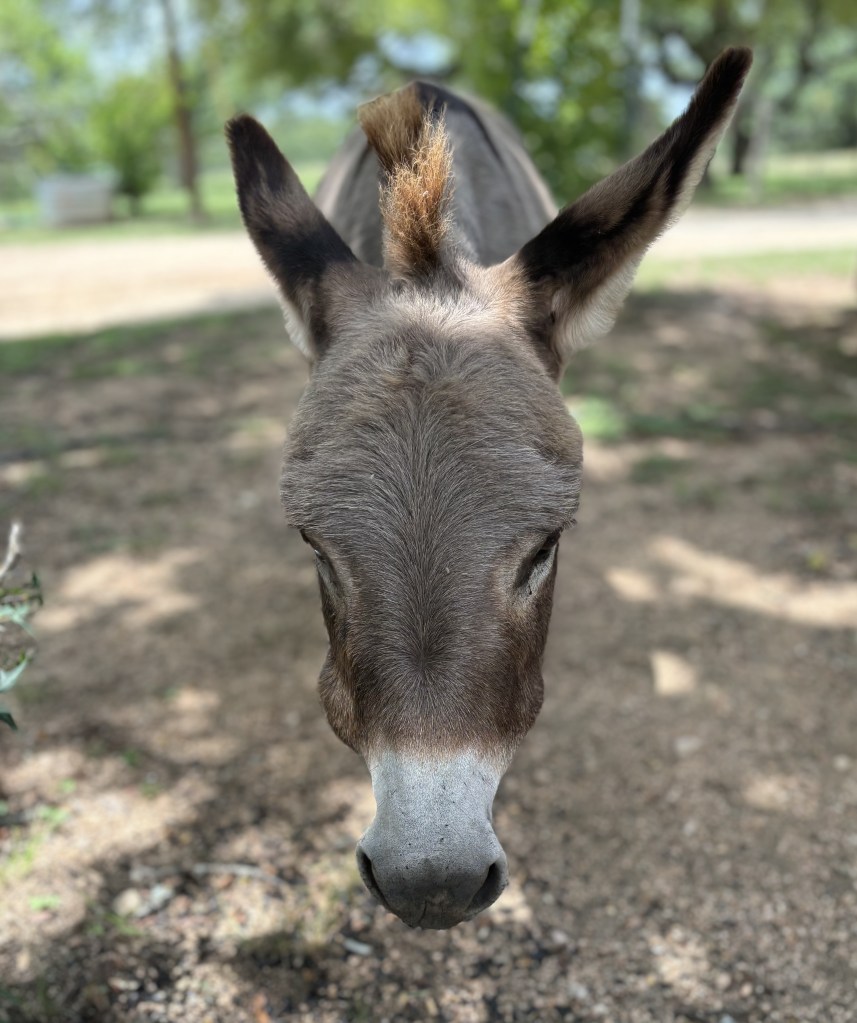
Burros are curious. They amble over to watch us garden and hang up laundry. They need company. They graze near each other. They may live into their 40’s. Sebastian, the short stubby knock-kneed male who invited himself to live here, may be 35 or more. Amanda (who insists I tell you she’s registered, with papers) may be 20. Her daughter Caroline is 12. Sebastian deems it his duty to bray loudly when any person or car appears at the end of the driveway, and to welcome the sun every morning with a stunningly loud bray. Now both Amanda and Caroline have begun to bray occasionally. 

Only donkeys can bray. Unlike horses or zebras, donkeys begin a bray on the inhale and continue braying on the exhale. They have great hearing—supposedly they can hear another donkey bray 60 miles away. 

They especially detest canids and will attack, dance on and kick dogs, coyotes, bobcats, foxes. A spooked horse will run away: donkeys stand together until they decide what they’re going to do. This morning, leaving for the post office, I saw the three donkeys standing together, knees locked, ears cocked, eyes fixed on two trespassing dogs who’d strayed across the cattleguard and into the donkeys’ domain. 

The dogs immediately acknowledged their gross error of judgment, raced frantically away and never returned.

If donkeys could read (wait—maybe they can, but have trouble turning the pages), I predict they’d prefer mysteries. They enjoy puzzles (like how to lift the chain and invade the fenced garden). 

Humans and donkeys. We are both curious animals.

Helen Currie Foster lives and writes the Alice MacDonald Greer Mystery Series north of Dripping Springs, Texas, loosely supervised by three burros. She’s drawn to the compelling landscape and quirky characters of the Texas Hill Country. She’s also deeply curious about our human history and how, uninvited, the past keeps crashing the party! Currently she’s working on Book 10. Her protagonist, Alice, gets into legal drama, and matters of the heart. Alice does have a treehouse…

Follow Helen at http://www.helencurriefoster.com and on Amazon and Facebook, https://www.facebook.com/helencurriefoster

Under The Blackjack Tree

VP Chandler

by V.P. Chandler

Thrilled to announce that one of my short stories has been published by Killer Nashville Magazine! Killer Nashville Magazine is a magazine that publishes stories in any genre that incorporate elements of mystery, thriller, or suspense.

This story means a lot to me because the seed of the idea is based on my family and family experiences. Look at my author notes at the end for the explanation.

I hope you enjoy it! Link here.