Wordsmithing!

by Helen Currie Foster

March 23, 2026

“Hop in the car, you little ragamuffins and tatterdemalions!” For so our papa fondly called his four children—two girls, two boys—on our long car trips.

Our papa was fascinated by words, and wordplay. Every Sunday he’d fetch the New York Times and finish the crossword…in ink. He abhorred sloppy word use, particularly if we said we “adored” something— “You adore a deity, nothing less.” He detested our casual use of “I swear!” Instead, “You may say ‘I affirm’ or ‘I attest’ but not ‘I swear’—‘Let your yea be yea and your nay be nay.’” Yes, some theological thoughts.

But only now do I realize how thoroughly we also absorbed our mama’s inherited expressions—maybe from forebears who brought to the New World some Scottish or English vocabulary. When getting ready for company she’d say “I’m all in a swivet!” I say the same thing and never realized not everyone uses that expression. Our mama also reminded us not to be “persnickety.” She turned clocks “anticlockwise” when appropriate and reported with raised eyebrows that someone was “fit to be tied.”  And she fostered independence: a frequent suggestion we kids got was “Root, hog, or die!” To her, “gumption” was a great virtue.

When we four children were scattered far from Austin, we eagerly awaited her monthly letters (typed, with 3 carbons—she alternated who got the original). She always reported on local politics, Texas football, drought/rain conditions and her ongoing war against bamboo in the back yard, and signed “Heaps of love” or “I love you more than tongue can tell.” In one letter she reminded us that our papa used to refer to her housecleaning (after she’d gotten in a swivet) as “rearranging the mess.”  In another, she said that after a welter of company “I bestirred myself to change all the sheets.”

Words! At Austin’s McCallum High School our senior English teacher, the redoubtable John Shelton, listed words on the blackboard for us to memorize each week—a task that sent us straight to the byways of the dictionary, a great (lifelong) destination. My friend remembers that one week the assigned words included “hygroscopic,” “tessellated,” “faience,” and “barghest.” https://bit.ly/4dF535p .

Other than “hydroscopic,” in ensuing decades I’ve never actually used any of those words in conversation. But that moment still may come!

Do you readers and writers keep a list of favorite words? Working on Book 11 in my Alice MacDonald Greer Mystery series, Ghost Music, I’m aiming for precision and concision. But I hope somehow to sneak in “awry”, “gleeful,” “impudent,” and certainly “iniquity” (right on point for a mystery). Also, maybe “drudgery,” “jasmine-scented” and “catkins.” Possibly “hygroscopic”?

It’s tough work to produce consistently vivid word pictures, precise and concise. One master is Stephen Harrigan. Of Harrigan’s The Eye of the Mammoth (2019), Texas writer Lawrence Wright wrote, “Word by word, book by book, Stephen Harrigan has proven that he’s the best writer Texas has ever produced.” https://bit.ly/4t440Aj

Wright’s right. It’s a beautiful book that tugs you straight into each story. (The cover calls them “essays” but believe me, they’re stories, and you see the word pictures so vividly you’ll be surprised there weren’t illustrations.)

For instance, you may already know, as Harrigan tells us, that there were mammoths in Texas up until some ten thousand years ago, and (of course) they were larger than the woolly mammoths, “reaching up to fourteen feet high, with domed heads and huge, sweeping tusks”:

Sixty or seventy thousand years ago, a herd of these creatures was foraging in a floodplain a few miles west of what is now downtown Waco. The landscape, in the waning millennia of the Ice Age, would have been prairies and lightly forested savannas populated with all sorts of vanished megafauna: camels, saber-toothed cats, ground-dwelling sloths that could rear up to twenty feet high, and massive, armadillo-like glyptodonts that shuffled along like living boulders.

The scene is set. You’ll want to know what happened when the mammoth herd was caught in “a flash flood roaring out of the ancestral Bosque River…” I was already trying to imagine gazing up at Mammuthus columbi, our Texas mammoth, fourteen feet high.  Harrigan had me right there. Every word counted.

And he’s right about the time frame. Last weekend we toured the Gault Archaeological Site up by Florence, Texas, and saw the (now closed) excavation where Dr. Michael Collins and others excavated down to bedrock, around 10 feet deep, in the pasture next to Buttermilk Creek. The excavation (see white posts) is next to the gravesite of Mona, the ranch cow who faithfully visited daily during the excavation.
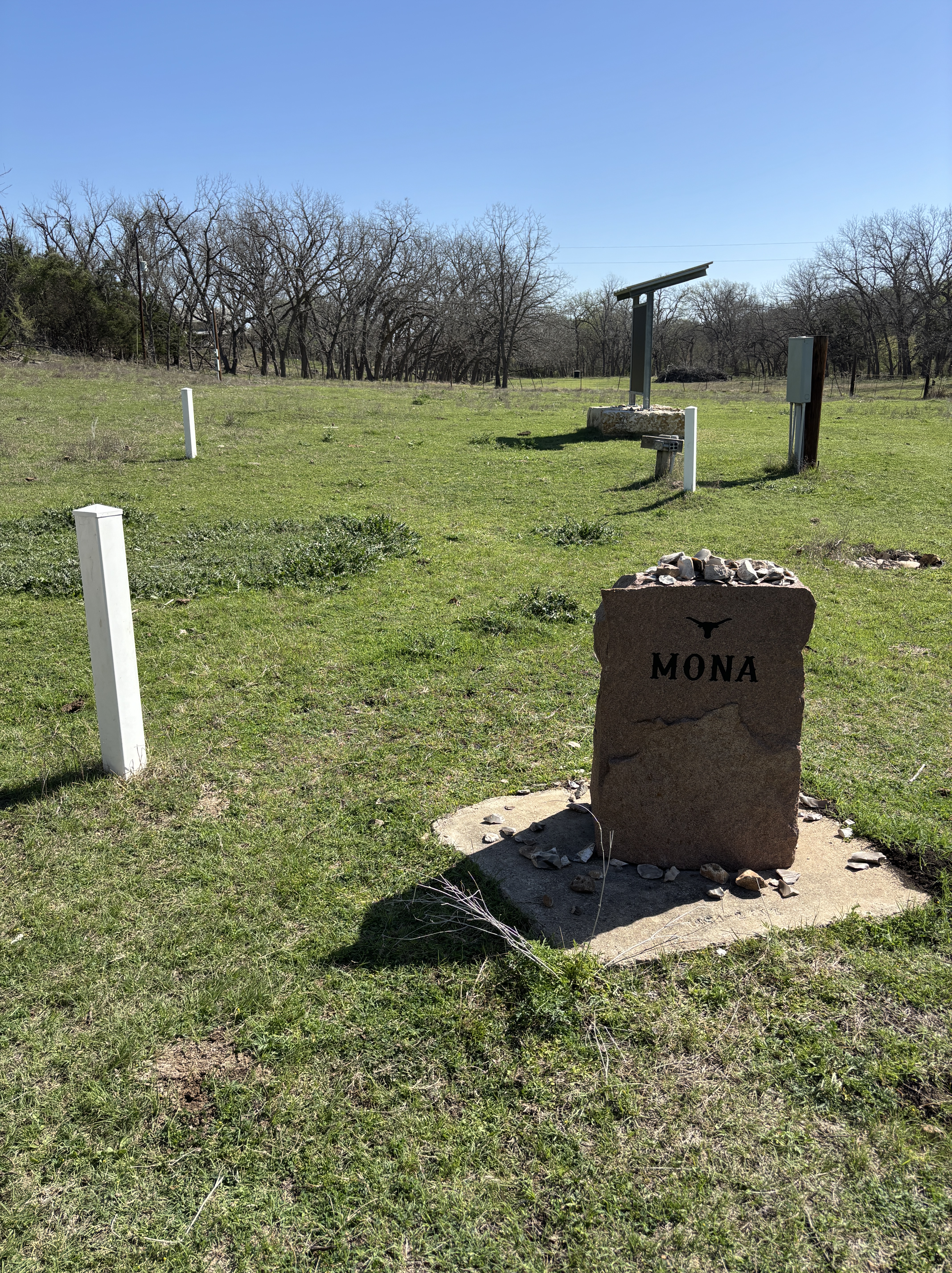
 Dr. Collins had long been dubious of claims that humans had only been in North America for 14,000 years or so, relying on the age of the Clovis points you may remember from high school classes. Sure enough, when the archeologists reached bedrock at the Gault site they found artifacts which are 16,000-22,000 years old. https://bit.ly/3NlC8J5

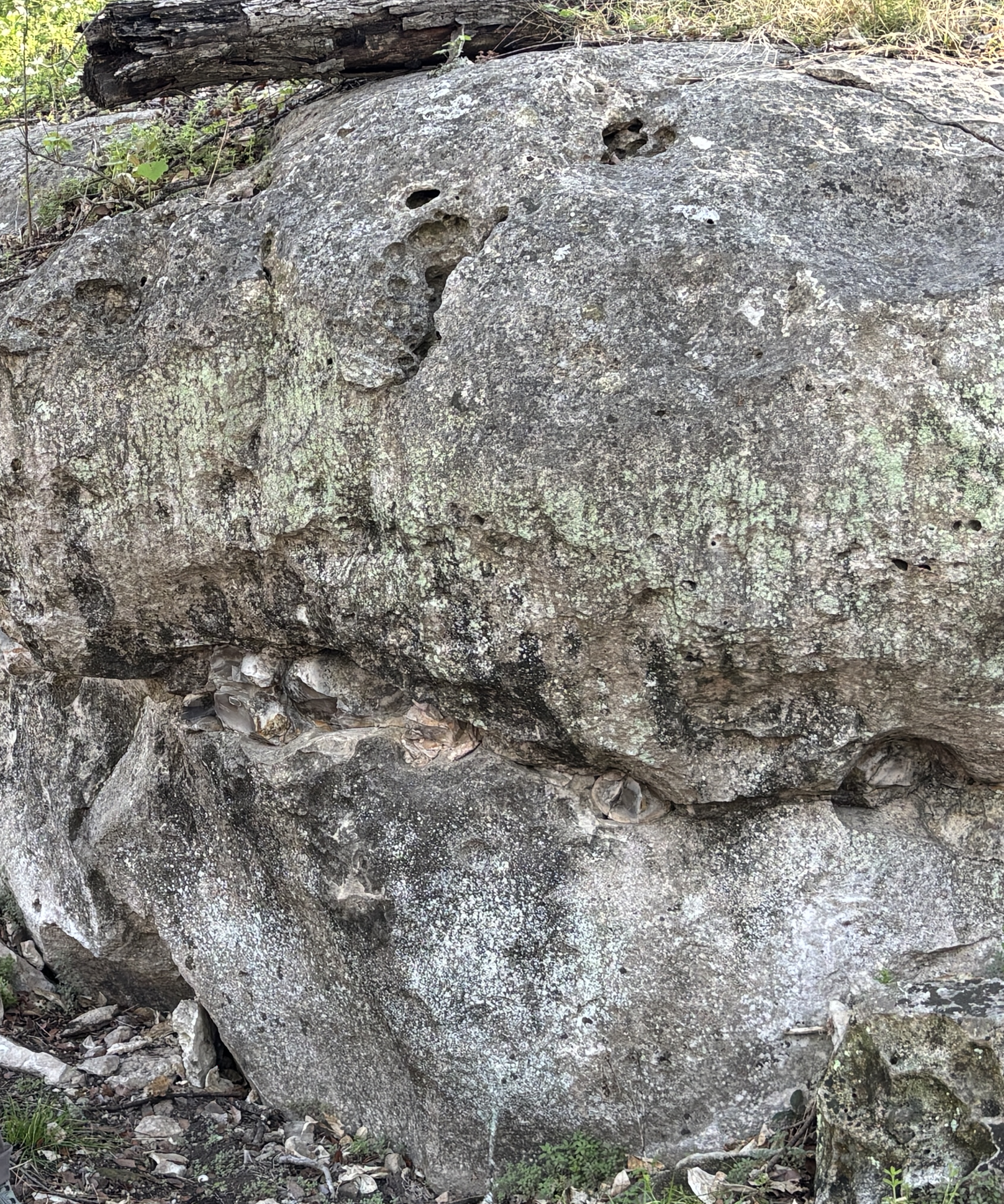
The Gault site is famous for very hard chert (visible in rock formations along the creek) which permitted Paleo-Indians to chip very sharp points for the spears/arrows they threw from atlatls. As we stood staring at the rocks it was easy to imagine mammoths in the big field by Buttermilk Creek…
Wordsmithing. Hard work, like blacksmithing. Heat the words till they glow red, shape them carefully, beat them into place. Luckily, after all that hammering, words are easier to move around, edit, and reshape… not so final as a horseshoe. Still, finding the right words for the right place—keeps me up at night.

Nathaniel Hawthorne has been quoted as saying, “Easy reading is damn hard writing.” Maybe he was repeating the words of humorist, essayist and poet Thomas Hood, whose letter to the London periodical The Atheneum in 1837 cited as one opinion on writing: “the easiest reading is d[amne]d hard writing.”

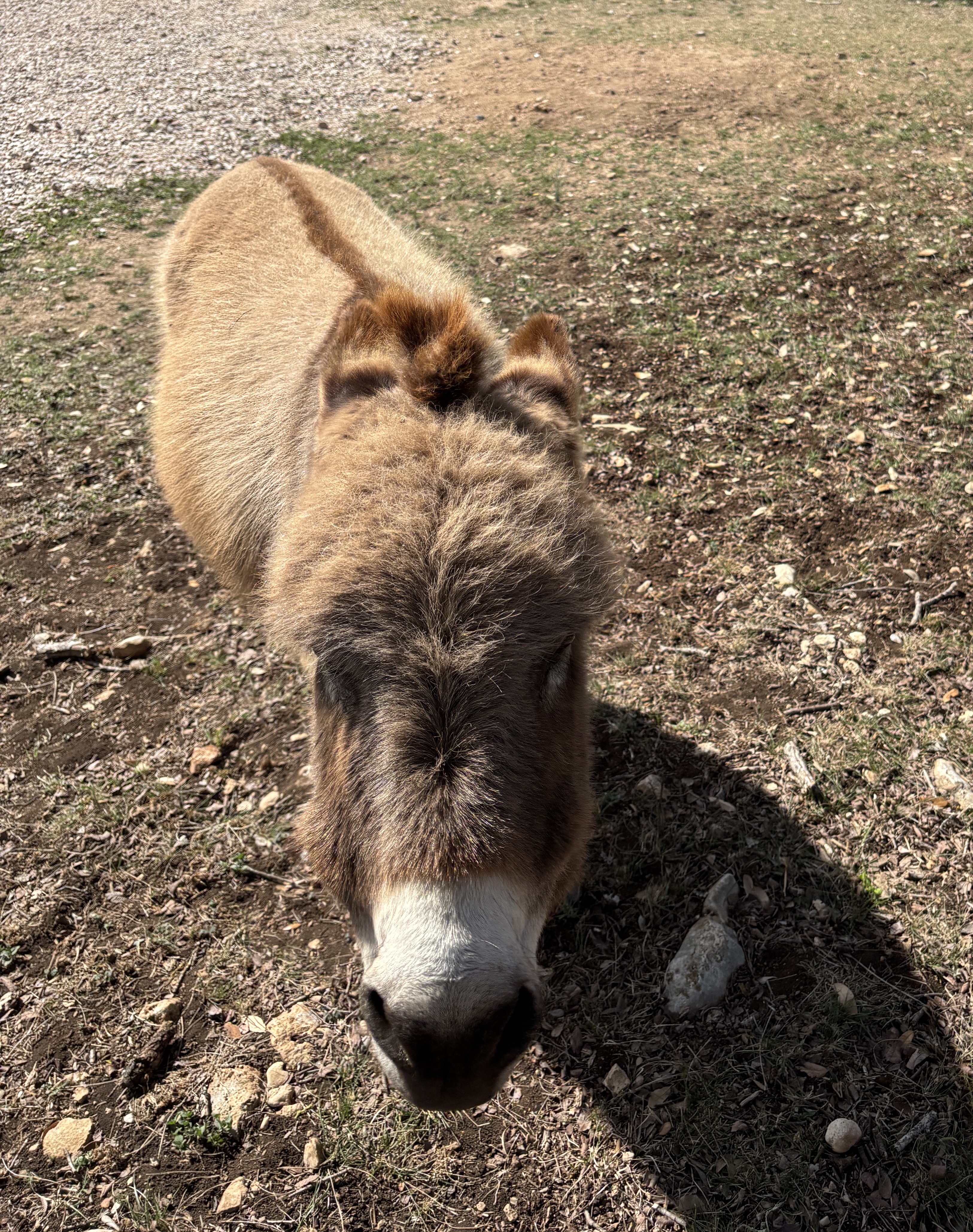
Still, west of Austin, the hill country offers generous terms to writers, at least as far as setting is concerned. The writer can count on buffalo grass, agarita, blue grama grass, and prickly pear cactus atop Cretaceous limestone chock full of snail and oyster and clam fossils. Also, painted buntings, tufted titmice, lesser goldfinch, summer tanagers, roadrunners, golden-fronted woodpeckers, ladder-backed woodpeckers, Swainson’s hawks, red-tailed hawks, great horned owls and screech owls. And jackrabbits, coral snakes, bright green lizards, newts, armadillos, bobcats, and raccoons trained to a high degree of thievery, including figuring out how to detach birdfeeders from trees and push them downhill into their favorite dining thicket. Finally, three burros live the high life, including daily carrots. Sebastian (the burro who undertakes to announce guests) offers to anyone who comes through the gate an enormous and distinctive bray of welcome, disproportionate to his small size.
And I haven’t mentioned the equally tough, equally resourceful, equally colorful characters that have settled here, some of whom have inspired the characters in earlier books in the Alice MacDonald Greer Mystery series and are inspiring Ghost Music.

Yes, easy reading is damned hard writing. Yet the material’s here. Just look around!

Author Helen Currie Foster lives and writes the prize-winning Alice MacDonald Greer Mystery series north of Dripping Springs, Texas, loosely supervised by three burros. She’s drawn to the compelling landscape and quirky characters of the Texas Hill Country. She’s also deeply curious about our human history and how, uninvited, the past keeps crashing the party. She’s active in Austin Shakespeare and the Heart of Texas Sisters in Crime chapter of national Sisters in Crime. And she treasures speaking with book groups.

Follow her at http://www.helencurriefoster.com and on Amazon. Her books are available at Amazon and at BookPeople in Austin.
My Grandfather’s Cherry Tree and Other Fragrances

by Francine Paino, a.k.a. F. Della Notte

Most of this is a reprint of a 2024 post, but I’ve added more on the beneficial effects of the aroma of coffee for my amateur sleuths.

A 2010 study published in The American Journal of Psychology found that “memories associated with smells were not necessarily more accurate, but tended to be emotionally more evocative.” How true!

From my office window in Austin, Texas, I look at the magnolia blossoms on the tree in front of my house. Pretty and pink, the blossoms are at the top of the tree. They are too high for me to reach and cut. Yet, I still enjoy their lovely fragrance when they fall to the ground. That scent transports me 1,500 miles northeast and back over half a century. Images of my grandfather’s cherry tree come to mind, unlocking memories of my life in an immigrant community.  

My grandfather’s cherry tree didn’t grow, surrounded by green hills and grass. It grew in a crowded Italian ghetto: a city within a city. Corona, New York. Here, cement sidewalks and concrete streets only allowed for narrow curb strips of weeds in front of houses, separated by narrow alleys. Few residences had any planting space to speak of, but my grandfather’s house was one of them.

Now, when I remember and look at pictures, I wonder how he dealt with the adjustment going from the grinding poverty in the beautiful, gently rolling hills and mountains surrounding Sassano, Italy, to a somewhat better existence but one encased in hard, cold, and grey surfaces. It’s a question I never did ask. I suppose his poverty-stricken but agrarian roots wouldn’t allow his small piece of the stark, utilitarian landscape to remain solid chunks of grey without a trace of nature, and so, the cherry tree.  

Planted in a small patch of dirt in his yard, surrounded by cement, my grandfather’s cherry tree grew straight and tall. Its round trunk was encased in bark that looked so dark it could have been black. The tree gave off a sweet fragrance in early June, only perceptible in the early mornings before the smells of car exhaust, trash, fumes, brick, mortar, and wood from the close-together homes crowded it out.  And once spring arrived, windows were kept open more often and the aroma of cooking wafted out, joining the profusion of smells that swept the neighborhood and overwhelmed the delicate fragrance of cherry blossoms. I found it strange that those sweet smelling blossoms produced a fruit that was mainly sour and enjoyed more by the birds than by the family.

According to the charts, cherry trees in the northeast are ready for harvest by the third week of June. I recall birds pecking at them and dropping ripened cherries into the cement yard. My grandmother would sweep them up fast to keep them from getting under our shoes and dirtying her faded but clean linoleum floor. The memories evoked by the cherry tree do not stop there. Like tendrils on a vine, places, events, and smells latch on to the Prunus Serotina.

In New York City, public schools let out by mid-June in the 1950s. That meant I could help my grandfather tend his little farm two blocks from his home, nestled between dilapidated houses on either side of the property and protected by an eight-foot-tall chain-link fence that ran around the entire perimeter.

The land in his little enclosure always smelled earthy. He’d fertilize it before the planting began. There were rows of corn, cabbage, zucchini, and Swiss Chard. There was an area dedicated to lettuce. The corn always had a slightly sweet and earthy fragrance. I have no recollection of smelling the growing cabbages or zucchini. Still, when I sauté garlic, I often recall my grandmother doing the same, then frying thick slices of zucchini and smothering them in a rich marinara sauce to finish cooking.

As a child raised in this hybrid environment, half city and half farm life, I took these scents for granted. Didn’t everyone have them? Perhaps my favorite olfactory memory comes from the herb garden. The lemony aroma of thyme is still one of my favorites. So are the peppery scents of oregano and the sweet, refreshing smell of basil. My grandfather would smile when he handed me a bouquet of basil. Maybe he already knew the beneficial effects it had. I’d bury my nose in it and breathe deep before walking the three crowded city streets back to the house with the cherry tree.

I’m amazed by how much scientific support smell has gained for its impact on various aspects of life, beyond memories of days gone by. Scientists at Brown University reviewed 18 studies on aromachology. They found that smelling lavender can indeed relax you, reduce stress, and even help you wake up more rested. Researchers examined studies on other scents, such as rosemary, peppermint, and orange. They propose that rosemary may help you sleep better, improve memory, and help with hair growth. Peppermint might boost physical performance, and the smell of oranges can reduce anxiety and help you feel more content or happier. Of course, more research is needed. If nothing else, taking the time to “smell the roses,” is already a step in slowing down and enjoying nature – in this case, the aromatic plants. When discussing memory stimulants and other benefits of scents, we cannot ignore coffee. While not an herb, it cannot be left out of the conversation.

Scientists would have us smell the coffee to wake up, reporting that the aroma alone of any preferred caffeine brew would awaken us. In a 2019 National Institute of Health article, it is claimed that “Inhalation of coffee fragrance enhanced cognitive parameters, including continuity of attention, quality of memory, and speed of memory, and also increased the mood score of alertness….”  

It is no wonder that for Mrs. B. and Father Melvyn, coffee is the house wine of St. Francis de Sales Rectory. The protagonists of the Housekeeper Mystery Series welcome the benefits of coffee and its aroma, which keep them sharp as they manage the parish, keep their cats happy and safe, and solve mysteries and crimes.

Enjoy your favorite fragrances and join me in savoring a cup of coffee.

Happy Reading!

PS: My grandfather was a javaphile too!

SOURCES:

https://www.bridgeportct.gov/news/whats-smell-it-might-improve-your-memory#:~:text=The%20researchers%20also%20looked%20at,push%2Dups%20or%20running%20faster.
https://www.brownalumnimagazine.com/articles/2008-03-26/scents-sensibility
https://www.ncbi.nlm.nih.gov/pmc/articles/PMC5198031/
https://www.healthline.com/nutrition/rosemary-oil-benefits
https://www.livescience.com/2614-whiff-coffee-wake.html
https://pmc.ncbi.nlm.nih.gov/articles/PMC6881620/#:~:text=Results,modulate%20autonomic%20response%20to%20stress

A Mind Still Unhinged

by Kathy Waller

I wrote the following post ten years ago. A fellow writer said I should repost it periodically, and over the years, I’ve done so. I’ve altered a few words, but nothing else has changed. 

*

So you start writing your post about the incomparable Josephine Tey’s mystery novels two weeks before it’s due but don’t finish, and then you forget, and a colleague reminds you, but the piece refuses to come together, and the day it’s due, it’s still an embarrassment, and the next day it’s not much better, and you decide, Oh heck, at this point what’s one more day? and you go to bed,

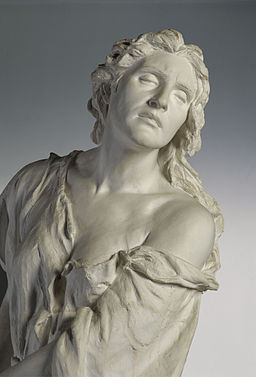
Elizabeth Ney’s Lady Macbeth, Detail, by Ingrid Frisch, CC BY SA-3.0, via Wikipedia

and in the middle of the night you wake to find twenty pounds of cat using you as a mattress, and you know you might as well surrender, because getting him off would be like moving Jello with your bare hands,

so you lie there staring at what would be the ceiling if you could see it, and you think, Macbeth doth murder sleep…. Macbeth shall sleep no more,

and then you think about Louisa May Alcott’s writing, She is too fond of books, and it has turned her brain,

and you realize that not only has your own brain turned, but that your mind has become completely unhinged.

And you can’t get back to sleep, so you lie there thinking, Books, books, books. Strings and strings of words, words, words. Why do we write them, why do we read them? What are they all for?

And you remember when you were two years old, and you parroted, from memory, because you’d heard it so many times,


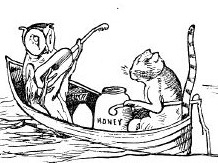
The Owl and the Pussycat, by Edward Lear, Public domain, via Wikipedia

The owl and the pussycat went to sea in a beautiful pea green boat,
They took some honey and plenty of money wrapped up in a five-pound note,

because happiness was rhythm and rime.

And when you were five and your playmate didn’t want to sit still and listen to you read Angus and the Cat, and you made her sit still and listen anyway.

And when you were sixteen and so happy that all you could think was, O world, I cannot hold thee close enough!, and you didn’t know who wrote it but you remembered the line from a Kathy Martin book you got for Christmas when you were ten.

And when you were tramping along down by the river and narrow fellow in the grass slithered by, and you felt a tighter breathing, and zero at the bone.

And when you woke early to a rosy-fingered dawn and thought

I’ll tell you how the sun rose,
A ribbon at a time,
The steeples swam in Amethyst
The news, like Squirrels, ran –
The Hills untied their Bonnets –

And when you saw cruelty and injustice, and you remembered, Perfect love casts out fear, and knew that fear rather than hate is the source of inhumanity, and love, the cure.

And when your father died unexpectedly, and you foresaw new responsibilities, and you remembered,

We never know how high we are
Till we are called to rise.
And then, if we are true to plan,
Our statures touch the skies—

 And when your mother died, and you thought,

The Bustle in a House
The Morning after Death
Is solemnest of industries
Enacted upon Earth –

 The Sweeping up the Heart
And putting Love away
We shall not want to use again
Until Eternity –

 And later,

Oh, if instead she’d left to me
The thing she took into the grave!-
That courage like a rock, which she
Has no more need of, and I have.

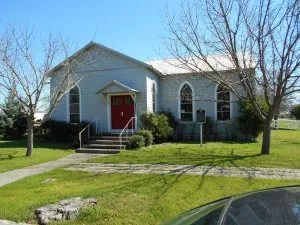
Fentress United Methodist Church

And at church the day after your father’s funeral, when your cousins, who were officially middle-aged and should have known how to behave, sat in the front pew and dropped a hymnbook, and then something sharp stuck you in the side and you realized that when you mended a seam in your dress earlier that morning, you left the needle just hanging there and you were in danger of being punctured at every move, and somehow everything the minister said struck you as funny, and the whole family chose to displace stress by laughing throughout the service, and you were grateful for Mark Twain’s observations that

Laughter which cannot be suppressed is catching. Sooner or later it washes away our defences, and undermines our dignity, and we join in it … we have to join in, there is no help for it,

and that, 

Against the assault of Laughter nothing can stand.

And when you fell in love and married and said with the poet, My beloved is mine and I am his.

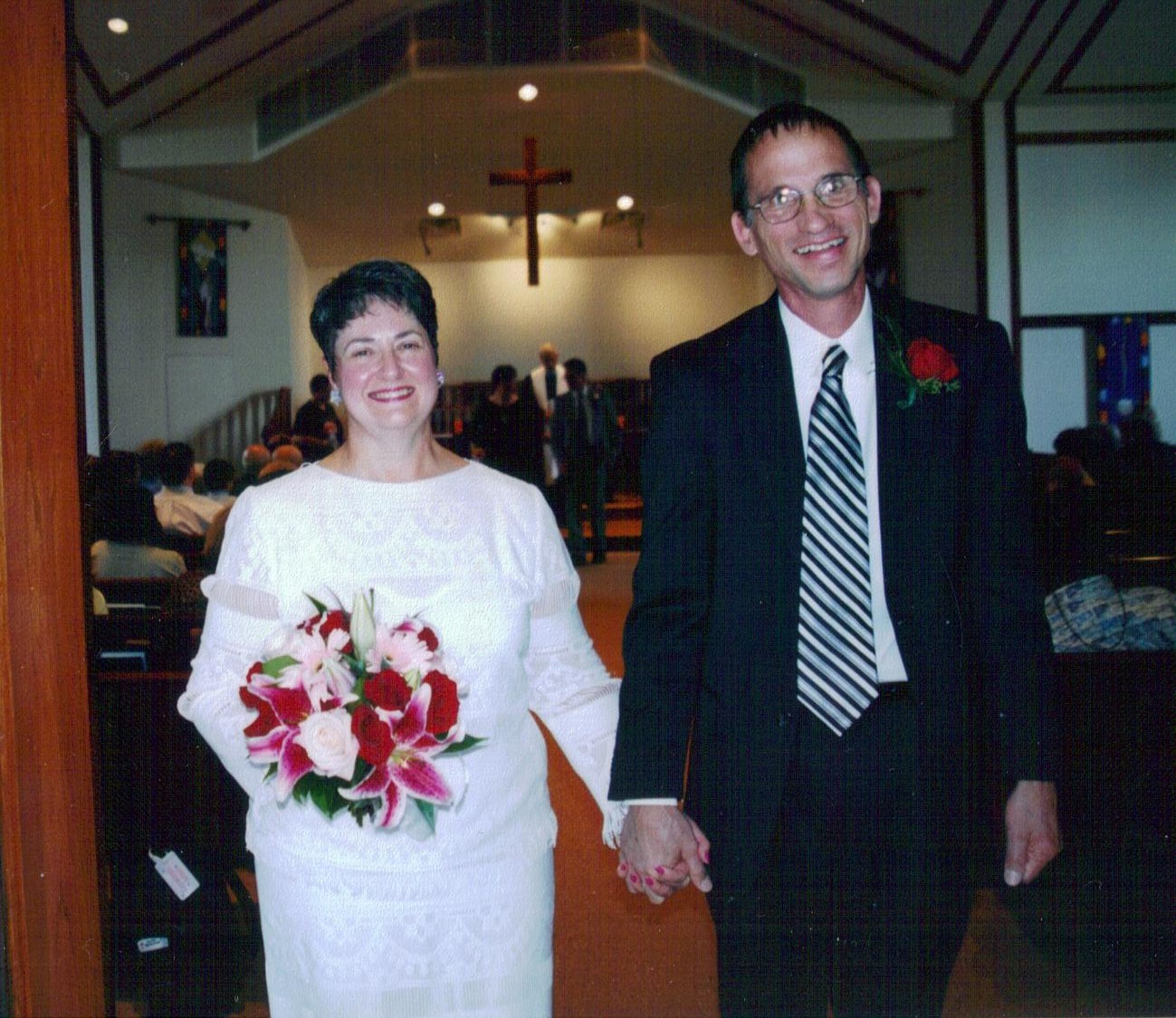
Wedding


And when, just before you walked down the aisle, you handed a bridesmaid-cousin a slip of paper on which you’d written, Fourscooooorrrrrrre…, so that while you said, “I do,” she would be thinking of Mayor Shinn’s repeated attempts to recite the Gettysburg Address at River City’s July 4th celebration, and would be trying so hard not to laugh that she would forget to cry.

And when your friend died before you were ready and left an unimaginable void, and life was unfair, and you remembered that nine-year-old Leslie fell and died while trying to reach the imaginary kingdom of Terabithia, and left Jess to grieve but also to pass on the love she’d shown him.

And when the doctor said you have an illness and the outlook isn’t good, and you thought of Dr. Bernie Siegal’s writing, Do not accept that you must die in three weeks or six months because someone’s statistics say you will… Individuals are not statistics, but you also remembered what Hamlet says to Horatio just before his duel with Laertes,

There’s a special providence in the fall of a sparrow. If it be now, ’tis not to come. If it be not to come, it will be now. If it be not now, yet it will come—the readiness is all.

And by the time you’ve thought all that, you’ve come back to what you knew all along, that books exist for pleasure, for joy, for consolation and comfort, for courage, for showing us that others have been here before, have seen what we see, felt what we feel, shared needs and wants and dreams we think belong only to us, that

everything the earth is full of… everything on it that’s ours for a wink and it’s gone, and what we are on it, the—light we bring to it and leave behind in—words, why, you can see five thousand years back in a light of words, everything we feel, think, know—and share, in words, so not a soul is in darkness, or done with, even in the grave.

And about the time you have settled the question to your satisfaction, the twenty pounds of Jello slides off, and you turn over, and he stretches out and leans so firmly against your back that you end up wedged between him and your husband, who is now clinging to the edge of  the bed, as sound asleep as the Jello is, and as you’re considering your options, you think,

The Owl and the Pussy-cat went to sea
   In a beautiful pea-green boat,
They took some honey, and plenty of money,
   Wrapped up in a five-pound note.
The Owl looked up to the stars above,
   And sang to a small guitar…

and by the time the Pussycat and the Elegant Fowl have been married by the Turkey who lives on the hill, and have eaten their wedding breakfast of mince and slices of quince with a runcible spoon, and are dancing by the light of the moon, the moon, you’ve decided that a turned brain has its advantages, and that you wouldn’t have your mind re-hinged even if you could.

*

20 pounds of Jello

*

The stalled post about Josephine Tey’s mysteries finally made it online at Inkstained Wretches: Author, Author: Josephine Tey, Occupying the Hinterland.

***

Kathy Waller’s short stories have been published in anthologies and online. She is co-author, with Manning Wolfe, of a novella, Stabbed.

A native of small-town Texas, she lives in Austin but finds that cows, horses, and rivers keep showing up in her fiction, and no amount of editing can make them leave.