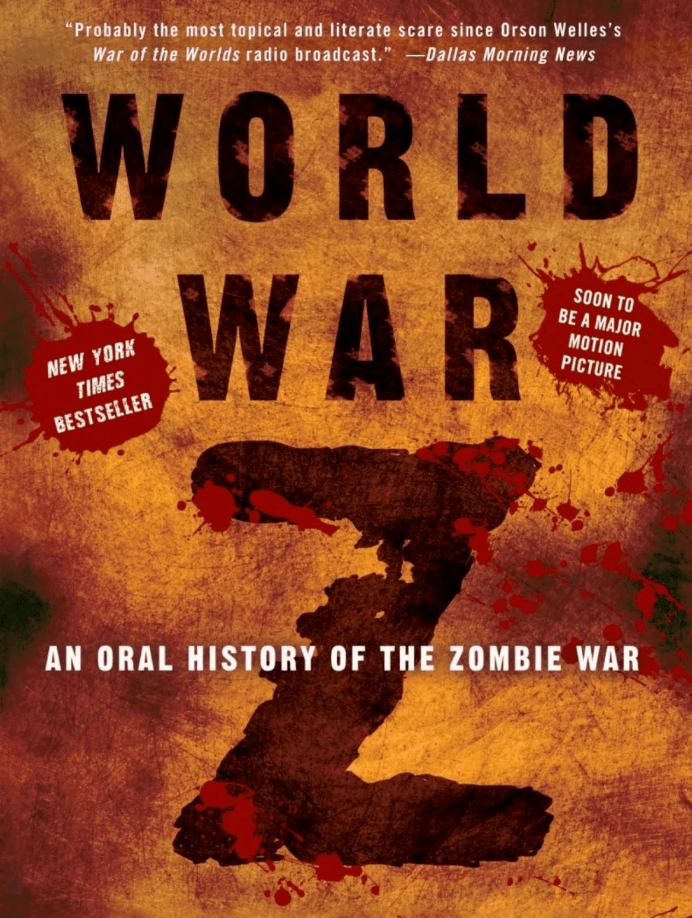
I recently finished reading World War Z. I know, I know, the book came out in 2006. As usual, I’m behind the times when it comes to reading books. I have so many on my bookshelves that it takes me a long while to get to them all. This book is one that my kid read back when it was popular and insisted that I read it too. So, it sat on the bookshelf, patiently waiting for my attention for several years. And while WWZ doesn’t fall into the usual reading for me, I’ve always been interested in anything that has to do with zombies. I watch most of the movies and shows. Not for the gore, but because I like to see how people react in the beginning days of the plague and how people may or may not survive in the long term.
Within the first pages I immediately saw why it was popular. Max Brooks is an excellent writer and the format appealed to me. Instead of creating a narrative with a beginning, middle, and end, he structured the book as a series of interviews. Each story is only a few of pages so it’s great if you like to pick up a book, do a quick read, and put it aside until next time. I personally like short chapters. It’s evident in my writing. But in the format of interviews, I found that the book didn’t hold my interest. There wasn’t much to compel me to open it and keep flipping pages. The story that I liked the most was about a downed pilot stuck in a Louisiana bayou. It was longer than the others, so I became invested in her, and I wanted see her survive. I wish more of the stories had been like that.
But I will say this about the book. Kudos to Brooks in his understanding of people and countries. If I were to sum up the book, I’d say that it was a character study of how people handle emergencies. It was as if he thought, “How would the American people and government respond to a zombie plague? Japan? Russia? Israel?” He included almost every country and every environment. What would happen in the mountains? Bayous? Coastal towns? How would this effect how people live in their homes? What kind of houses or fortresses would they have? Would people trust each other afterwards? And what would this do to humanity if we survived? Would the world still be worth living in?
He answers all these questions and more.
So, while it is a book of interviews about how people survived a global zombie apocalypse, it’s much more than that. It’s a study of humanity.
V.P. Chandler has been a paralegal, a teacher, and a West Texas rancher. She grew up in a family involved with the criminal justice system, (criminal justice professor, parole officer, pathologist, photographer, etc.), so thinking about the dark side of life is in her blood. Her most recent book, THE LAST STRAW is a novella co-written with Manning Wolfe.
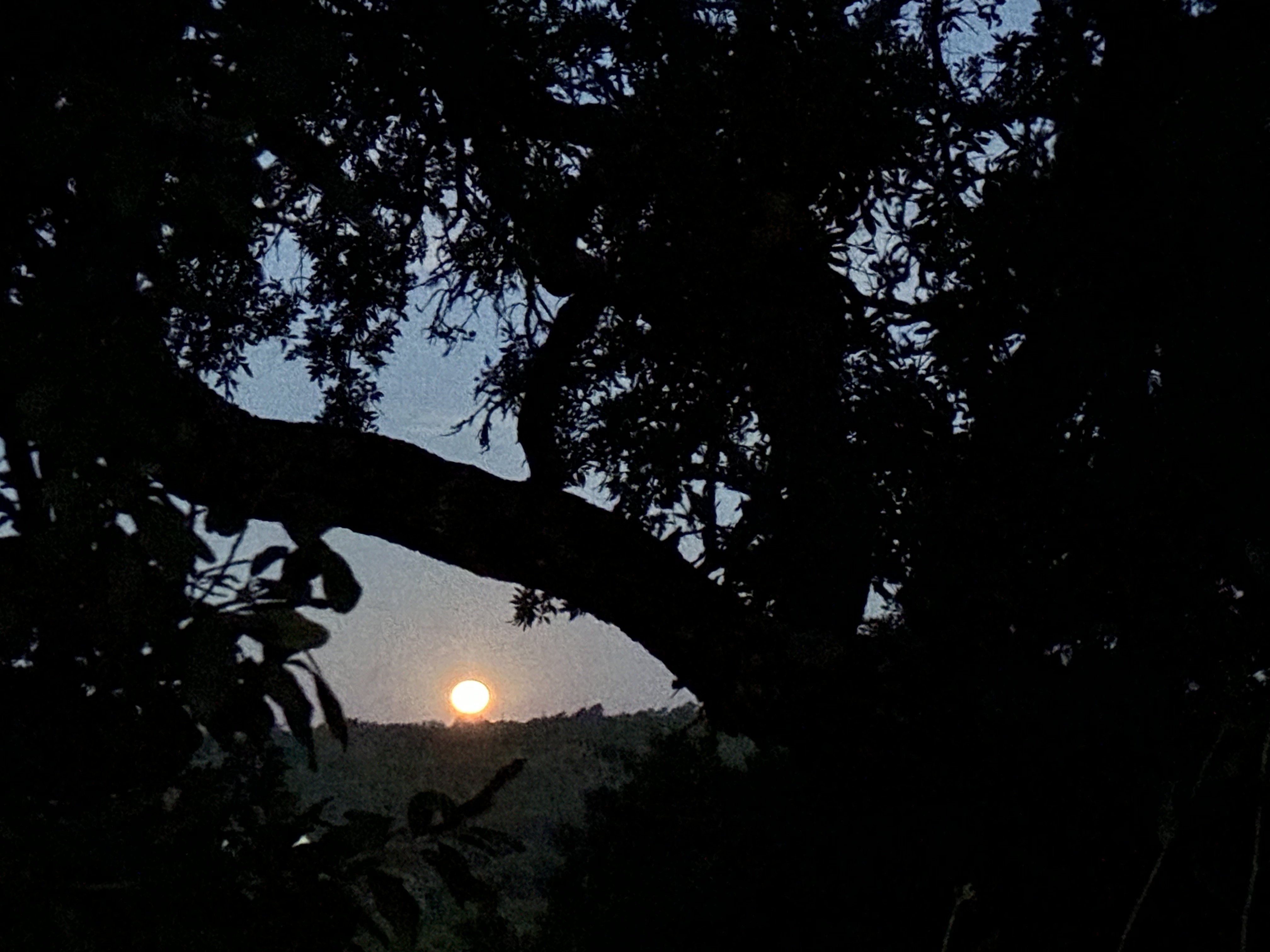
I wasn’t going to discuss the dreadful heat. But early this morning came two despite-the-heat surprises: first, moonset of the August Supermoon.
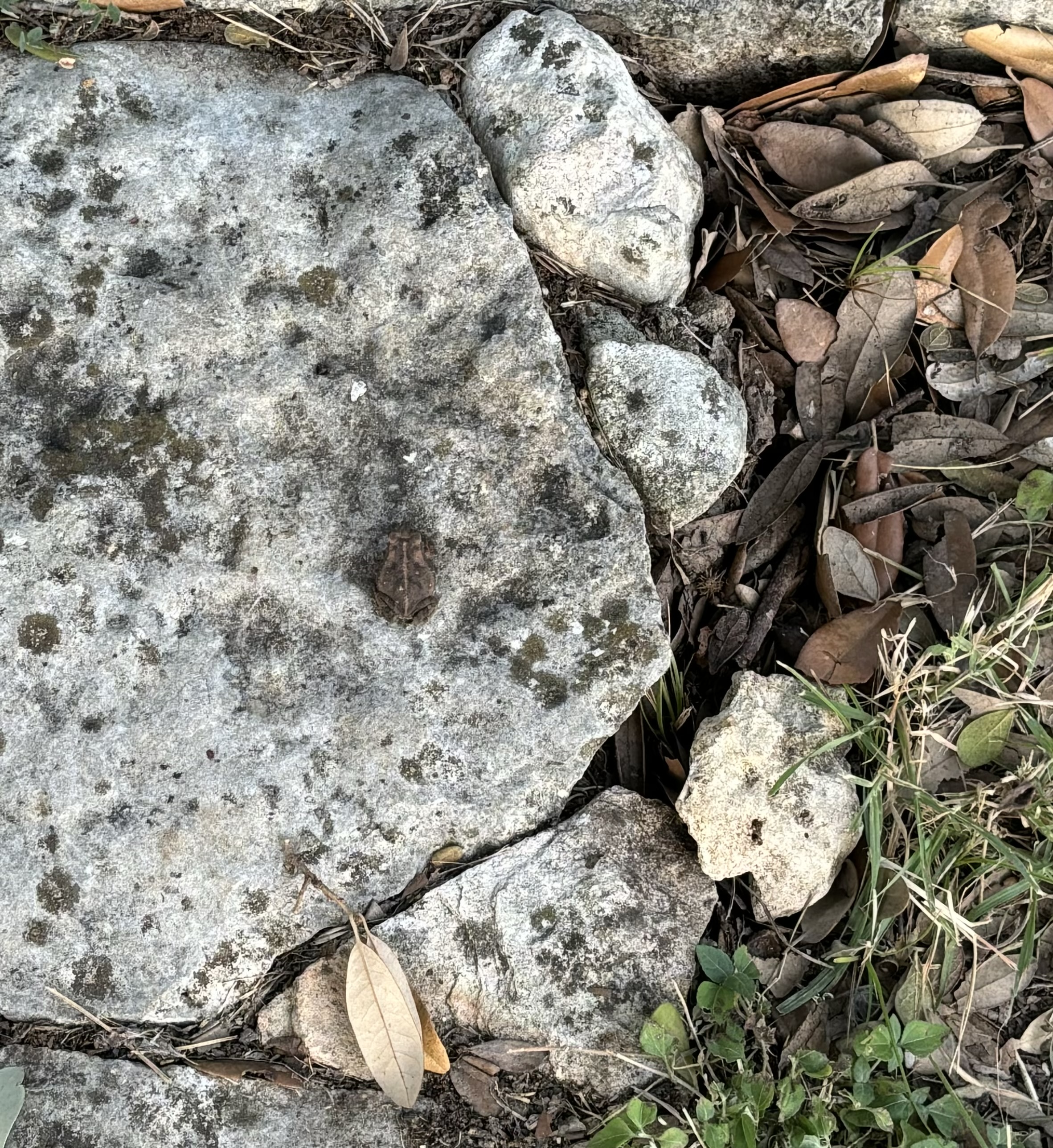
Next, a tiny frog, less than an inch long, sitting quietly in the shade. Could it be a Texas cricket frog? Maybe some frog-maven will know. Can you spot it here?
Another treasure: an email from a reader who’d read Ghost Cave, first book in my Alice MacDonald Greer Mystery series, and wanted the recipe for the coffee cake served by Alice’s redoubtable elderly friend Ilka:
They settled at the tea table. Ilka poured. Bone china, thin and old, the glaze crazed. Like Ilka’s face and hands, thought Alice. The cake stand held something Alice had never seen—a pale smooth yeasty-smelling cake with thin cinnamon topping…
“Oh, goodness, Ilka,” said Alice. “What is that?” The yeast dough, ivory and fragrant, left a mysterious fragrance in the air.
“Cardamom,” said Ilka.
Yikes! I had to tell her I had no recipe! Only—a memory! As kids we were in awe of our neighbor Mrs. Slinn, up the street. She wore her hair pulled back in a bun and longish dresses and, I think, always an apron. When we scruffy little children approached her door she always offered cookies. (We still roll out her classic “teacake” sugar cookie dough to make Santas, snowmen, reindeer.)But occasionally Mrs. Slinn swept down the street to our kitchen bringing magic: a round yeast coffee cake, no taller than 3 inches in the middle, ivory-gold with a delicate sprinkle of cinnamon and sugar on top. It tasted amazing and when cut into small wedges was absolutely delicious…
To this memory, in Ghost Cave, I’d added cardamom—not a spice we knew when I was little. But where to find a recipe for the inquiring reader?
FROM THE READER HERSELF! She wrote back that she’d located cookbooks from Mason County, Texas (dated 1976), and Fredericksburg (12th edition–Fredericksburg cooks published their first cookbook in 1916!). Each included a recipe for “yeast coffee cake.” (The Fredericksburg recipes include the original names—like Apfelkuchen, Schnecken, Kolatschen.) Which is further proof that mystery readers themselves are bright, curious sleuths. And why hearing from readers is wonderful.
Below you’ll find a slightly modified recipe from the excerpts she sent, but with a little cardamom added.
At a recent book talk I called the relationship between mystery reader and mystery writer a collaboration. Indeed, a primary rule of the 1930 Detection Club in London was that any clue must be instantly produced for the reader. No holding back explanations or back story until the end of the book! Of course that rule was sometimes violated (yes, Madam Christie, we’re talking about you). In contrast, Christie’s contemporary, the New Zealander Ngaio Marsh, occasionally adds some colorful backstory at the end, but she also generally has already given the reader fair notice of the clues that will identify the murderer.
In her series featuring the elegant Scotland Yard sleuth Roderick Alleyn, Marsh typically begins with the setting—often provided by a variety of characters––of the site where murder will inevitably take place, either in England or New Zealand. The setting could be an artist’s colony (“Colour Scheme”), a tour boat on an English river, a village church hall, a pub, an elegant country house (“Dancing Footman”), the London apartment of a practically bankrupt upper-class family (no one seems to have a job) (“Surfeit of Lampreys”). Thus when we open a Marsh mystery, first we meet the potential suspects, including one we may hope is innocent, may hope is truthful. Then comes a seriously tricky murder. (Did someone disturb the fly rod on the wall? Why?) At that point Inspector Alleyn arrives, with his sidekick Fox and the crime scene specialists. For the competitive mystery reader—collaborating with the author to detect the murderer––each detail matters and is promptly disclosed. But who lied? Who was mistaken?
Rest assured Marsh knew her subject matter and her settings: she was an artist, an actor and a theatre director as well as a writer. She lived and worked in England as well as New Zealand. She was appointed Dame Commander of the British Empire in 1966. The Mystery Writers of America bestowed the Grand Master Award for her lifetime achievement as a mystery novelist. https://en.wikipedia.org/wiki/Ngaio_Marsh I suspect her character Agatha Troy (an artist who finally marries Alleyn) may be in part a portrait of Marsh.
Marsh’s first book came out in 1934, featuring Alleyn as the upper-class “grandee” who resigned from the foreign service to join Scotland Yard. A different sort of sleuth was emerging in the U.S. In 1930 Dashiell Hammett published The Maltese Falcon and we met Sam Spade. In 1933 Raymond Chandler, like Hammett, was already publishing in The Black Mask magazine, and in 1939 he published The Big Sleep, presenting Philip Marlowe. Decades later the mystery genre continues to grow and grow: Noir! Culinary mysteries! Cozies! Mysteries narrated by dogs! (Spencer Quinn’s Chet and Bernie series.) Cowboy mysteries! Fantasy/sci-fi/mystery! Sleuths in Laos, China, Australia, Scandinavia, Russia, Alaska, Louisiana, national parks, Native American reservations. Edinburgh! The Shetlands! Botswana! Canada! Italy! France! Israel! Scandinavia! Legal thrillers! Spy thrillers! What a wealth of mysteries for us to enjoy.
And what about the Texas Hill Country? In her latest adventure, Ghost Bones, lawyer Alice MacDonald Greer grapples with the murder of a deeply respected judge. His death was apparently triggered by his efforts to solve the murders of six people on his property almost two centuries ago. Alice needs all the help she can get from her irrepressible assistant, Silla, and from Ben Kinsear, as she tangles with mystery, legal drama, and matters of the heart. Finally–please let me know if you recognize that little froglet!
Helen Currie Foster lives and writes the Alice MacDonald Greer Mystery series north of Dripping Springs, Texas, loosely supervised by three burros. She’s drawn to the compelling landscape and quirky characters of the Texas Hill Country. She’s also deeply curious about our human history and prehistory, and how, uninvited, the past keeps crashing the party. Follow her at www.helen.currie.foster.com.
Nearly Mrs. Slinn’s Coffee Cake:
3/8 c. milk, 2 Tbls. sugar, ½ tsp. salt, ¼ cup butter, 1 egg, beaten, 2 tsp. dry yeast, 1 ½ Tbls. warm water, 1 tsp. ground cardamom, 1 ¾ c flour–Plus additional melted butter (about 2 Tbls.) and sugar/cinnamon mixture (1 tsp cinnamon to 1/ c sugar) for the topping.
Scald milk and pour over the butter, salt and sugar. Stir and let stand until lukewarm. Dissolve yeast in warm water for 5 minutes. Stir egg and yeast mixture into milk mixture. Stir in 1 tsp cardamom and 1 cup of flour. Beat well. Continue adding remaining flour. Put dough on lightly floured board and knead until smooth (add a bit more flour if too sticky). Place in greased bowl, cover, and let double in size. Then punch down.
Butter bottom and sides of round 8” pan. Put parchment paper in the bottom. Pat in dough. Brush with melted butter and sprinkle on the sugar/cinnamon mixture. Let rise again until double in size. Bake at 350 for about 20 minutes or until just turning golden. Let cool. Serve it forth!
Cookies. Who doesn’t love them? Far and away, the American favorite is the Chocolate Chip cookie, a creation of the Wakefields of Massachusetts. (More on that later). Over 53% of American adults prefer Chocolate Chip to other varieties. But the most popular cookie worldwide, sold in over 100 countries… drum roll, please, is Oreo!
The popularity of these cookies made me wonder what other fun facts I could find to entertain and inform, so I set out to investigate the origins of these sweet delights. Did you know Oreo is considered the number one copycat cookie? Two brothers, Joseph and Jacob Loose, battled for dominance over the Oreo. It was first produced by Hydrox. (Remember them? Or have I dated myself?) Then, it was baked and sold by the National Biscuit Company, now known as Na-Bis-Co. See the link below for more information on the Battle of the Oreo.
With this in mind, one might imagine that the earliest origin of cookies began in a Western European country, perhaps in Great Britain, Ireland, or Scotland. It may have begun in one of the Romance Countries. The first was Italy, followed by France and Spain. In fact, the biggest surprise of all is that the cookie dates back to Persia, in the 7th century C.E.
It all began around 550 B.C.E. in the Persian Empire, conquered many times and most famously by Alexander the Great, who defeated Darius III. These luxurious little cakes were well-known, and as Persia evolved into a diverse nation in the Islamic world, its culture spread. Sugar, which originated in the lowlands of S.E. Asia, was brought to Persia and cultivated there. It then spread through the eastern Mediterranean and into Europe, and bakers created beautiful cakes and pastries—for the wealthy, of course.
After the Muslim invasion of Iberia in the 8th century, followed by the Crusades and the developing spice trade, cooking techniques and ingredients began to reflect different civilizations, especially the influence of Arabian cuisine. In fact, one of the most treasured desserts of Italy, the Cannoli originated in Sicily and reflected Arabic recipes – but back to the cookie.
According to culinary historians, the cookie’s origin had a more serious purpose. It was, in fact, a test cake. Small amounts of cake batters were dropped onto baking pans to test the temperatures of the ovens. These little cakes were the first crude thermostats used to determine when the fires, fueled by burning wood, were at the correct heat to cook without wrecking the food, and each region or nation developed its own little cakes for this purpose. Eventually, these little test cakes morphed into the dry, hard-textured cookies we know today, and the renaming of these little cakes first appeared in print in the early 18th century.
Eventually, the cookie came to America via the British Empire, where they were and still are called biscuits. After the Revolutionary War, the newly minted Americans changed the name to further separate themselves from Great Britain. They chose the Dutch variation Koekje/koek, which evolved into the word cookie, but it wasn’t until 1924 that the most beloved of all American cookies was created: the Chocolate Chip.
Ruth Graves Wakefield, before marrying, was a graduate of the Framingham State Normal School Department of Household Arts (at that time not considered a slur or degradation of women). She worked as a dietician and lectured on food. In 1930 Ruth and hubby Kenneth purchased a Cape-Cod style inn, The Toll House, in Massachusetts. Constructed in 1709, the house was a stop-over for travelers in Colonial times where they paid their road toll, changed horses, and dined. Under the Wakefield’s ownership, the Toll House served traditional Colonial fare, and Ruth’s homemade desserts were quite popular. One day, in 1937, she discovered she didn’t have the baker’s chocolate required for her brown sugar cookies. Instead, she chopped a bar of Nestle’s Semi-Sweet Chocolate into tiny pieces, believing that adding them to the dough and baking would melt them, but the chocolate held its shape and softened to a creamy texture. The new cookie became very popular at the inn, and Ruth’s recipe was published in newspapers throughout New England, skyrocketing the sale of Nestle’s Semi-Sweet Chocolate Bars. Thus was born the Chocolate Chip Cookie. And there you have the basics of the origin of cookies. But what you might ask, has this to do with mysteries besides the secrets of various bakers and recipes?
Cookies, I have found, are not only popular desserts and treats; they play an essential and often intriguing role in many culinary mysteries, especially the cozies. I logged onto Goodreads and searched mystery books with the word cookie in the title. I was intrigued to find 18+ pages, 20 titles to a page, representing approximately 360 books, excluding cookbooks and children’s books. And that was only on Goodreads. Some of the titles I found brought a smile to my face. In the interests of full disclosure, I haven’t read any of them, but among my favorite titles were A Tale of Two Cookies, And Then There Were Crumbs, Misfortune Cookie, Tough Cookie, and Murder of a Smart Cookie.
Many authors of cozies and some traditional mysteries weave the art of cooking and baking into their stories. In the Housekeeper Mystery Series, set primarily in Austin, Texas, Mrs. B., a fine cook, keeps the priests of St. Francis de Sales supplied with her home-baked Italian Lemon Drop Cookies (Anginetti), while she and the pastor, Father Melvyn, help solve crimes and find answers. For cookie enthusiasts, I’m happy to share my favorite Lemon Drop Cookie recipe. See the link below.




 Austin Mystery Writers