Just One More Page…

By Laura Oles

So many great books and so little time.

As I work through a TBR list that is longer than the fish stories told by teens holding poles at the Blanco River, I feel very behind in my reading but also grateful for so many choices. This summer, I’m letting Netflix chill on its own and, instead, enjoying the selection of fantastic crime fiction that has been released in the last year.

Here are a few of my favorite summer reads so far:

LITTLE SECRETS by Jennifer Hillier:  In this dark domestic thriller, Jennifer Hillier proves why so many readers finish her books in a single sitting. Little Secrets opens with every parent’s nightmare—the disappearance of a child in a busy public place. Marin is a busy mother with a successful business, who is trying to juggle the demands of her life while being an attentive mother.  In a single moment, her young son, Sebastian, disappears when she is distracted by a phone call.  It only takes a few seconds—a situation every parent of young kids understands—for her entire life to take a devastating turn.  Hillier’s ability to bring complex characters into a twisty plot with a genuinely surprising ending is on full display here. Like many readers, I read Little Secrets in a single day. I closed the book, impressed with Hillier’s storytelling skills and ready for her next novel.
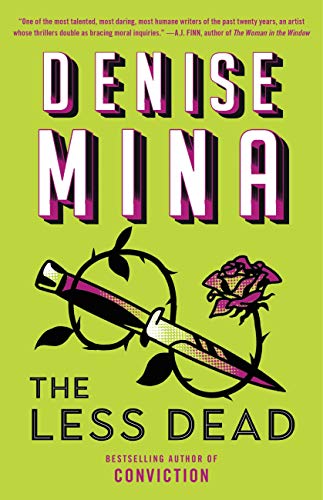
THE LESS DEAD by Denise Mina: A woman begins a search for her biological mother and ends up tracking her mother’s murderer. Dr. Margo Dunlap has her hands full with her career, her friend’s dangerous relationship and the recent discovery that she’s pregnant. When Margo decides to search for her birth mother, she meets her Aunt Nikki, who tells her that her biological mother had been murdered and the killer has never been caught.

This novel is a departure from some of Mina’s other novels, and I loved it for that reason as well as her ability to handle serious issues with care while also weaving in some dark humor. This book explores not only the relationships between mothers and daughters but the complicated realization that those we love keep secrets…sometimes for good reason.

BEFORE SHE DISAPPEARED by Lisa Gardner: Frankie Elkin is a middle-aged woman who has dedicated herself to searching for missing people, particularly those cases that have gone cold and no longer receive media attention. A recovering alcoholic who carries guilt and trauma over the death of a loved one, she channels her energy into helping other families find missing loved ones. Her current case, the disappearance of Angelique Badeau, takes her to a Boston neighborhood named Mattapan, where she meets resistance from the Boston P.D. as well as those close to Angelique.

Frankie is complicated heroine who is all at once tough, broken, thoughtful and determined. She doesn’t walk into this case with the idea that she has all the answers. She is working through her own grief while working the Angelique Badeau case. Gardner’s first-person approach kept me immersed in the story and turning the pages, and the story is compelling, smart and socially conscious. I hope to see more of Frankie Elkins in the future.

THE SUNDOWN MOTEL by Simone St. James: This atmospheric novel drew me in from the first chapter. Alternating between two time periods thirty-five years apart, this story revolves around Carly Kirk and her desire to find out what happened to her Aunt Viv, who disappeared in 1982. The book switches between Viv and Carly, and the story is part mystery, part ghost story, equally compelling and creepy. And that cover? Wow.

THE SEARCHER by Tana French: When retired detective Cal Hooper moves to a remote village in Ireland, he believes his days will be spent in solitude, fixing up a run-down cottage he purchased and exploring the countryside on his own. His plans change, though, when a young boy comes to him after hearing town rumors of his past detective career. The boy’s older brother is missing, and he wants Hooper to find him.

THE SEARCHER is quite different from French’s previous novels, a slow burn character driven story with a mystery being a smaller part of the novel. French’s ability to immerse me, not only into the setting but also the lives of the townspeople, are what kept me reading to the last page. The missing brother’s story is important, but how his absence has impacted his family, how this family is treated, and unraveling the inner workings of this tight-knit community add so many layers to this tale.

THE MIDNIGHT LIBRARY by Matt Haig: Somewhere in the space between life and death, a secret library exists where you can try alternative choices to see if your life might have turned out differently. Nora Seed’s life is filled with regrets, and she is struggling to get through each day. She soon finds herself at the steps of this library with an opportunity to review her own personal Book of Regrets. She’s given the opportunity to make different choices and to see where they lead. Would one of these choices change her life and make it worth living again?

This book had a Sliding Doors feel for me, and the idea that you could explore other options and experience the results is a compelling premise. Haig’s prose is easy to read and rhythmic, and he balances light-hearted moments while also addressing deeper issues such as depression, anxiety, mental health and regret. THE MIDNIGHT LIBRARY is an uplifting and thought-provoking novel that delivers a powerful story.

Next Reads:

RAZORBLADE TEARS by S.A. Cosby: I loved BLACKTOP WASTELAND and can’t wait to read Cosby’s latest novel. His talent speaks for itself, and the glowing reviews and accolades are well-deserved. As an Elmore Leonard fan, I’m thrilled that his writing has been compared to one of my favorite authors.

THESE GHOSTS ARE FAMILY by Maisy Card: Thirty years ago, a man stole the identity of his best friend and now, on his death bed, confesses this to his family. This generational family saga is a debut novel, and the more I read about it, the more I want to read it.

THINGS YOU WOULD KNOW IF YOU GREW UP AROUND HERE by Nancy Wayson Dinan: In this novel, a teenager returns from a family wedding to discover that a friend has gone missing. This novel is set during the devastating 2015 Memorial Day floods in the Texas Hill Country. Those of us who live in the area remember that time vividly and still see the damage left behind—on our landscape and in the families who were tragically impacted by so many levels of loss.

Judging a Book by Its Cover

By K.P. Gresham

“Good cover design is not only about beauty… it’s a visual sales pitch. It’s your first contact with a potential reader. Your cover only has around 3 seconds to catch a browsing reader’s attention. You want to stand out and make them pause and consider, and read the synopsis.”
― Eeva Lancaster, Being Indie: A No Holds Barred, Self Publishing Guide for Indie Authors

Of course, the opposite is capsulized in a familiar quote, “Don’t buy the book by its cover.” BUT, if an author wants to sell their book, they’d better face some marketing facts.

A book cover sells the book. At least it’s the first thing to catch the readers’ gaze as they wander through the shelves of a bookstore, library or click through bookseller websites. Yes, of course the blurb on the back is incredibly important, but it’s the cover the buyer sees first. It’s the cover that makes that buyer turn the book over and read the blurb.

Think about it. If the cover grabs you, you’ll pick up (or click on) the book. If it’s blah, chances are you’re going to move on to the next book.

Now what exactly in the cover image grabs you?  Does the cover tell you the genre? What to expect? Look professional? I’m a mystery writer, so I’m looking for a cover that not only says it’s a mystery, but what kind of mystery it is. Here are some examples.

Cozy Mysteries—The readers are looking for lightheartedness, as well as any of the tropes associated with cozies: animals, home-town-feel, food, maybe even a graphic image (cartoon) suggesting any of the above. They do NOT want to see brutality.  For example, here’s the cover for Arsenic and Adobe by Mia Manansala. Note the cartoon-like quality, the dog, the happy homemaker and the bottle of poison. All of these elements tell the reader this book is a mystery, homey, and involves cooking. (And don’t forget the dachshund on the shoulder!) Cozy readers love these signals. Yes, they’re going to turn the book over to learn more about it.

Horror Mysteries–Here the prospective buyer is looking for dark, scary elements. The cover should promise there will be blood and violence in the book. Body parts are great. The titles alone should give the reader the chills. The Mosquito Man by Jeremy Bates is a perfect example. Yikes!!!

Suspense Mysteries–Again, we start with the fact the reader wants to KNOW this is mystery. Suspense is a tricky cover. How does one put the feeling of suspense on a cover?  In a dramatic work, suspense is the anticipation of the outcome of a plot or the solution to a puzzle, particularly as it affects a character for whom one has sympathy. How do you put that in an image? There are different ways to achieve this in a cover. Location. Lighting. Showing action or giving a subtle clue; having the feel that there’s something risky going on. For this example, I’m going with Louise Penny’sAll The Devils Are Here. Here, the silhouetted building against a dark sky evokes mystery, and the Van Gogh-like swirls in the night sky suggest to the reader that there’s more to this book than simply being set in Paris. It suggests depth of plot.

These are only 3 basic categories of mysteries. Consider how the covers are created that show the true crime category? The thriller category? The paranormal mysteries category? Then study your own reaction when you’re checking out the mystery sections in your favorite bookstore or online. The only thing I can think of on a cover that would hook you more than the lay-out or artwork is the author’s name. If you have a favorite author (and yes, that for me is still J.D. Robb), I’ll buy the book without even looking at the cover. But like I said, that’s the only thing I can think of that would sway a buyer more than the visual impact of the cover.

So authors, beware! Readers are judging books by their covers! To our beloved readers, take your batch of three seconds, go book-shopping and buy some books!!!

   K.P. Gresham, author of the Pastor Matt Hayden Mystery series and Three Days at Wrigley Field, is a preacher’s kid who likes to tell stories, kill people (on paper, of course!) and root for the Chicago Cubs. Born in Chicago and a graduate of Illinois State University, K.P. and her husband moved to Texas, fell in love with not shoveling snow and are 35+ year Lone Star State residents. She finds that her dual country citizenship, the Midwest and Texas, provide deep fodder for her award-winning novels. A graduate of Houston’s Rice University Novels Writing Colloquium, K.P. now resides in Austin, Texas, where she is the president of the Sisters in Crime Heart of Texas Chapter and is active in the Writers League of Texas and Austin Mystery Writers.

Where to Find Me

Website: http://www.kpgresham.com/

Email: kp@kpgresham.com

Blogs: https://inkstainedwretches.home.blog/

https://austinmysterywriters.com/

Facebook: https://www.facebook.com/kpgresham

Books by

K.P. Gresham

Three Days at Wrigley Field

The Pastor Matt Hayden Mystery Series

The Preacher’s First Murder

Murder in the Second Pew

Murder on the Third Try

Coming in 2021

Four Reasons to Die

And Over. And Over. And . . .

by Kathy Waller

I’m thinking it over.

— Jack Benny

A curse on this week’s post. I banged out nearly 2,000 words that should have been online yesterday, and the post just gets longer and longer, and there ain’t no way I’ll get it finished and revised and edited and polished today, or this week, or possibly by New Year’s Eve 2022. I know the problem. Too much thinking. But I can’t help that. So I’ve pulled up something I wrote for my personal blog in 2010. I’m reposting, with some changes. I’d like to say it’s outdated, but nothing much has changed. No matter what the last line says.

*

In one of my favorite scenes from the Mary Tyler Moore Show, assistant TV news producer Mary Richards suggests that writing a news story isn’t all that difficult. News writer Murray Slaughter disagrees.

Then a wire comes in, something big. The story must be written and rushed to anchorman Ted Baxter, who is on the verge of uttering his sign-off:  “Good night, and good news.”

Murray, smiling, bows to Mary.

Mary rolls a sheet of paper into her typewriter. She types several words. Then she stops. She erases. She starts over. She stops. She erases. She starts over. She stops . . . Everyone in the newsroom stands around her desk, watching . . . waiting . . .

Finally, at the last minute, Murray loads his typewriter and, fingers flying, writes the story, rips the paper from the machine, and hands it to producer Lou Grant, who runs for the anchor desk.

That’s why didn’t go in for journalism. I’m not Murray.

I’m Mary.

That, and because I knew that if I were a journalist, I would have to talk to people: call them on the phone, request interviews, ask questions. I had no intention of talking to people I didn’t know.

But mainly, editors would expect me to write without thinking.

I look back and wonder how I got to that point. Not the distaste for talking to people I didn’t know—I’ve always had that—but the difficulty with writing.

When did I start letting my editor get in the way of my scribe?

Once upon a time, I loved to write. By the time I was seven, I was writing long letters to my grandfather and great-aunts and aunts and uncles and cousins. Once, I used a pencil with a point so soft, I doubt the recipients could read through the smears on the pages.

Another time, when I was on sick leave from school, enjoying the mumps, my mother let me use my father’s Schaeffer White Dot fountain pen, a source of even better smears.

The summer I was eight, I spent June in Central Texas with Aunt Laura and Uncle Joe while my mother stayed in Dallas with my grandmother, who was ill. My father, who remained in Del Rio working, visited one weekend and brought me a present: a ream of legal-sized paper.

I don’t know what prompted the gift, and on a scale of one to ten, most children would have rated a ream of paper at minus 3. I gave it a twelve.

I wrote my own newspaper. Most articles covered weddings between various cats and dogs of my acquaintance. I discovered a talent for describing tuxedos and bridesmaids’ dresses worn by Blackie and Bootsie and Miss Kitty and Pat Boone (my fox terrier). It was a devastating little parody of a small-town newspaper.

But suddenly, it seemed, I did what my thesis adviser, years later, warned me not to do: I got tangled up in words. Writing was no longer fun. Confidentially, I think it had something to do with English class, essays, outlines, and needing to sound erudite. I hated it.

Why I thought should teach English, I do not know.

Well, I do. Professor Ken Macrorie said English majors think they’ll be paid to read books.

It was years before the English Teacher Establishment (Macrorie was part of the shift) said, “You can’t write an outline until you know what you’re going to say, and you can’t know what you’re going to say until you’ve written something.”

Novelist E. M. Forster had said it long before: “How can I know what I think till I see what I say?” But education always lags behind.

Anyway, the word to both students and conflicted teachers (aka me) was—Write it and then fix it. And lighten up.

When I write blog posts, I don’t think so much. I lighten up. Words flow.

Unless I’m trying to be serious and sincere and profound and erudite. I’m not a profound writer. I think profound, but I write shallow. It’s in my nature.

And I still can’t imagine squeezing myself into the little journalism box. That’s pressure. And talking to people I don’t know. I’d rather make up the facts myself. Can’t do that in journalism. Journalism matters.

I don’t like talking to journalists, either. I always tell them to be sure to make me sound intelligent. A reporter told me she didn’t have to fix anything in my interview because I talk in complete sentences. I told her that was an accident.

Now. It’s way past my deadline for putting up this post.

But that is not of paramount concern. Because I’m not trying to say anything worthwhile.

I have lightened up.

*

“I’m thinking it over.” Forty seconds of perfection. (If the video doesn’t play, google “jack benny i’m thinking it over”. That should work.)

*

Image of Mary Tyler Moore cast via Wikipedia. Public domain.

*

Kathy Waller has published stories in anthologies Murder on Wheels: 11 Tales of Crime on the Move; Lone Star Lawless: 14 Texas Tales of Crime; and Day of the Dark: Stories of Eclipse; and online at Mysterical-E. She blogs at Telling the Truth, Mainly.

She is still amazed at how long it takes to write a blog post, even when she isn’t thinking.

MEOW, WOOF, and TWEET

ANIMAL SIDEKICKS AND PETS IN FICTION

By Francine Paino AKA F. Della Notte

“Outside of a dog, a book is man’s best friend. Inside of a dog, it’s too dark to read.” —Groucho Marx

Animal characters in stories aren’t just for children. You can go through millions of children’s books and find the same number of animal sidekicks and pets as main characters and their antagonists, providing comfort, support, and companionship to the children’s heroes.  

Animals are near and dear. We often imagine them to be all that we are not. Thus it’s no great wonder that they show up and play important roles in our stories. There are hundreds of tales that sentimentally humanize animals, but even in the ones that don’t, animals are essential to the  completeness of many characters’ lives and the mysteries of humans.  

But why are ‘grown-up’ books featuring animals as sidekicks or just plain ole-pets so successful? First of all, any pet owner—myself included—will object to the term, plain ole. No such thing. Every pet has its own personality, likes, dislikes, habits, and quirks, just like us. On top of that, we often imbue them with human behaviors and sentiments—in some cases, that is realistic and in others not, but the question remains, why do we love these stories? What is it about animal sidekicks or companions that attract many readers?

There are as many opinions as animal sidekicks; among them is the theory that authors are free to attribute emotions to animals that might be construed as too sappy in a human. Then, of course, animals don’t usually warrant life stories of their own, although I’d bet any author writing a pet sidekick or companion in fiction could give one. Animals can display levels of loyalty to its human that does not read the same person to person. Can you imagine a human sitting beside another human, panting for their attentions, hanging on every word, listening to their thoughts, insecurities, and foolish notions, without sitting up and saying, “Hey, pal? Get over yourself,” or “Get off your duff and take care of business?” Not likely. So, where do we find these lovable, funny, sometimes sad creatures in literature?

In most genres, we find unforgettable, heart-warming, emotional, and spirited animals like Aslan in The Chronicles of Narnia. Then there is Charlotte, in Charlotte’s Web, and not to be ignored, Hedwig, Harry Potter’s owl, but some of the most heart-wrenching are the animals that are written into sagas, such as Michael Morpurgo’s 1982 War Horse. 

The book, the movie, or the play are all tearjerkers, but not with the epic scope of the true account of the horse it’s based on: Warrior. This amazing story of a real warhorse published 1934, was based on My Horse, Warrior by General Jack Seely. It documents the hell that horses endured during the Great War. You won’t get through this one without a box of tissues.

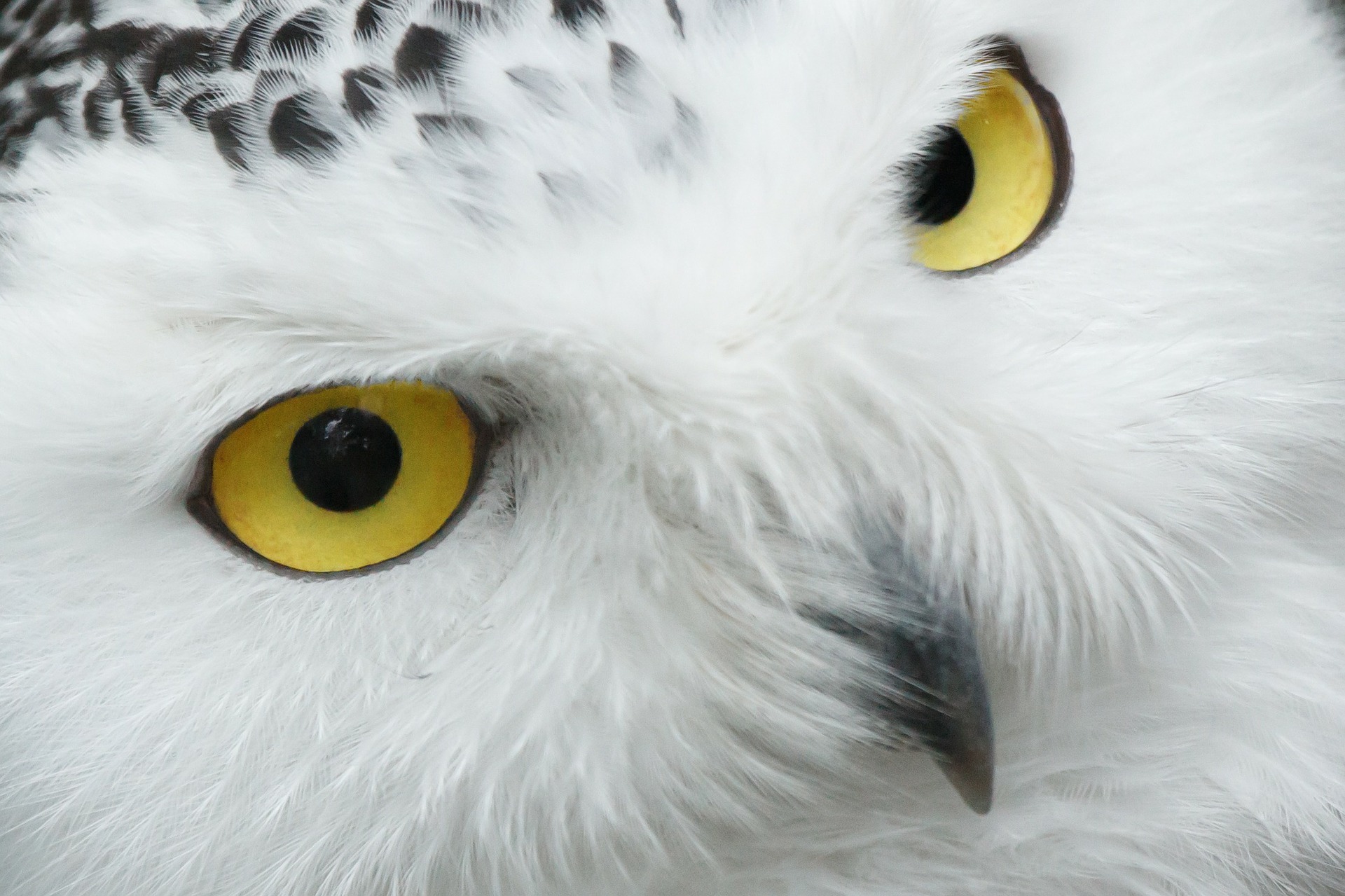
Sometimes, authors need a villain, and according to Disney, “from time to time we like to shine a light on the work of villains and their sidekicks,” which brings us to the feathered friends or not-friends of Iago, Jafar’s parrot sidekick in Aladdin. Who can be more deliciously evil than Maleficent with her Raven? There’s Mockingjay from the contemporary Hunger Games, and perhaps the nicest in a novel and outside the cartoon world is Harry Potter’s Snowy Owl, Hedwig, loyal, intelligent, and affectionate. 

photo from Pixabay

Cats and dogs are also a staple in Romance writing . They provide the author with a character who can be the subject of a tug-of-war in the humans’ breakups. They can reveal the softer side of a character portrayed otherwise as cold or emotionally distant. Still, perhaps their presence is felt most in the mystery categories, beginning with its subgenre of cozies. 

  For those who aren’t exactly sure of what defines a cozy, neither am I, but the definitions I find basically explain that the cozy mysteries have specific characteristics in common: these are “gentle crime books.” No graphic violence, no profanity, and no explicit sex. Most often, the crime takes place “off stage,” and death is usually swift. The characters must be likable, most often not professional crimes solvers – amateurs and primarily women. Into this fray enters the pet sidekick.

There are shelves of cozy dog mysteries—in fact, too many to list, beginning with Michael Bond’s Pomme Frites (French Fries) and Dashiel Hammet’s Thin Man Mysteries with Nick and Nora Charles, and their female Schnauzer, Asta.

Among the most popular cozies are cat-detective mysteries, a universe of its own. In the realm of regal cats, there are also too many to name, but among the most famous are Lillian Jackson Braun’s cats, Koko and Yum Yum, in The Cat Who… series.

Given the characteristics that we love in animals, it’s no wonder that literature, particularly the mystery genres, is full of them. If you’re in the market for some plucky animal characters, real and imagined, all you need do is google Animals as Pets and Sidekicks in Fiction.

Perhaps your pets will be interested in hearing these opinions.  Pictured here: Miss Millie, my boss, whose characteristics can be found in the cats of the Housekeeper Mystery Series, LaLa, Ziggy, and Sasha.

Miss Millie