Today is Memorial Day, the last Monday in May, when we remember the men and women of the military to whom we cannot say, “Thank you.”
There are many stories about when and where Memorial Day, formerly called Decoration Day, began. Originally, it honored soldiers fallen during the Civil War, and was first officially celebrated in 1868.
Wikipedia, however, points to an earlier beginning: “On May 1, 1865 in Charleston, SC, formerly enslaved African Americans honored hundreds of Black soldiers who were killed in the Civil War but who were buried in a mass grave. They unearthed the bodies and gave each a proper burial and held a parade in the soldiers’ honor. This is the first major honoring of fallen soldiers that is believed to have begun the tradition.”
In honor of the day, I’ve chosen a poem by British poet and novelist Thomas Hardy.
My Boy Jack (Television film based on play by Daniel Haig) (Link leads to complete film on Youtube.) The title My Boy Jack comes from a poem written by Rudyard Kipling for Jack Cornwell, “the 16 year old youngest recipient of the Victoria Cross who stayed by his post on board ship during the battle of Jutland until he died.” The poem “echoes the grief of all parents who lost sons in the First World War. John Kipling was a 2nd Lt in the Irish Guards and disappeared in September 1915 during the Battle of Loos in the First World War.” His body was never found. (Wikipedia). Haig’s play deals with Kipling’s grief at the loss of his son.
Almost every great detective has a great sidekick. Leading the pack, of course, is Sir Arthur Conan Doyle’s with his team of Sherlock and Watson.
In the Sherlock Holmes mysteries, Dr. John Watson is Sherlock’s sidekick and the narrator. The character created by Doyle to support Holmes is modest and intelligent—but not as smart as Holmes. A former military doctor wounded in India, Watson is far from dull. Still, like most readers, he doesn’t share Holme’s detecting capabilities, powers of observation, and lightning-swift reasoning, which is a blessing for readers, for it’s Watson who explains and shows the readers Holme’s admirable characteristics through his narrative and descriptions.
Another of the best-loved investigating pairs are Rex Stout’s Nero Wolfe and Archie Goodwin.Wolfe is a New York City private investigator. His sidekick, Archie Goodwin, does the lion’s share of investigating because Wolfe doesn’t like to leave the brownstone, but it’s Wolfe who provides the keen intellect. Archie’s role is to bring wit and a fast-paced narrative to the reader. Rex Stout has published around 80 novels and novellas detailing their various cases. Wolfe and Archie are right up there with Dr. Watson and Sherlock.
Contemporary author Faye Kellerman created the Peter Decker and Rina Lazarus team.Decker is a Los Angeles cop investigating crimes in a conservative Jewish community. His supporting character is Rina Lazarus, with whom he falls in love. He converts to Judaism for her, and they are married. Together they become involved in several mysteries in Jewish communities. Although she isn’t a police detective, she is vital to the investigations for her deep understanding of Jewish culture and faith.
A little outside this norm is Agatha Christie’s Miss Marple, who seems to work alone. She is an independent woman of independent means. Elderly, and unassuming Miss Marple uses her advanced years and knitting needles to stay out of the limelight to observe without being noticed. She is a student of human nature and able to solve complex crimes not only because of her shrewd intelligence but because over her life living in St. Mary Mead, she has had the benefit of infinite examples of the nastier side of human nature.
Her friends and acquaintances function in the role of supporting characters, and they are sometimes bored by her frequent analogies. Still, these analogies often lead Miss Marple to a more profound realization about the true nature of the crime. It isn’t until her later years that her companion, Cherry Baker, moves in and makes her first appearance as the sidekick in The Mirror Crack’d from Side to Side.
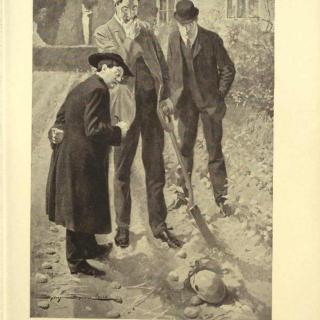
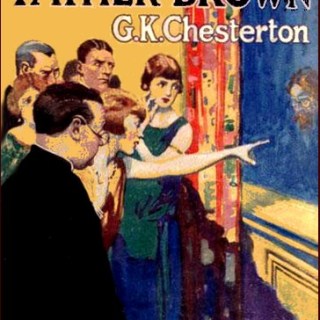
Perhaps one of the most unique and unexpected characters in a supporting role is M. Hercule Flambeau, a reformed criminal in the Father Brown series by G. K. Chesterton. Flambeau is always amazed at how a priest could have such a depth of understanding and insight into the criminal mind. The good priest explains that while he must protect the sanctity of confessions and not give specifics, people reveal their sins and show the evil in the human heart.
In the first chapter of The Secret of Father Brown, the priest tries to explain that he doesn’t look at criminals scientifically from the outside.
“I am inside a man. I am always inside a man, moving his arms and legs; but I wait till I know I am inside a murderer, thinking his thoughts, wrestling with his passions; thill I have bent myself into the posture of his hunched and peering hatred; till I see the world with his bloodshot and squinting eyes, looking between the blinkers of his half-witted concentration; looking up the short and sharp perspective as a straight road to a pool of blood. Till I am really a murderer.”
Flambeau was a skilled and highly successful thief with an intellect equal to Father Brown’s. In The Secret of Flambeau, he reveals, “Have I not heard the sermons of the righteous?… Do you think all that ever did anything but make me laugh? Only my friend told me that he knew exactly why I stole, and I have never stolen since.”
There are as many famous sidekicks as there are famous detectives, including Captain Hastings, in the Hercule Poirot books by Agatha Christie and Brother Eadulf in Peter Tremayne’s Sister Fidelma series. In Dashiell Hammet’s The Thin Man, Nora Charlesis a glamourous sidekick to her husband, Nick. But why do authors create these characters?
Like the supporting stage and film actors, the mystery book sidekicks have a vitally important role, both to the principal characters and to the readers or audience.
A good sidekick is usually the polar opposite of the detective. Watson is kind, patient and loyal, and in many ways ordinary. The opposite of Holmes.
Like Watson, Captain Hastings, Hercule Poirot’s supporting character is also ordinary, loyal, and determined but lacks Watson’s military experience.
The sidekicks showcase the detectives’ intelligence but cushion the readers from feelings of inferiority. The sidekick usually seems to be a rather ordinary person, with exceptions, like Flambeau, who is anything but ordinary.
For the sake of storytelling, good detectives have quirks and personality flaws. They allow the sidekick to show opposite and balancing characteristics, provide an avenue for readers to understand what the main character is thinking, ask the readers’ questions, explain the detective’s reasoning and methods and any cryptic or scientific terms. Sometimes, the sidekick inspires the detective to look at a situation in a new way, which wouldn’t be evident without the secondary character’s input. This can provide a stalled plot with an escape valve, but most importantly, the sidekick can never be interchangeable with the main character.
From the outset, Nora Charles is a Nob Hill socialite. Nick Charles is a retired detective who has been exposed to the seedier sides of life. This seemingly incompatible couple marry and combine wits to solve crimes.
In my Housekeeper Mystery Series, Mrs. B. is the leading amateur woman detective. She’s impulsive, willful, nosy, outspoken, likes people, loves to cook, and loves cats.
Father Melvyn Kronkey is her boss and pastor of St. Francis de Sales, Roman Catholic Church. He is a good man and a devout priest who will serve as an anchor for the curious and impulsive Mrs. B.
Even our lovable and independent Miss Marple, who doesn’t have one sidekick, has a group of friends to whom she talks and explains. Still, she too takes on a supporting character, in the person of Cherry Baker, in later mysteries.
An essential part of a mystery writer’s tool kit, the sidekick provides color, contrast, relief, and assistance to the reader. They often help the main characters grow, evolve, and sometimes change course altogether.
And Hansel fooled the witch and escaped. Jack chopped down the beanstalk and escaped.
We mystery readers read a vast number of mystery novels. Fifty percent of adults say their favorite book genre is mystery/thriller. In 2020 mystery e-book sales appear to have increased by13% and thrillers by 15%.
We’re always searching for a new adventure, a new love. Have you ever pulled a book from the shelf, glance at the back cover, then (with hope in your heart) the first page, and then pushed the book back on the shelf, sure this one won’t do? I have, so many times. Same drill at the library. We usually know from page one (or at most page two) if we’re going to like a new author. If we don’t like the setting, the protagonist, the voice, forget it. But if we do, if we give that book a chance and like it, we look for a series. Bonus points if we find a new series we like! A series is efficient: we already know the protagonist, the repeating characters, many details of the setting. We plunge straight into the story.
Yet sometimes—even when I really like an author’s book—they run together. I may find them exciting, may remember specific scenes, may like the ending. But often a week after I finish a book, even one in a series with a protagonist who enchants me, I can’t quite remember who died. Now that’s embarrassing. As a murder mystery reader, shouldn’t I remember the victim?
If the victim, stuck there on the page, could talk back, maybe he or she would say, “C’mon, reader, give me a break! Don’t you remember how my body was pulled from the [canal] [truck] [hidden grave]? Don’t you remember how hard I was to find? Don’t you remember how excited the [police team] [sleuth] was to figure out who killed me? Can’t you remember me for at least three minutes? I mean, I’m the one your beloved protagonist investigated! I’m the whole point of the book!” And then in a more querulous tone, “Aren’t I?”
Maybe not. We get caught up in the badinage between DI Dalziel and his sidekick Pascoe. They go off to a pub and suddenly we find we’ve opened the refrigerator. We want to be there with them, sitting at that table near the dart board, sipping beer. Or our protagonist is reviewing the grisly evidence while listening to Madame Butterfly, and we find ourselves humming the first phrase of the aria (the only one we know). Maybe we’re really more interested in a favorite protagonist than in the victim. Sorry, Victim. The Protagonist will be in the next book––but you won’t.
On the other hand, now and then, there’s a death that sticks. One that even haunts me, after the denouement, after the explanation, after I finish saying “aha, I spotted that,” or “Hmm, very tricksy.” After all the figuring-out, occasionally I’m still thinking about the victim.
I started wondering about the ones who stick this week when I read two mysteries from Donna Leon, who just published her 30th book, Transient Desires. The title puns on what Donna Leon terms the “Nigerian Mafia” which she describes as smuggling young African women into Italy, promising them jobs which will let them send needed money home to their families, but instead enslaving them as sex workers or—occasionally—taking their transport money while throwing them into the Mediterranean to drown. In Transient Desires, Leon introduces us first to a young woman who survived the sea crossing but is being driven mad by her enslavement. Then we meet a naïve young Venetian man, desperate to keep a job with his boat-owning uncle which allows him to support his mother. The young man is slowly being destroyed by what his uncle forces him to do. These two portraits stick in my mind.
I also read Leon’s 22d book, The Golden Egg, where her protagonist, Venetian Inspector Guido Brunetti, must determine whether a young deaf man committed suicide by swallowing his mother’s tranquilizers, or was murdered. Which? Brunetti is stunned that the Serene Republic of Venice, which keeps tab of virtually every aspect of every inhabitant’s life, has no record of this young man. He’s unaccounted for: no school, no paying job, nothing. Brunetti learns he toiled his life away ironing clothes in a laundry, unpaid, speaking to no one, with no one speaking to him. He was never taught sign language, never taught how to interact with people. He lived in Venice where people know and speak to their neighbors and shopkeepers…but no one spoke to him. Brunetti doggedly unearths the peculiar cruelty of the people who kept him alive but didn’t teach him to live…parents who never talked to him, never taught him, never allowed anyone to reach out to him. Even worse, if worse is possible, Brunetti discovers the boy had a rare artistic talent—appreciated only by the boy’s doctor—that the boy never knew was worthy of recognition. Donna Leon’s description of one of the boy’s drawings, one the doctor has on his wall, brings home to the reader the two-fold tragedy: that the boy never knew his creations were beautiful, and that the world was deprived of knowing the human being who created such beauty. He was trapped. And he died without ever escaping. That’s a victim I cannot forget.
What aboutThe Nine Tailors(1934), by Dorothy Sayers?. This classic tale, often called her best, has all the charming hallmarks of a carefully constructed village-and-vicar English mystery, including the peculiarly English tradition of bell-ringing. We’ve got it all here: stolen jewels, a letter written in cipher, and an unidentified male body with no hands. The setting: the fens of East Anglia, with drainage ditches, locks, and ever-shifting floodwaters, and the contrasting grandeur of the ancient fen churches whose spires, with their enormous bells, mark the landscape. On New Year’s Eve, with the great influenza raging, Lord Peter Wimsey and his valet Bunter wreck the car and become lost in a snowstorm. They’re rescued by the vicar of Fenchurch St. Paul, who proudly announces that his bell-ringers are going to ring in the New Year with “no less than fifteen thousand, eight hundred and forty Kent Treble Bob Majors”—nine hours of bell-ringing. When one ringer, Will Thoday, is struck down by influenza, the vicar begs Wimsey to take his place. Wimsey later finds a recently buried man with no hands. As to why the victim has no hands, and how he was killed—is it a spoiler to emphasize, reader, that you do not want to be tied up, unable to escape, in a bell-chamber just above those enormous thousand-year-old bells while they ring unceasingly for nine hours? That victim’s death has stayed with me. But also, the circumstances which led to in his entrapment in the bell tower resulted in such grief for three characters that their lives are changed forever. That stayed with me too. No happy Sayers-esque denouement here. Instead, characters are condemned to remember. As to the title, the Nine Tailors are the nine strokes of the tenor bell—three, three, and three more—rung to mark a death in the parish.
Fans of Tony Hillerman will remember The Wailing Wind, where NavajoDetective Joe Leaphorn is hired by Wiley Denton, a wealthy older man recently released from prison for shooting a man named McKay, who had promised Denton a map to a fabled gold mine. Denton wants Leaphorn to find out what happened years ago at Halloween to his beloved young wife, Linda. The convoluted plot takes the reader through numerous twists and turns, but the gold mine convolutions aren’t what I remember. Instead I remember that McKay, all those years ago, drugged Linda and left her in a locked bunker (one of hundreds of identical bunkers in an untravelled area on the vast grounds of Fort Wingate), hoping to use her as leverage to get the deal he wanted from Denton. Denton shot McKay, not knowing that McKay had hidden Linda. So she died, slowly mummified, in a bunker in the Arizona desert. Now that’s one that sticks with me.
I’ve been wondering why I found these particular victims so hard to forget. You’ll have noticed that all were trapped.Transient Desires involves economic entrapment—slavery, really. Both the young Nigerian and the young Venetian have no economic hope, no way to escape doing what they hate. The Golden Egg reveals a young man cruelly trapped by isolation, deprived of human communication, deprived of any way to express an enormous talent. In Nine Tailors and The Wailing Wind, the victim’s death by physical entrapment creates another trap: those involved are trapped by their memories.
I wonder if the rank injustice that Leon depicts is part of the staying power of Transient Desires and The Golden Egg. Particularly in The Golden Egg, Brunetti feels helpless, and we share his frustration, his horror, really, at the young man’s death, and at the society that allowed it to happen. To that extent I’m still identifying with Brunetti, not the victim.
I’ve hidden my murder victims in enclosed spaces. Ghost Cave.
Maybe we identify more with the victim when reading about a death caused by physical entrapment, whether the victim’s tied up in a bell-tower or locked in an isolated bunker, where no one can hear the call for help (the bells are too loud, or the bunker too soundproof). Doesn’t that reverberate with all of us? We’re generally confident we could escape from most situations, could chew off the ropes on our wrist, pick the lock, find a secret passage, get a message to our rescuers. Fool the witch and chop down the beanstalk. But what if there’s no one to hear? No one to help? No way to get out? End of story. Not comfortable. Awfully memorable. Awfully.
***
Helen Currie Foster is the author of the Alice MacDonald Greer mystery series. Her latest novel is Ghost Cat. Read more about her here.
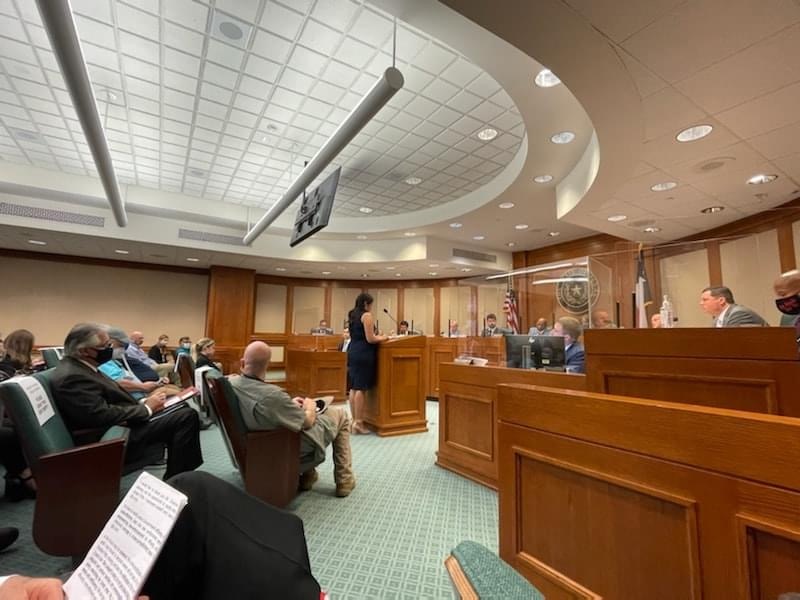
On March 18, 2021, Alice Almendarez, stood before the Texas legislature and testified in support of #HB1419, also known as John and Joseph’s Law. This new law would make it mandatory for all missing people and unidentified body reports to be entered into NamUS (The National Missing and Unidentified Missing Persons).
There are currently 1,660 unidentified bodies and 1,529 missing person reports open for Texas in the NamUS database. This means that there are more unidentified bodies than there are missing persons reports. In short, many families are without answers as to the where their missing loved one is, and this law could be the link that provides an answer. John and Joseph’s Law is named for Alice’s father, John, and Joseph, David Fritts’ son.
Alice understands all too well the pain these families endure. Her father disappeared after spending Father’s Day with her family in June of 2002. One moment he was with them, and then he was gone.
Alice went to the Houston police to file a missing persons report. She followed the instructions of what she was told to do, but adult missing persons cases can be challenging in many ways. Law enforcement officers explained that her father was an adult and that it wasn’t a crime to go missing. In her heart, she knew her father would never walk out on his family in such a way, but small doubts haunted her. What if he had left them? It is a horrible burden to carry as a child.
Alice searched for twelve long years before she would learn the fate of her father.
She later discovered that his body had been found a few weeks after his disappearance, just a few minutes from his childhood home. Early on, she had gone to the morgue asking if they had any bodies matching her dad’s description and was turned away, only to later find out he had been there during the time she was looking for him. The truth had been close, and she had no idea.
It is this trauma and heartbreak that Alice hopes to spare other families and is the driving force behind her working to have this important law passed.
John and Joseph’s Law would support the search in locating missing persons by requiring the use of the NamUS database. Alice explained, “If someone goes missing in Houston, Texas, and his body is found in Austin, Laredo, or somewhere in Louisiana, there is no way to currently make this connection. How would law enforcement in Louisiana know this person is missing if there is no paperwork outside of the missing’s home city?”
Alice makes an important point in that this law will link and share resources to the benefit of both the missing unidentified person’s family as well as law enforcement. She said, “This law will require that police reports like my father’s missing persons report be entered into the NAMUS database. They can then be linked to any of these unidentified bodies, since those, too, must be entered with this new law. Dental, DNA and other sorts of comparisons can then be made, and these reports can be viewed at any time.”
Alice’s personal experience with NamUs was one that gave her answers. “It took twelve years for me to find an answer. Once his information was entered into NamUs, a comparison was made in six months. This law can keep other families from the relentless trauma of searching for a loved one and not finding an answer. I don’t want any other families to endure what we did.”
One of the most remarkable things to note is that Alice didn’t learn about NamUs through any law enforcement agency. She discovered it while watching a television show. “Is this a real thing?” she wondered. She got online and learned that it did, in fact, exist.
Alice has spent the last several years helping other families navigate the fraught and difficult road of searching for a missing loved one. In 2015, Alice attended a missing persons event and realized that even an organized meeting didn’t cover a number of important issues. When she attends an event, she explains the process, including the importance of entering a loved one’s information into NamUs (there is a family section of the database for this purpose), and how critical it is to search outside of one’s own jurisdiction. She has personally assisted several families, including one whose sister had been missing for twenty-one years. After the NamUs entry and the DNA submission, this family, too, found their sister.
Todd Matthews, former Director Case Management & Communications and missing person’s advocate, told me, “I’ve seen Alice resurrect herself from total devastation into a powerful advocate for change. As a father myself – I am positive that her father would be prouder that she can even imagine.” He also added, “As Texas works to pass a state law that strengthens the procedure surrounding the missing and unidentified, there’s some important unfinished business. I want to help make it possible to return Alice’s father to his family for repatriation closer to his family.”
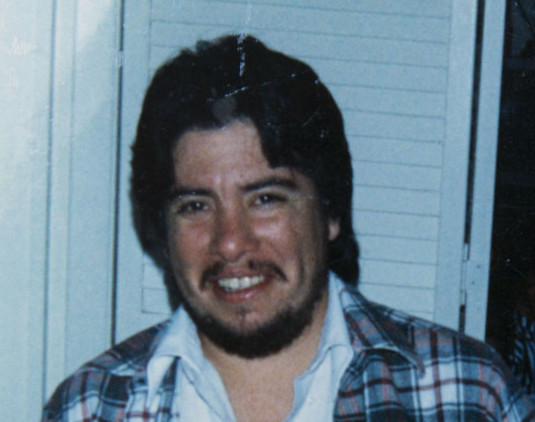
John Almendarez
This, too, is Alice’s continued effort—to have her father returned home. Next year will mark 20 years since his body was found. “He has only been dead in my mind for 6 years,” Alice told me. “This is the final step, and it has taken so long. I will get him moved to a respectable grave if it’s the last thing I do.”
When Alice went to the Texas legislature on March 18, 2021, to testify on behalf of passing this law, she felt the full weight of its importance. She said, “It was a bit overwhelming. There are thousands of familes waiting for help that were depending on us. I felt like I needed all the right words and God’s favor to prove to them there was no reason not to pass this law. I heard someone say this was long overdue. That was exactly what I needed to hear.”
Alice’s next step is working with state senator Carol Alvarado, who is sponsoring SB899, the companion bill to John and Joseph’s law. Alice will continue advocating for families and working with the Texas legislature to ensure that NamUs becomes a required part of the missing persons investigative process. Once this law is passed, the next step, Alice says, is to work on back logs. “This law will make it mandatory for cases of missing and unidentified to be entered only AFTER September 1, 2021. The bodies already waiting and reports from people who have lost all hope are still waiting. I plan to work on an amendment to this current bill for the 88th legislation to make all the unsolved missing and unidentified reports to be entered into NamUs. That is the only way we can help those 1,660 bodies left without a name. I can only imagine these families’ pain.”
Alice, in fact, knows their pain all too well, which is why she dedicates so much of her time and energy to supporting other families in their search for missing loved ones. Her future plans include starting a foundation to help families of the missing. “Once you’re in this world and you know your way out, you just can’t leave. I have the tools and knowledge to help, and I’m going to continue to do that.”
When I asked Alice how we, the public, can help support these efforts, she said, “Social media is very useful. Specifically, sharing our posts about John and Joseph’s Law. Also, there is a place to leave comments when there is a hearing. This kind of support is very helpful. Most important, share a missing person’s post or article—no matter how long they have been missing. We have power that can help families. Even if it just shows them their loved one has not been forgotten. Seeing one share of their loved one’s case gives hope.”









 Austin Mystery Writers