THE ARTS AND OUR SOCIETY

by Francine Paino

 Day after day, whether we want to or not, we hear nothing but murder, mayhem, the politics of personal destruction, and a new insistence on rigid lines of political correctness. Somehow we put one foot in front of the other and march on – sometimes wondering to what end. On November 16, I had an experience that washed all of that away, even if just for a little while.

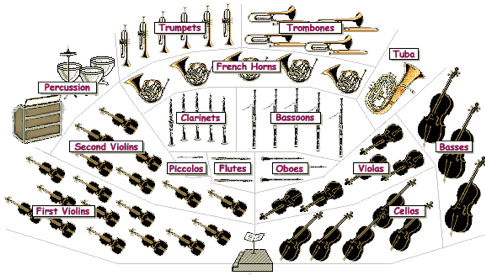
I attended a special concert by the Austin Symphony Orchestra at the Lake Travis Performing Arts Center. As expected, Maestro Peter Bay and his orchestra were superb in their renditions of Holst, Mozart, and Musorgsky. But Mr. Bay went beyond. To provide another level of inspiration to young musicians in training, he reached out and arranged for sixteen music students from Lake Travis High School to join the orchestra, some even given the honor of sitting in the first chairs.     
For this brief moment, all the tensions of daily life melted away, and I felt a surge of renewed hope for the future, for in the arts lies the unity of humankind. At the concert, I cannot tell you if I saw people of color, blonds, brunettes, or greying heads on the stage.

I only saw musicians making sounds that swelled my soul and transcended the noise of our daily lives. 

Artists in all disciplines must reach for more, whether conceiving an architectural masterpiece, a painting, an opera, a ballet, or a symphony. In their quest for excellence, their creations help erase the boundaries that separate us as people. Those who create must look beyond the narrow limits of mob-think; they must see in vivid colors, hear in vivid sounds, and often take the roads less traveled. They may be reclusive in the process of creating, but they do not function in isolation. Individuals who dedicate themselves to artistic development have a strong sense of self, driven to self-actualization. Their visions give to society while they draw from their cultures and many academic disciplines. 

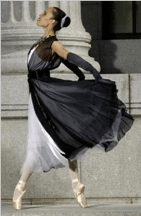
Painters see in colors, form, and proportions. Composers and musicians operate within mathematical formulas: divisions of time; use of fractions to indicate the length of notes. Dancers operate within the structures of Physical Science and the theories of motion and gravity. Actors must empty themselves to absorb the characters they play on stage – This requires looking beyond their own perceptions and truths.

 The arts are vital to humanity. They give flight to imagination and creativity and should be an essential part of academic education. Albert Einstein, perhaps one of the most highly self-actualized human beings, once said, “Creativity is intelligence at play.”

The Austin Symphony Orchestra and Lake Travis High School showed us a model for Einstein’s playful quote. We watched and listened to the young, who are still fresh and full of hope, join the seasoned professionals, and reach for excellence. They expanded their horizons and brought a diverse audience together in admiration. 

You may be thinking, lovely sentiment, but how do we do it? 

Many believe that the government should become the primary support for everything – including the arts. That road too quickly leads to a government having the power to define and control creativity. Study the long list of artists who defected from socialist/oppressive nations where the State defines what art is and how it’s to be expressed. The government can, however, have a constructive place in nurturing our children’s individual creative development.

Block grants to school districts, earmarked explicitly for promoting artistic growth, might be of great value in helping our young reach for their stars, and in the process, build bridges between people and help elevate humanity to higher levels of well-being. That requires recognition and respect for the fact that people are different, and the differences go deeper than  color or ethnicity.   

The arts ensure that diverse identities and cultures are recognized and given a voice in the world. The arts of every culture reach back in time, relying on those who came before. Present-day artists build on the past and expand their disciplines, reflecting today’s world. Our art not only leaves a record of who we are, but also the growth we’ve contributed to the future.

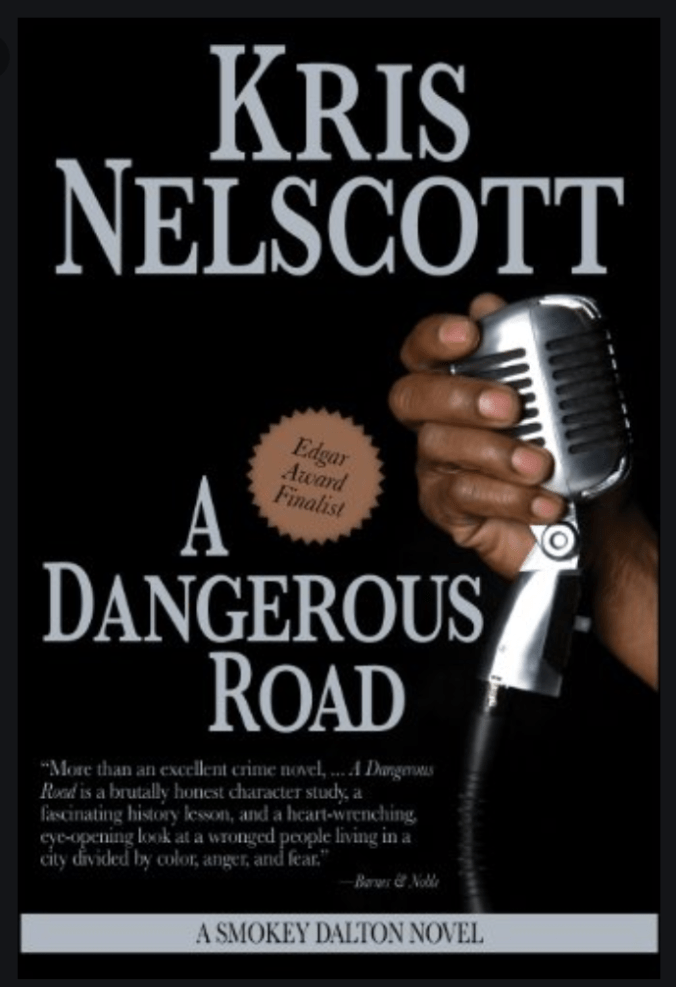
V.P. Chandler Review of A Dangerous Road: A Smokey Dalton Novel by Kris Nelscott

As with many other books, I’ve been late on the scene with this series and author. A Dangerous Road made its debut in 2001 but I just discovered it recently. I was fortunate that my book club chose it. So not only did I get to read a great book, I got to read an intriguing mystery that kept me turning pages! And I got to discuss it with good friends.

I primarily write historical mysteries, usually Westerns, but this one takes place in Memphis in 1968. A turbulent time and place. There was a lot that I didn’t know about this time and I can tell that Nelscott did her homework. For example, there was a strike among the garbage collectors and trash began to pile up. The smell and inconvenience added to the tension of the story. The impending marches and the arrival of Dr. Martin Luther King, Jr., are churning up hostilities between the races, and among the races. Add to that a black male P.I. who has a white, attractive, female client, Laura Hathaway, and the tension mounts!

The mystery part of the story is about $10,000. Laura Hathaway demands to know why her mother would leave $10,000 to Smokey. He has no idea. He doesn’t know the Hathaways. Could Mrs. Hathaway have been the anonymous benefactor who left him $10,000 ten year prior? It seems like too much of a coincidence. And why would she do that? Laura decides to hire Smokey to find out about her family background, what secrets they were hiding and how he is involved in it, if he is.

That’s what kept me turning pages. I had no idea where it was going to go!

The book starts with scenes from the premiere of Gone With the Wind in 1940 in Atlanta. (I didn’t know that it premiered there! Did you?) It takes a while until it becomes clear why this event was important to the story. But it’s pivotal.

Which gets me to what I admired most about the book. Not only was it a mystery, but it deftly maneuvered through and around the worlds of 1940 Atlanta and 1968 Memphis. Both eras are complicated. Dalton and the black community have to constantly be alert and careful what they say and do. And not all dangers are outside their own community.

Nelscott dances her way around and through the story, taking the reader with her. I was impressed with its complexity and how she was able to keep the tension throughout. I was not surprised to learn that it won the Herodotus Award for Best Historical Mystery and was short-listed for the Edgar Award for Best Novel.

This reader and writer will definitely be reading more of the Smokey Dalton stories!

Characters We’re Drawn To

by Helen Currie Foster

Originally posted on Ink-Stained Wretches

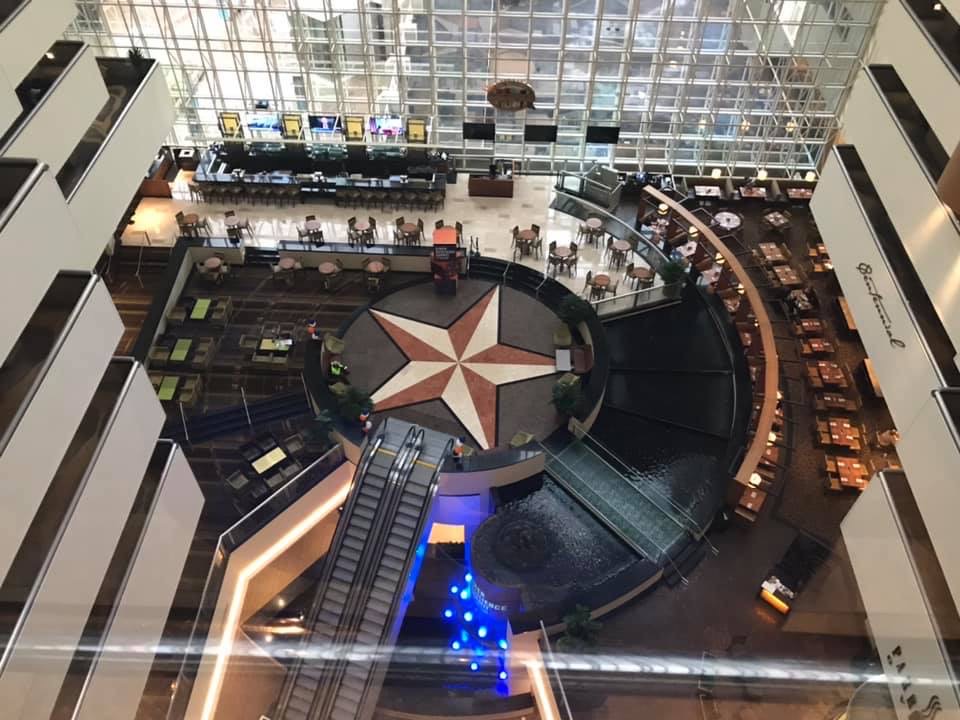
Last week Big D hosted the Bouchercon book conference. Two sessions made me wonder why we’re drawn to particular book characters, and how key they are to readers.

At the Bouchercon “Success in Publishing” panel, a speaker said, “People read for character. Conflict turns pages.” A second speaker said she’ll re-read a writer’s submittal if, the next day, she remembers the characters.

Best-selling author Elizabeth George (Inspector Lynley series) told a spellbound audience (me too) that for a new book, before she starts writing anything else, she creates her characters and settings.

George designs her characters to “reflect the human heart in conflict.” Sometimes she’ll have as many as six characters telling the story from their point of view. She creates a character prompt sheet, deciding, for each, what is this character’s real need? She considers the character’s psychopathology: what would the character do under stress? If the character appears only once, what is the character’s agenda in
that scene?

George then decides, where does this novel begin? Only then does she start to outline the first ten scenes. Each must be causally related to another scene. She then writes a rough draft of those first ten scenes, and repeats the process for the next ten scenes. Nothing is set in concrete.

In the tug-of-war for primacy between plot and character, what gives a character “pull”? If we “read for character,” which characters really attract us––perhaps even more than a forceful plot? What does Elizabeth George mean––the human heart in conflict?

Each of you has your own list of favorite characters, some from favorite childhood books. Take Charlotte’s Web. I’m fond of the pig Wilbur, and the child Fern. I empathize with Wilbur’s terror when he’s being chased for the slaughter. But Charlotte…isn’t she the magnet? Aren’t we as fixated on her as Wilbur is? Using Elizabeth George’s approach, how is Charlotte’s spiderly heart in conflict? We know she’s determined to teach Wilbur how to survive. We know that a spider has no duty to befriend an orphan pig. Conflict? We know by the end that Charlotte has spent her last days using her remaining energy to teach Wilbur what he needs to know, while fully aware that her own end is nigh. We’re drawn to Charlotte’s generosity, her clever planning, her foresight, her perseverance: we admire her. Like Wilbur we hope for her approval. Do we empathize with her? Yes, when she’s working so hard on those webs. We feel her exhaustion! We too are swinging from one side of the web to the other! Wilbur has learned from Charlotte’s work, too. Perhaps he has learned gratitude? Awe? Aw.

We’re also drawn to childhood characters who learn. Think of that little sourpuss Mary in The Secret Garden. Readers can empathize with her lonely railroad journey to a place where she knows no one, but honestly, she is essentially unlikable: rude, willful, suspicious, unkind. Her heart distrusts the world. As the gorse bushes blossom and the downs bloom, as the children find their way to each other and into the secret garden, Mary slowly changes, slowly learns friendship, slowly learns generosity. We see from her eyes, hear with her ears, and experience her transformation ourselves.

What about Kim? This little orphan, footloose in the Raj, asks himself the great question: “Who is Kim?” Is he English? Hindu? Pathan? Who deserves his loyalty? I love Kim’s rapid costume changes, his effortless switches of vernacular as he deals with beggars, farmers with sick children, high-born old ladies in their palanquins. I itch for him in the woolen school uniform he must wear when sent off to a miserable English school, separated from the beloved Tibetan lama he has adopted. Kipling’s rich plot takes Kim (and us) across India and up into the high cool hills of the Himalayas, as Kim is initiated into the perilous Great Game of spying between the British and the Russians. Such a rich plot––secret messages, invisible ink, spies dressed as beggars, hypnotic jewel games––could dominate the characters. I don’t think it does. On one long day of healing after Kim finishes his exhausting trip from the high hills down to the plains, carrying the sick lama, we experience Kim’s discovery. The lama finds his long-sought river, and Kim begins to know who he is.

Okay, one last favorite character from that grand tale, Lonesome Dove. The question “which is your favorite character…?” occasioned great debate at our house. I opt for Gus. We meet him at the beginning, we see what he sees, hear what he thinks, we know just how he feels as the sun slowly––finally––sinks low enough in the first chapter that he can stalk out to the adobe springhouse to get his jug and have a swig in the dab of shade on the porch. We see other characters through his eyes. But I also admire Gus: I admire his taking care to help Lorena survive, his concern for Newt. I hate that Deets dies, that the little Irish boys die, but I can ascribe that to fate (as wielded by Larry McMurtry). Gus is different. Oh, yes, the author made me care for other characters on that long drive to Montana. But I personally experienced most of the book from Gus’s saddle, as if I were perched right behind him. I don’t want McMurtry to let Gus ride over that hill.… Gus, don’t go over that hill!

Oh, and let’s add A Gentleman in Moscow. Mmm, that tenacious Count Rostov.

My favorites share some qualities: generosity, intelligence, some humor. But in addition, despite their human hearts in conflict, they choose to take action, action potentially at odds with their own interests, despite personal danger and fear of loss. So, throw determination in there too.

Bouchercon 2019

There are few things I enjoy more than spending several days with other crime writers.  Writing is often a solitary experience, so the opportunity to connect with friends to debate all aspects of the craft and business of crime fiction is something I look forward to.  Discussing the issues of plot structure, character arcs, how to poison imaginary people….

I was thrilled that my short story titled, “The Deed,” was chosen for this year’s Bouchercon anthology.  We had a fantastic turnout of readers, and I learned that many readers collect every edition of the anthology.  My good fortune included sitting next to John Floyd, whose talent is  outshone only by his generous nature.  This year’s lineup of short stories includes a bevy of accomplished authors, and I can’t wait to steal an evening so I can read every single story.  All proceeds benefit Literacy Instruction for Texas (LIFT), so if you didn’t pick up a copy at the convention, you can order it from BookPeople or online.  

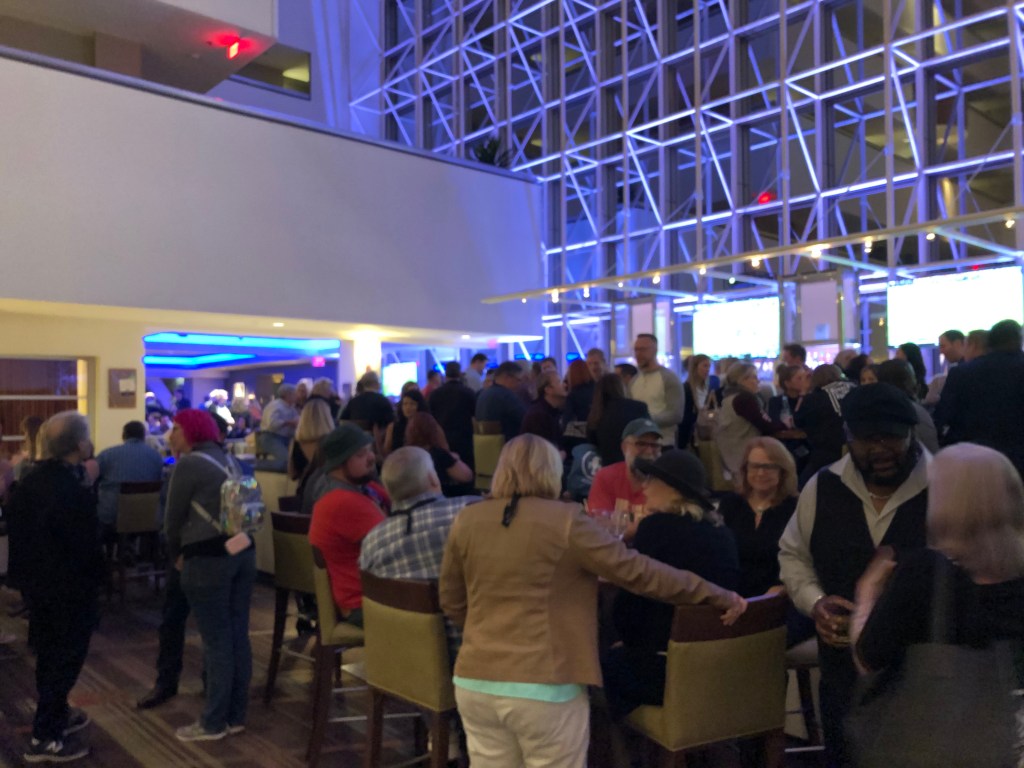
The challenge of Bouchercon is that there are so many events happening that you simply can’t do them all. There were several panel options in every time slot for the entire four days of the show, and I realized that many of the panels I wanted to attend were scheduled at the same time of my own panels or other events.  You have to sit with the program and prioritize where you want to be.  And make time for the bar.  Some of the best conversations I had took place in the bar. 

One of my favorite panels was given by Luci Zahray, affectionately called The Poison Lady, and she will scare the hell out of you and make you laugh all at the same time. She generously gives her time and expertise to crime writers across the country, and her presentations are always packed with information. If she’s on the schedule, I make sure to attend.

More Real Than the Housewives Panel

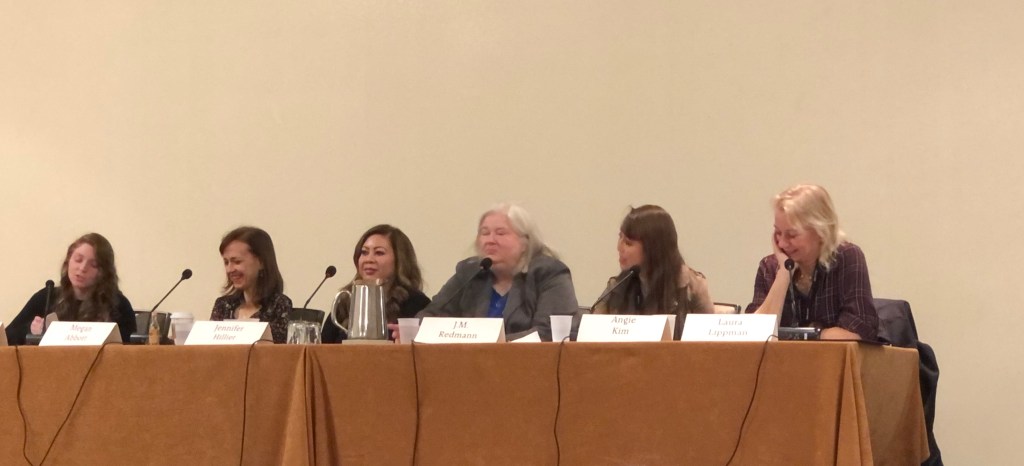
Another panel that I add to my favorites was “More Real Than the Housewives: Unlikeable Women. Moderated by Katrina Niidas Holm, the panelists were Megan Abbott, Jennifer Hillier, Angie Kim, Laura Lippman, and J.M. Redmann. The conversation around the issues pertaining to how female characters must/should act in fiction in order to be accepted/rooted for by the reader/etc. was fascinating. There were too many relevant points to list here, but I agree with the panelist who said that she preferred that a character be interesting above all else.

That’s What She Said: Snappy Dialogue

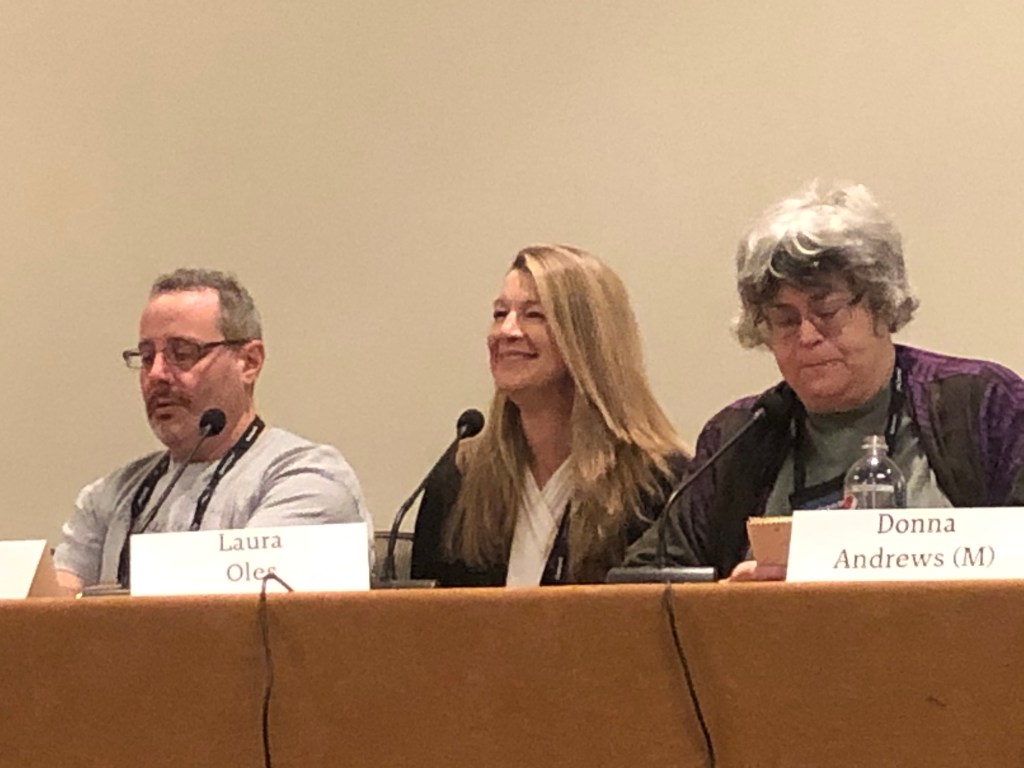
I served on two panels, the first titled “That’s What She Said: Snappy Dialogue,” and the experience was fantastic.  We had a wonderful crowd.  Donna Andrews was a thoughtful moderator and my fellow panelists—Hillary Davidson, Dana Haynes, Matt Iden and Lynette Eason—made the hour fly with their wit and clever banter. My stomach hurt from laughing when it was over.  

Bullet Books signing at Mystery Mike’s

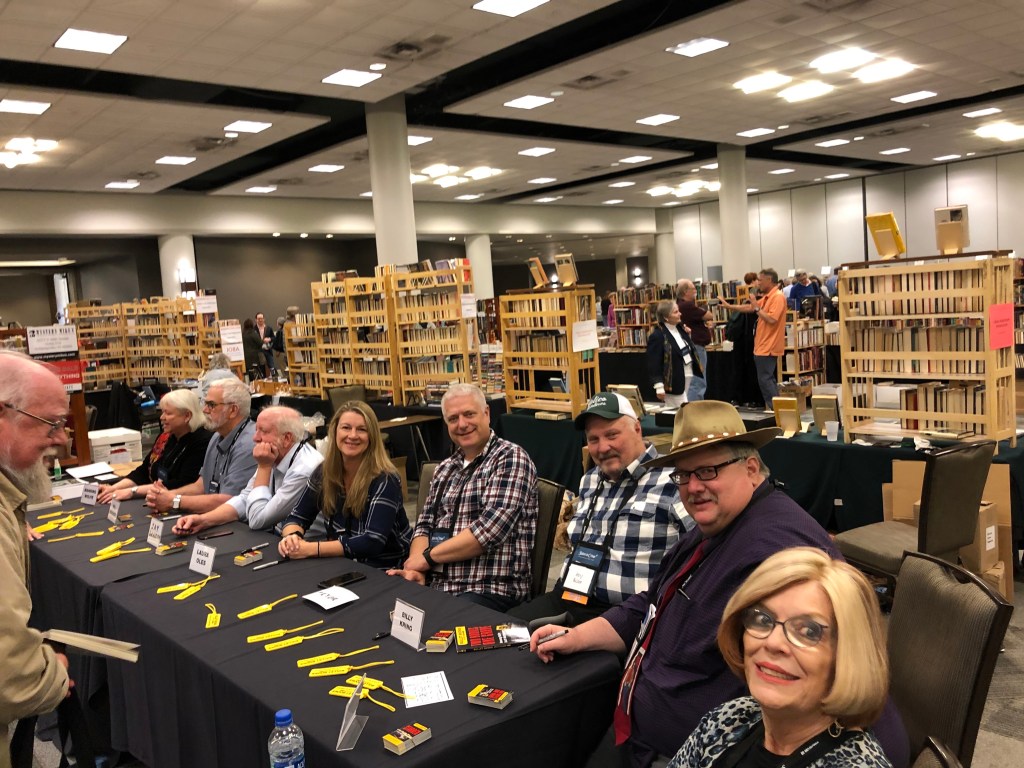
My second panel, Co-Authoring, moderated by Manning Wolfe, focused on the process of co-authoring a book project. Her Bullet Books project,  which includes my novella titled LAST CALL, offers readers a way of enjoying a shorter story while traveling on a plane, train, or bus. Reading while driving is probably not a good idea.  We had several authors serve as panelists, including Jay Brandon, Billy Kring, Bill Rodgers, Kay Kendall, V.P. Chandler and Scott Montgomery. Co-authoring a book is a different experience than writing solo, so we wanted to explore the topic in the hopes of helping our audience decide if this was something they might want to try in the future.  

How did I miss the class on lock-picking?  I’m still bummed about that one. 

The Sisters in Crime breakfast starts SO EARLY but is well worth the lost sleep. It’s another opportunity to catch up with friends, hear the latest updates from the Board, and hear how certain projects such as We Love Libraries, We Love Bookstores and others have progressed throughout the year. I also love the webinars and classes that are offered, and I enjoyed talking with other members to learn which aspects of SINC they enjoy the most. Oh—and the pancakes were SO GOOD.  I’ll get out of bed early for pancakes.

The most important part of this year’s conference, though, was the time I spent with friends. Truly, it’s the people who make this community so special, and I’m grateful to be part of it.

Laura Oles