When Books Were Love

by Gale Albright

IMG_3110

Aunt Marjorie Nell was a big fan of mine.

That’s why I figure she may have embellished stories about my alleged brilliance when I was a tot. She taught me to read when I was just three years old, because I told her “I want to read like you do, Jaumie.”

She was thirteen years old when I was born and she spent every minute away from school taking care of me. She was the only one I allowed to wash my hair (without squalling), and apparently, teach me to read.

I don’t know if I was really that young when I learned to read. I think Aunt Marjorie gave me too much credit, but I learned early and fast. I loved words. All kinds of words. I talked them, sang them, heard them on the radio. I found them in conversations and I found them in books.

Books were magic. Books were love. Books meant I was sitting on Jaumie’s lap while she read to me with her gentle East Texas twang. They took me to magic, foreign places while I was cuddled and safe with my biggest fan.

When I got big enough to read books by myself, I rode my bicycle to the Carnegie Library in Tyler, Texas. I loved the smell of the library. There was a sun-dappled holiness about the place. People spoke in hushed whispers as light streamed through the windows, illuminating the ivy plants perched on the windowsills.

Books—their touch, their smell, their heft–meant I was immersed a safe, happy place where you could fly to the moon; go on adventures with Freddy, the talking pig; witness the struggles of Black Beauty; go on the run with Tom Canty down the mean streets of Tudor London; and travel with Doctor Dolittle.

Fast-forward about a million years or Time Marches On.

My lifetime love affair with books turned me into a true Luddite, scoffing at electronic readers, literally clasping hard copies of books to my heaving bosom, filled with the sweetness of self-righteous indignation. I swore, repeatedly, that never would any &%$*# electronic reading device darken my door (you get my drift).

Until I listened to Mindy Reed speak about containers versus content.

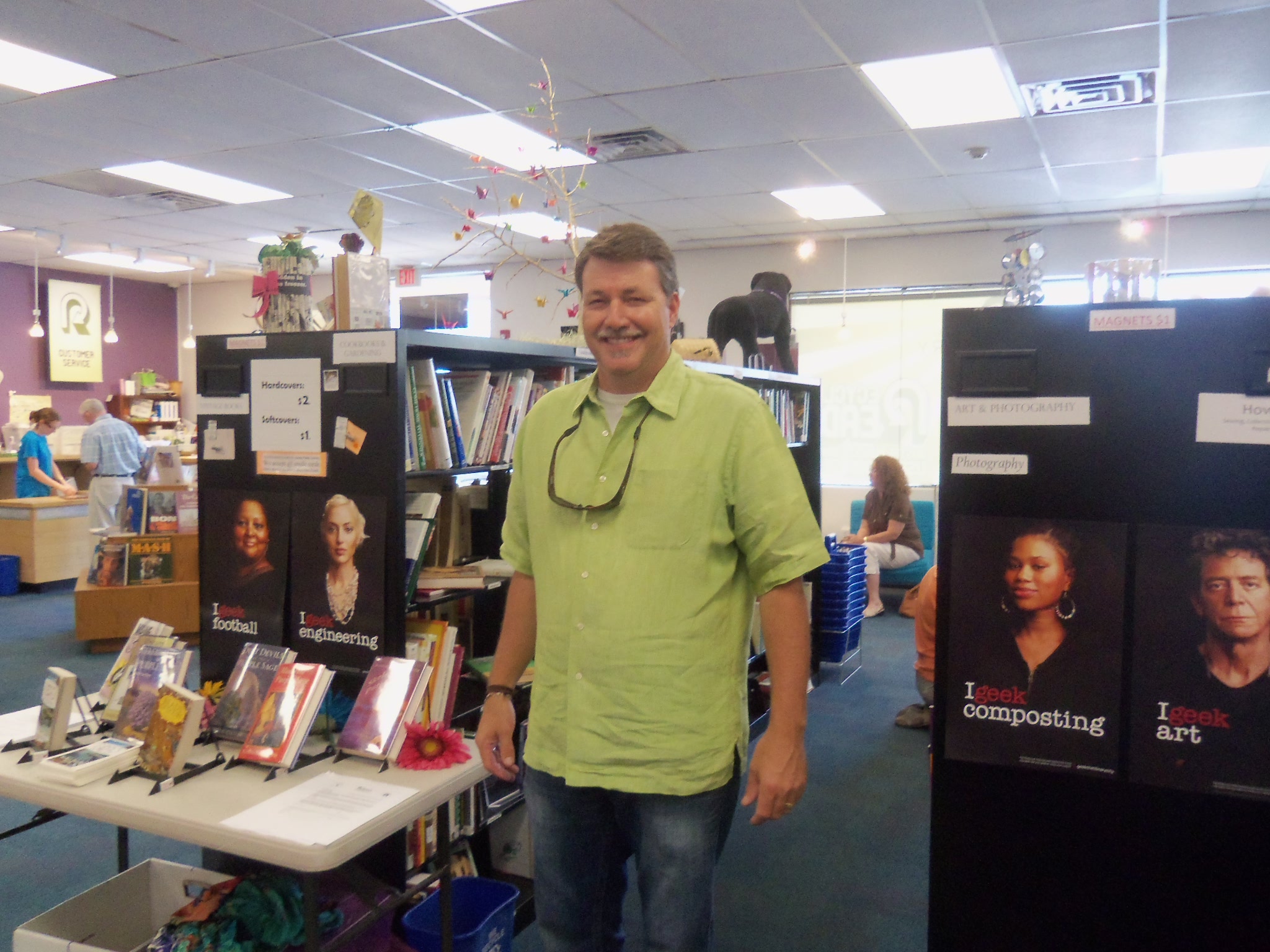
Ms. Reed was the featured speaker at the June 8 Sisters in Crime: Heart of Texas program on current publishing trends. The meeting place was Recycled Reads, a part of the Austin Public Library. Recycled Reads keeps books and other materials out of landfills once libraries have weeded them from their shelves. It is part of Austin’s Zero Waste Initiative.IMG_3097
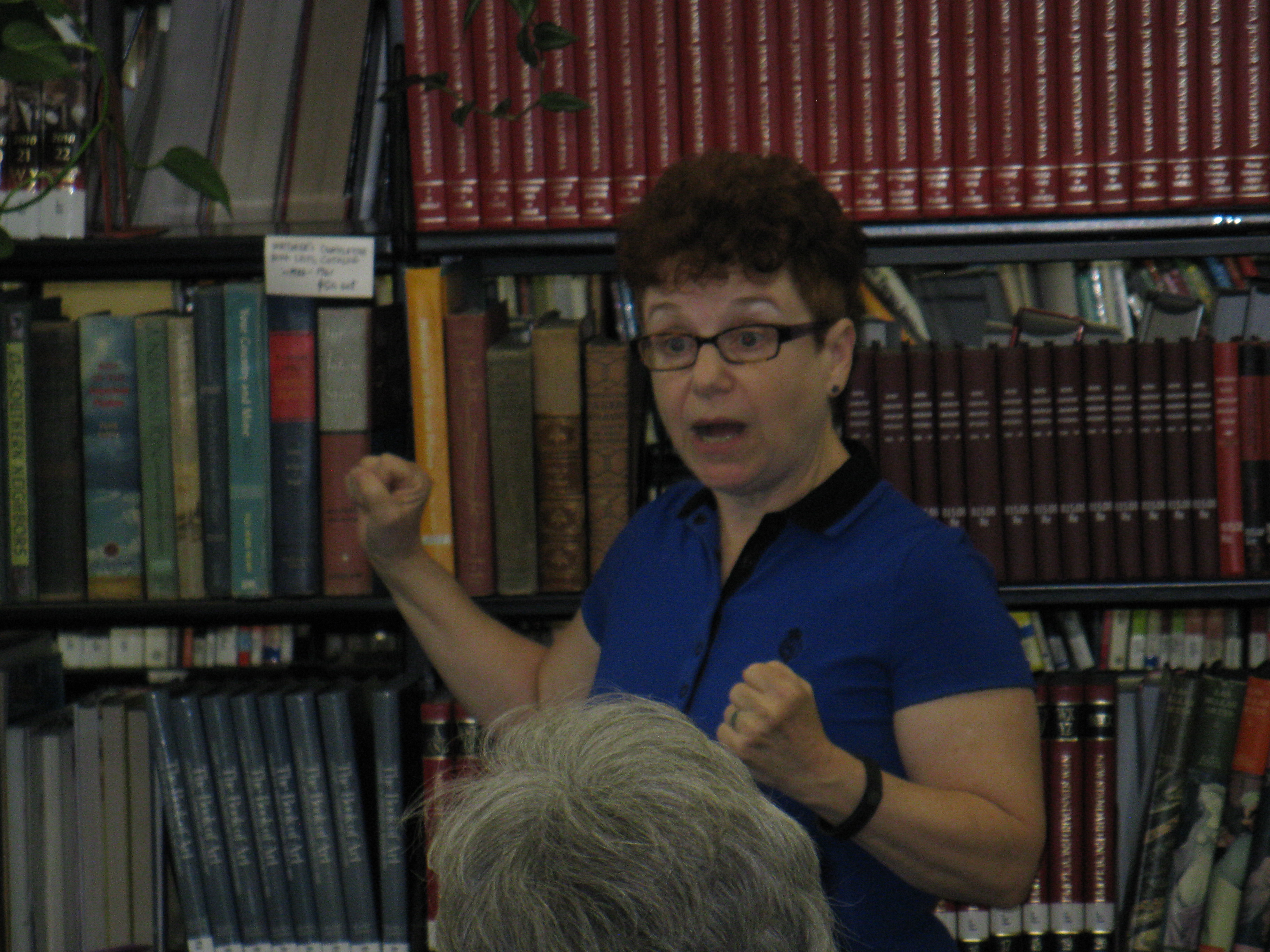
Ms. Reed, Recycled Reads manager, librarian, editor, and co-proprietor of The Authors’ Assistant, said readers have had a “romance with the book. There’s a romantic connection with books–we love them. But you can’t love all of the many donations of bestsellers that go out of style.”

The store recycles between twelve and fifteen tons of material a month. It has recycled 865 tons in the six years since its inception. How, you may ask, do we get so many recycled books?

According to Ms. Read, look to the New York Times bestseller list. Publishers strong-arm book stores to pre-order books. The list is based on the numbers of pre-orders sent out to stores. Some are sold. Many others are remaindered, resulting in a colossal waste of resources. These publishing practices make a negative impact on the environment. It is a bad, old-fashioned distribution mode for books

Ms. Read pointed to a display of plastic cups, glasses, coffee cups, etc. assembled on a table in front of the audience. “If you are thirsty, you want water. You don’t care if you get it from a fountain, bottle, or glass. They all contain water that will quench your thirst. Think of that when you talk about the rise of the digital age in publishing. Does all of that need to be put in this type of container? It’s about content as opposed to container.”

I do have a romance with the book. The sight, feel, and smell of books trigger endorphins, for all I know. I associate them with escape, peace, and happiness.

E-readers don’t exercise that special magic, but they do have what kept me coming back to books all those years ago. The stories. Or, as Mindy said, content versus container.

I thought I would never give in, but I have decided (one of these days soon) to buy an e-reader. Can e-books help save the planet by making less waste for us to pour into landfills? Yes. Is that important? Yes.

I don’t feel romantic about e-readers, but, when you’re thirsty, do you care if you drink your water from a crystal goblet, bucket, dipper, or paper cup? The first priority is to get some water. Or some words.

If using e-readers will help save the planet, I can do my part by giving back some love to the universe instead of extra trash.

Where Do You Find Hope?

0kathy-blog*

*

*

Posted by Kathy Waller

*****

This isn’t a kindergarten for amateur writers. I’m sorry, Mr Kipling, but you just don’t know how to use the English language.” ~ Rejection from the editor of the San Francisco Examiner to Rudyard Kipling

*****

What makes a successful writer?

Aside from a working knowledge of the language and a certain amount of talent, answers generally include persistence, organization, initiative, professionalism, practice, vision, confidence, tolerance for criticism and rejection, vision, confidence, self-discipline, resilience, motivation, creativity, empathy, patience, courage, flexibility . . . Well, it’s a long list.

But Ralph Keyes, in The Writers’ Book of Hope, says aspiring writers need two basic things: a knowledge of how the publishing industry works, and hope.

Publishing has changed considerably since Keyes’ book was published just over ten years ago, and the Internet has made it easier to find what beginning writers want to know.

Hope is a different matter. There’s plenty of pessimism and discouragement out there. Where does a writer seeking publication acquire hope?

In my experience, much of it comes from other writers.

Last month I spent a Saturday morning in a class sponsored by the Writers’ League of Texas and taught by novelist Karleen Koen. I first met Karleen three years ago, when she taught at the WLT Summer Writing Retreat, and I’ll see her again at the WLT retreat this August. Last month’s class was a “sneak peek” at the August class: “The Damned Rough Draft: Reframing and Reimagining Your Novel in Its Beginning Stages.”

I’m not the only one of Karleen’s students who keeps coming back for one more course. She’s a good teacher. What she knows, she shares. She also acknowledges both the highs and the lows of her own writing life. (The title of this year’s class–“The Damned Rough Draft”–is evidence of her empathy with students.)

Karleen doesn’t promise the people sitting in her classes will become novelists, but she makes the possibility come alive. She is generous. She offers hope.

Who are other hope-givers?

Members of Austin Mystery Writers, and similar groups, who read and critique thirty to fifty pages every week. Beta readers, who go through entire manuscripts–hundreds of pages–to offer criticism. Strangers who read blog posts and Like or Reblog or Tweet or leave comments. All readers who tell the truth–both positive and negative–in a way that says, “I believe in you. Keep writing.”

It’s your turn now, writers: Who gives you hope?

Writing to Music

I think the writing process fascinates writers and non-writers alike. There seem to more questions asked of writers about it than anything else. “Where do you get your ideas? Do you have a writing schedule? Do you have a special workspace?”

When writers congregate over the communal coffeepot, we talk about these things too.

One of the questions I like to ask is, “Do you listen to music when you write?”

I asked file3551243435174this on Facebook and Twitter the other day and here are some of the responses I got. I was curious to see what the answers would be, and if they were similar for writers within the same genre.
 

Mystery/Thriller –

Gale Albright – I don’t listen to anything if I can help it. I prefer quiet when I’m writing. I am writing EVA in a definite time period, the Great Depression in East Texas in the early thirties. I have thought that maybe I should get some music (probably from the library) of popular songs played on the radio during the Depression, plus old-time church music, etc. I could listen to set the mood. I don’t know if I could write with it on. I haven’t done it, so I could try it as an experiment.

Steve Freeman – Not usually. If I do, though, it has to be instrumental or it’s too disruptive. I usually listen to Hans Zimmer.


Fiction:

Brianna Soloski – I have a play list of songs I never get tired of hearing. As for type…Billy Joel, Carly Rae, Jepsen, Train, and more.


Romance:

Michelle Hughes: If it wasn’t summer I would. Right now I get to listen to screaming. LOL


History

Jeff Kerr – No


Historical Fiction –

Jeri Westerson – Yup. I like to listen to medieval music or soundtracks to medieval-themed movies while I write… Some of the worst movies have produced some great soundtracks.

Kim Bullock – I have to have silence. This is not always easy to come by.


Fantasy/Sci-fi –

Tonia Marie Harris – I listen to certain music when I’m writing or revising. For my current book, I’ve found myself listening to … post-industrial like Tool or Portishead, but I like classical pieces like Lakme’s The Flower Duet….Living in a tiny house with three kids, three animals, and babysitting full-time, playing music on low helps me focus, rather than detract from my work.

Vaughn Roycroft – Three words. Dead Can Dance.

JC Cassels – I listen when percolating. I use music to set the mood… I bought some royalty free soundtrack music that I listen to while plotting. It helps with pacing the action scenes.

Marta Pelrine-Bacon – Often, but not always. I listen to music appropriate for what I’m writing as if the scene is a movie.


Freelance/Essays/Other –

Katherine Wolbrink- Never. I find it way too distracting. But I have the attention span of a toddler, so…

Patrick Thunstrom – …I listen to trance, techno, metal, or some form of rock, with the occasional foray into classical. I have a “get pumped” list that is fun.

Joel B. Matuszczak – I write about things that happened to me, so I often listen to the music that I listened to during whatever phase of my life that I’m writing about. My taste in music, like the rest of my life, has changed a lot over the years…

Roberta Schirado – Instrumental jazz. The beat seems to focus my attention.

Kit Frazier – Yes, and sometimes I have a movie playing in the background…


I used to listen to movie soundtracks while writing. I found I couldn’t listen to anything with lyrics, especially if I was writing dialogue. I even created a personalized station on Pandora I named, Music for Writing. It’s composed of movie/video game soundtracks. Most are by Hans Zimmer (I love HZ!). It’s great for setting the mood when I’m thinking and plotting tension and action. When I’m thinking about my Texas historical fiction, I listen to the soundtrack to Lonesome Dove. It works for me every time.  But once I sit down to write, I have to turn it all off. I’ve found I need to focus on the words and I already have too many other things swirling around my head.

So there you have it, a totally unscientific survey of a few writers and their music/writing habits. My conclusions?  I guess it depends more on the individual’s personality and not the genre. That and, I feel old because I don’t know who some of these groups are or even the type of music!

Thank you to my writing friends who answered my questions and let me use their answers.

VP Chandler

Classic Summer Reads

Love the summer, and it’s finally here! Summer means sun block, sassy water and a good book. To me a great summer read (or poolside or hammock book) has a dreamy setting, romance, suspense, mystery and adventure. I like substance, too—I don’t want a light, forgettable story, but one that will stick with me for a while and challenge me.

Cornwall

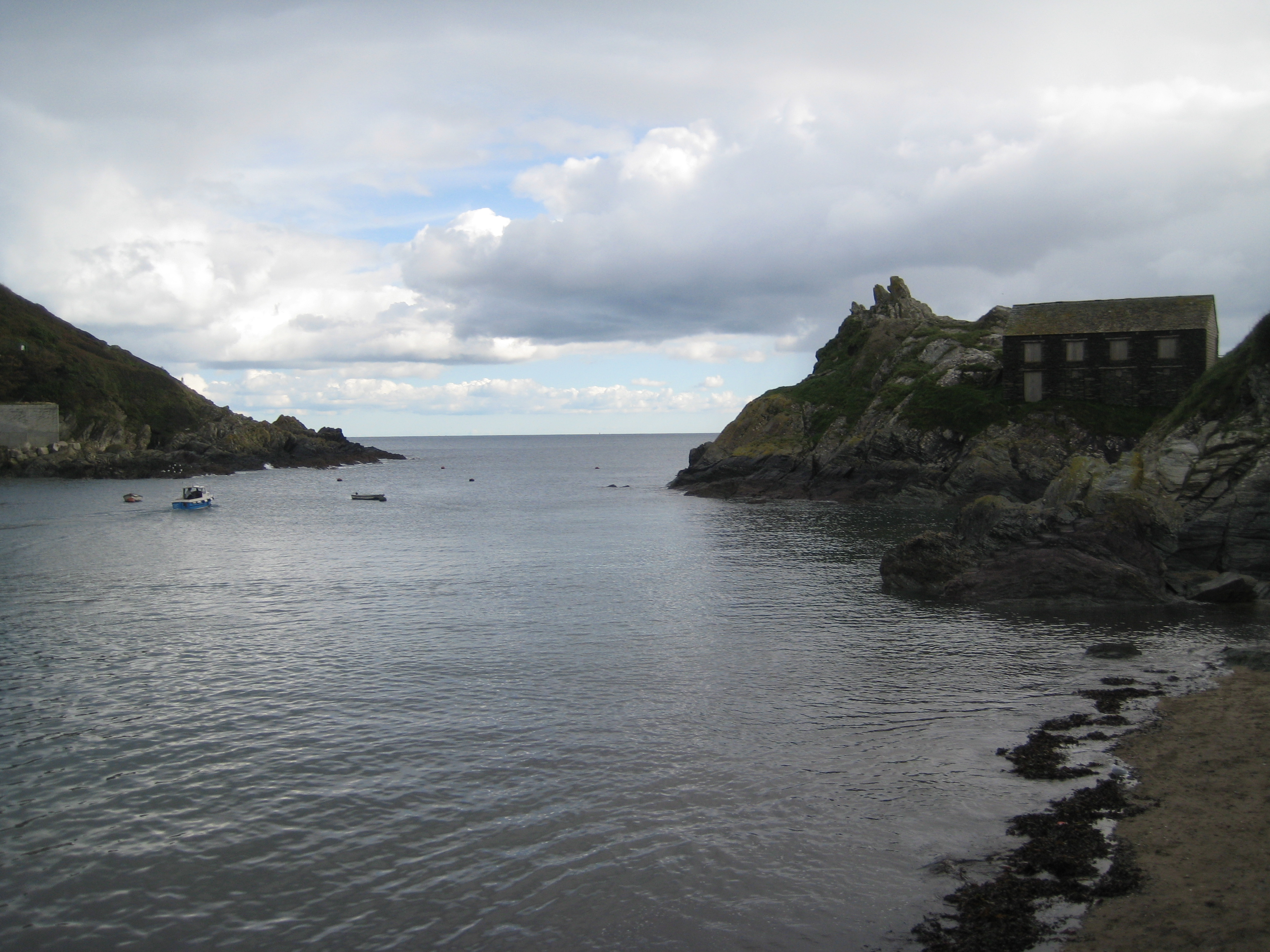
On just such a bay in Cornwall, Rebecca De Winter drowned.

Sometimes I browse the bestseller lists for the latest beach book, but I like to read the best of the past, too. Here’s a short list of classic summer reads. Two are extremely famous and two are relatively obscure. The latter two are free for your Kindle!

Rebecca, Daphne Du Maurier’s 1938 Gothic romance, is an archetypal suspense novel with all the right ingredients. Manderley is probably the most famous mansion in all of fiction, and Maxim de Winter is the perfect brooding, rich, handsome romantic hero with a mysterious and tragic past. The climax is a real nail-biter. If you’ve already read Rebecca (like a few million other people), you can try the less well-known Progress of Julius, also a great beach read.

Lolita, by Vladimir Nabokov, ignited a firestorm when it was first published in the US in 1958. The subject is controversial, the style is highly subjective, and the book is often listed as one of the best English-language novels of the 20th century—if not one of the best novels ever written in any language, period.

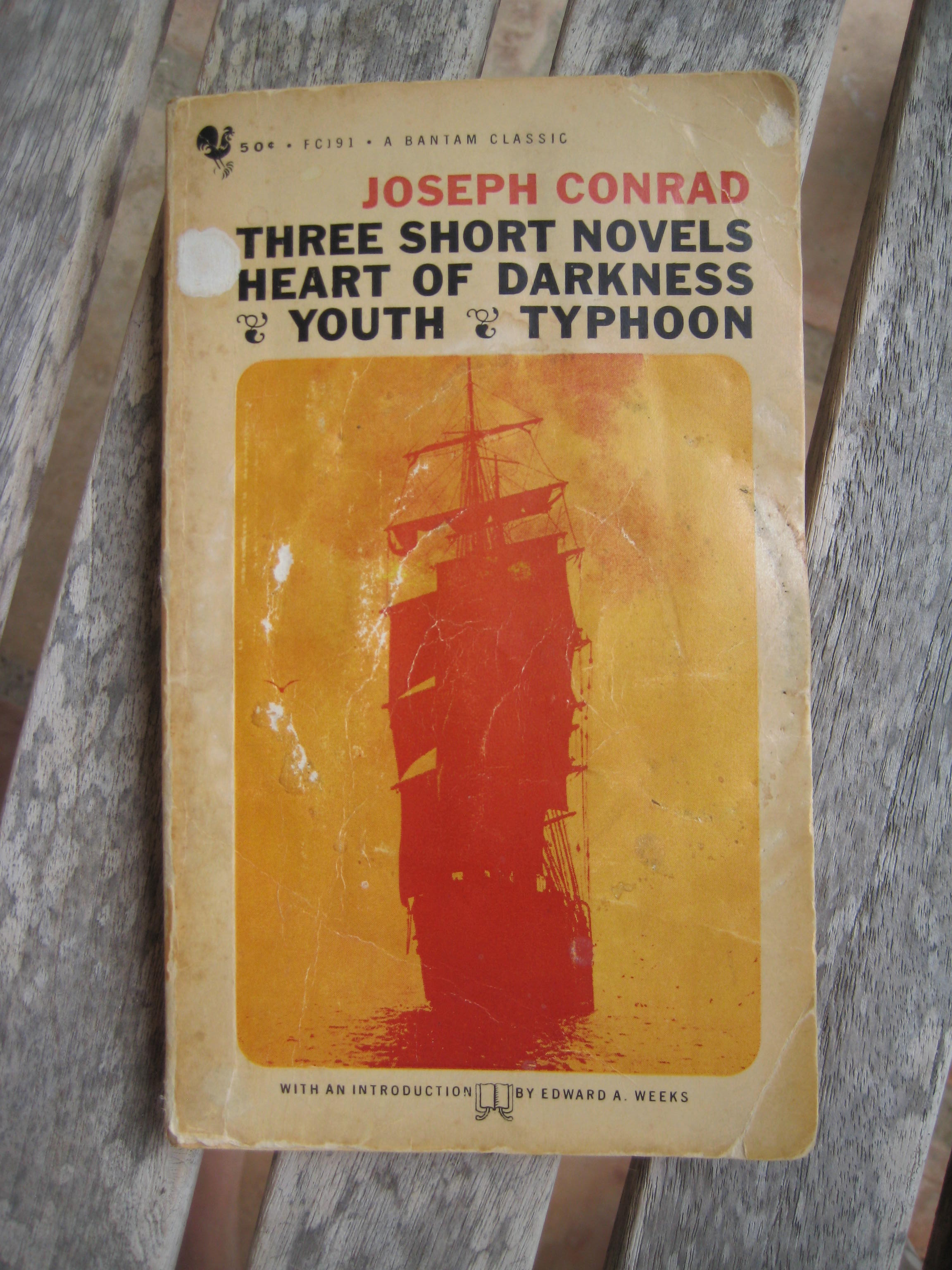
Youth, Conrad

Youth, by Joseph Conrad

Summer is a novella by the great American author Edith Wharton. First published in 1917, it starts out with all the promise of a fine and atmospheric romance: a young girl living in a remote New England village meets a mysterious young man from the larger world. A romance follows, but it bears no resemblance to the modern genre. Rather, it is a stark, unflinching work of literary genius that will haunt you.

Youth, by Joseph Conrad, is also a novella. Just 70 pages, it will carry you off on a desperate and epic voyage through storms and vast emptiness at sea. Sail from London to Bangkok on the barque JudeaDo or Die! Just reading it is a magnificent adventure, and it’s short enough to finish in a single summer afternoon.

Elizabeth Buhmann

Enjoy the sunny weather! And don’t forget to take a good book with you to the beach.

Elizabeth Buhmann is the author of Lay Death at Her Door, a mystery/suspense novel about an old murder that comes unsolved when the man who was convicted of it is exonerated.

A Good Time Was Had by All

IMG_3022By Gale Albright

There was much happiness on display at the tenth annual Barbara Burnett Smith Aspiring Writers Event (BBSAWE) on May 18 at Recycled Reads in Austin. People were talking, laughing, eating, exchanging e-mail addresses and phone numbers, eating, reading out loud, giving gifts, taking pictures–did I say eating?

The BBSAWE was created in the spring of 2005, after the tragic death of Ms. Smith, who was a published cozy mystery author. She was past president (International 1999-2000) of Sisters in Crime and was known for her helpfulness to other writers. Dynamic, energetic, and talented, her loss was greatly mourned by her family and the Austin writing community. To honor her memory, the Barbara Burnett Smith Mentoring Authors Foundation was dedicated in her honor to support and provide a mentoring community for aspiring mystery writers.

Every year Sisters in Crime: Heart of Texas chapter calls for submissions of the first 500 words of a mystery story or novel from unpublished authors. The aspiring writers are then matched up with published mystery authors for mentoring.

This tenth BBSAWE was a joyous occasion. Six mentors and seven aspiring writers were introduced to the audience. The writers read aloud the synopses and first 500 words of their submissions. We were treated to a diverse and imaginative display of literary talent.

W.D. Smith, son of Barbara Burnett Smith and head of her foundation, presented certificates to mentors and aspiring writers, as well as copies of his mother’s mystery novels. Russ Hall, prolific mystery writer and all-around Sisters in Crime volunteer, spoke about mentoring, calling on his long-term experience at the job.

“In life, you will realize there is a role for everyone you meet. Some will test you, some will use you, some will love you, and some will teach you. But the ones who are truly important are the ones who bring out the best in you. They are the rare and amazing people who remind you why it’s worth it. I’m not telling you it’s going to be easy. I’m telling you it’s going to be worth it.”bbs photos 006 IMG_2971 Sinc tx cookies sinc tx hearts

After readings were completed and gifts awarded, we adjourned to enjoy a bountiful feast of fresh fruit, raw vegetables with dip, lovely finger sandwiches and wraps, crackers, cheese, and hand-crafted desserts.

It was inspiring to see people socializing after the program, doing the aforementioned laughing, talking, conferring, and eating. Writers were networking and making plans to start critique groups.

The event took several months of work and planning to put together, but to echo Russ Hall, it was worth it. I’m looking forward to the eleventh annual BBSAWE.

Following is a list of mentors, aspiring writers and their biographies:

Elizabeth Buhmann mentored Sue Cleveland and Dixie Evatt for Shrouded.

Elizabeth Buhmann is originally from Virginia and lived several years abroad while growing up. She graduated magna cum laude from SmithCollege, Northampton, Massachusetts, and has a PhD in Philosophy from the University of Pittsburgh. For twenty years she worked for the Texas Attorney General as a researcher and writer on criminal justice and crime victim issues. Her first novel, Lay Death at Her Door, (Red Adept Publishing) reached the Amazon Top 100 bestseller list (paid Kindle) in 2013. She is currently working on her new mystery, A Monster in the Garden. Elizabeth now lives in Austin, Texas, with her husband, dog and two chickens. She is an avid gardener, loves murder mysteries, and has a black sash in Tai Chi.

Sue Cleveland was born in a hunting lodge in England. She is a widely traveled writer and award-winning artist. A member of SCBWI, Mystery Writers of America, Sisters in Crime and Writers’ League of Texas, Sue is eagerly awaiting the publication of her short story, “Decoy,” in Minerva Rising Literary Journal. She hopes to find a home for several manuscripts: Shrouded, which she wrote with Dixie Evatt, and two middle-grade mysteries.

Dixie Evatt has more than 35 years professional experience in news reporting and public relations, including experience in political and government affairs. Dr. Evatt also taught at Syracuse University, Baylor University and The University of Texas at Austin. Her academic publications include a book about communication practices of small enterprises called Thinking Big. Staying Small. Although they’ve yet to be published, she and her writing partner, Sue Cleveland, have completed two mysteries and are working on a third. One takes place in Egypt, one in Italy and another in the Southwest. They make it a point to travel to each location for research.

 Susan Rogers Cooper mentored Lindsay Carlson for The Origami Murders.

Susan Rogers Cooper has been a published mystery writer since 1988 and has had a total of 26 books published.  She’s garnered rave reviews and was nominated for an Edgar.  Her newest E.J. Pugh mystery, Gone in a Flash, is available now, and a new Milt Kovak will be out in the fall, entitled Countdown.  Her back list is now being uploaded to e-books.

Lindsay Carlson currently splits her time between being a legal drug dealer (aka pharmacist) and a writer.  In her “free time,” she feeds her fortune cookie addiction and collects books to add to her to-read pile, which currently is taller than she is.

Helen Ginger mentored Shelby O’Neill for Truth or Dare.

Helen Ginger is an author, freelance editor, and book consultant. Her first fiction book, Angel Sometimes, won a USA Best Book Award and her new mystery, Dismembering the Past, is coming out soon. Actively involved in the writing community, Helen was the Executive Director of the Writers’ League of Texas from 2003-2005. Currently, she serves as a Committee Chair for the Texas Book Festival. In February of 2012, Helen took over as the Coordinator of Story Circle Network’s Editorial Services.

Shelby O’Neill is a writer and editor who lives in Austin, Texas, with her husband and their two pets. Her first novel is currently a quarter-finalist in the Amazon Breakthrough Novel Award contest, and she is hard at work on her second book, a teen cyber-stalking mystery.

Jan Grape mentored Jane Shaughness for The Invisible Detective.

Former owner of Mysteries & More bookstore in Austin, Texas, Anthony and Macavity Award-winner Jan Grape’s first mystery novel Austin City Blue was nominated for best first novel at Bouchercon 2002. Dark Blue Death is the second in her Zoe Barrow mystery series set in Austin about a female police officer. Found Dead in Texas is Jan’s first short story collection.  She wrote a stand-alone called What Doesn’t Kill You and co-edited two anthologies with R. Barry Flowers, American Crime Writers League, Murder Here Murder There and Murder Past Murder Present and has a short story in each.  She is currently finalizing her books for Kindle and Nook.

Jane Shaughness retired from the University of Texas at Austin in 2013 where she had worked for almost thirty years in the areas of student affairs, architecture, and most recently, compliance and ethics. Last fall, after giving herself six months of “free” time in which she entirely overscheduled herself with volunteer work, Jane began to work seriously on her mystery novel. In addition to writing fiction, Jane enjoys writing for her blog “55 AND COUNTING . . .” where she highlights free events in Austin of interest to the literary autodidact. Jane lives in Hyde Park with her husband, her two dogs, Jake and Champion, and her cat Pumpkin.

Russ Hall mentored Alex Ferraro for Ramona.

Russ Hall is author of more than a dozen books and co-author of numerous other books, as well as short stories and articles. He has been an editor for major publishing companies, ranging from Harper & Row (now HarperCollins), Simon & Schuster, to Pearson. He lives in Lago Vista, where he hikes, fishes, and tends a herd of deer that visit daily to peep in the office window and help with the writing.

Alex Ferraro was born in Denver, Colorado. At the age of five, he stole a horse and rode to Texas, where he has lived ever since. In 2011, he graduated from The University of Texas at Austin with a dual degree in business and drinking. When he isn’t writing or watching entirely too much TV, he performs standup comedy in and around Austin. He also co-hosts a podcast about writing called Do the Write Thing, which can be found on iTunes and at WriteThingPodcast.com

Caroline Shearer mentored Eileen Dew for Invisible in Austin.

Caroline A. Shearer is the creator of Absolute Love Publishing. A bestselling author, Caroline’s popular books include, Dead End Date, the first book in the Adventures of a Lightworker metaphysical mystery series. In addition to her own projects, she founded Spirited Press, an assisted self-publishing imprint that operates under the umbrella of Absolute Love Publishing. Spirited Press supports authors in sharing their own messages with the world.

Eileen Dew is a former English teacher who writes about mother-daughter relationships which are unique and yet the same, regardless of the time or the location.

bbs photos 010