Murder as Entertainment

By Elizabeth Buhmann
croppedA well-known contemporary philosopher (and friend) once asked me what I was reading. As usual, I was in the middle of a murder mystery. When I said so, he was aghast!

Murder, he said, was a dreadful crime, a terrible thing. How could I possibly think it was fun to read about it??? He was appalled at my insensitivity.

I saw what he meant, and it gave me pause—but I have to admit, I kept right on reading murder mysteries. I love them. In fact, when it comes to fiction, I’m not entirely happy with a book in which no one gets killed. I don’t like books about war and mayhem, but I do like a nice one-on-one murder.
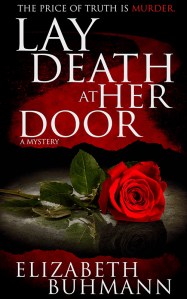
Cover-Lay-Death-BuhmannWhen I sat down to write my own novel many years later, there was no question what it would be—a murder mystery, of course. But I remembered Bob Solomon’s chiding remark and gave it some fresh thought.

I found that as a writer, although I am not going to give up on murder as entertainment, I do feel an obligation to treat the subject with respect. And for me, this entails a serious exploration of the motives and emotions that could lead one person to kill another.

I don’t write about psychopaths or serial killers (though some very good writers do). I am not interested in extreme abnormal psychology so much as in human emotions we all share. I am drawn to a murder story that gives me a glimpse of how familiar feelings and yearnings could come together in a situation that results in murder.

I chose to write a standalone suspense novel as opposed to a detective story because, from a detective’s point of view, we are at arm’s length from the murder story. In detective fiction, the main story line is all about the discovery of truth. The drama is about an agent of justice and his quest to identify the killer and his or her motive.

Don’t get me wrong—I love detective stories! But I wanted to get closer to the drama that led up to murder, so in Lay Death at Her Door I chose for my protagonist one of the main actors in that drama. Kate Cranbrook didn’t commit the 1986 murder that provides the central mystery of the book. But she was a key player in that story.

Kate witnessed the murder and was herself raped and beaten. Her testimony sent an innocent man to prison for the crime. She knew the truth about what happened, lied to protect herself, and spent the next twenty years living with the knowledge that she’d committed perjury and was an accessory, however unwilling, after the fact of murder.

Kate is also a key player in the story of how the murder is solved. Her own character drives the ultimate unraveling of her secret life and the exposure of the long-hidden truth behind the old murder. My protagonist is not a champion of justice, to put it mildly. She is a deeply flawed character mired in a sordid personal history. But in her, and in the final revelations of the book, I think we glimpse a capacity for darkness that is recognizable to all of us.

Who Was Barbara Burnett Smith?

By Gale Albright

img_1111-1

According to author Bill Crider in his post of February 20, 2005:

Barbara Burnett Smith died in an accident in San Antonio Saturday night. Barbara and her husband were there to rescue a dog, and when they visited Remember the Alibi (bookstore), the dog ran from their car and into the street. It was raining and dark, and apparently Barbara stepped into the street to catch the dog. She was hit by a car and died in the hospital.

I’m still in shock over this. I’ve known Barbara for at least 15 years, and she was one of the nicest people you’d ever hope to meet. She was lovely and perky and a very talented writer. She was also the former daughter-in-law of another fine mystery writer, Thomas B. Dewey, whom she credited with helping her quite a bit when she was starting out.

I don’t really have much more to say, except that the world is a poorer place without Barbara in it. (Bill Crider’s Pop Culture Magazine)

Bill’s comments about Barbara Burnett Smith are similar to everything I’ve heard about her. She was well-known and well-loved in the writing community.

Barbara was a member of several writing groups and served as the president of Sisters in Crime (International 1999-2000). She was a writer of cozy mysteries, including the popular Purple Sage series featuring heroine Jolie Wyatt, an amateur sleuth and radio newscaster in a small Texas town. Shortly before her death, she began a new mystery series with Bead on Trouble, whose main character, Kitzi Camden, was an amateur sleuth and beader. Her second book in the series, Beads of Doubt, was completed by fellow Sisters in Crime member Karen MacInerney.

W.D. Smith III, Barbara’s son, wrote a tribute to her in the May 2011 edition of the Sisters in Crime newsletter, Hotshots:

She always had the drive to be at her best and asked that those around her did the same. After she started writing and got out of the corporate world and took on the training game, she started to change. She wanted to give back to people and hope they had a better time of it than she did, trying to succeed in a man’s world. After a few years in the training game and running a successful business (or at least one that paid the bills), she really started to shine. She saw people for who they were and wanted to help in any way possible. I don’t think she ever watched Oprah but I believe she garnered sound bites from her show. She used a quote from Maya Angelou: “People will not remember what you said to them, but they will remember how you treated them.

On March 13, 2005, A Celebration of Barbara Burnett Smith was hosted by the Heart of Texas Sisters in Crime chapter. The Barbara Burnett Smith Mentoring Authors Foundation was established in her honor to support and provide a mentoring community to help budding writers.

We are now approaching the tenth annual BBS Aspiring Writers project, to be held during May Mystery Month at Recycled Reads, on May 18, 2014, at 2 p.m.

As BBS project coordinator, I’m calling for submissions of the first 500 words of a mystery story or novel by an unpublished writer. After the submission deadline of March 31, writers will be matched with published mystery authors for mentoring. The mentors will introduce their aspiring writers at the Sisters in Crime meeting on May 18.

For more information about submission rules, go to the Events/News section of this blog.


An Evening with Laurie R. King

By Laura Oles

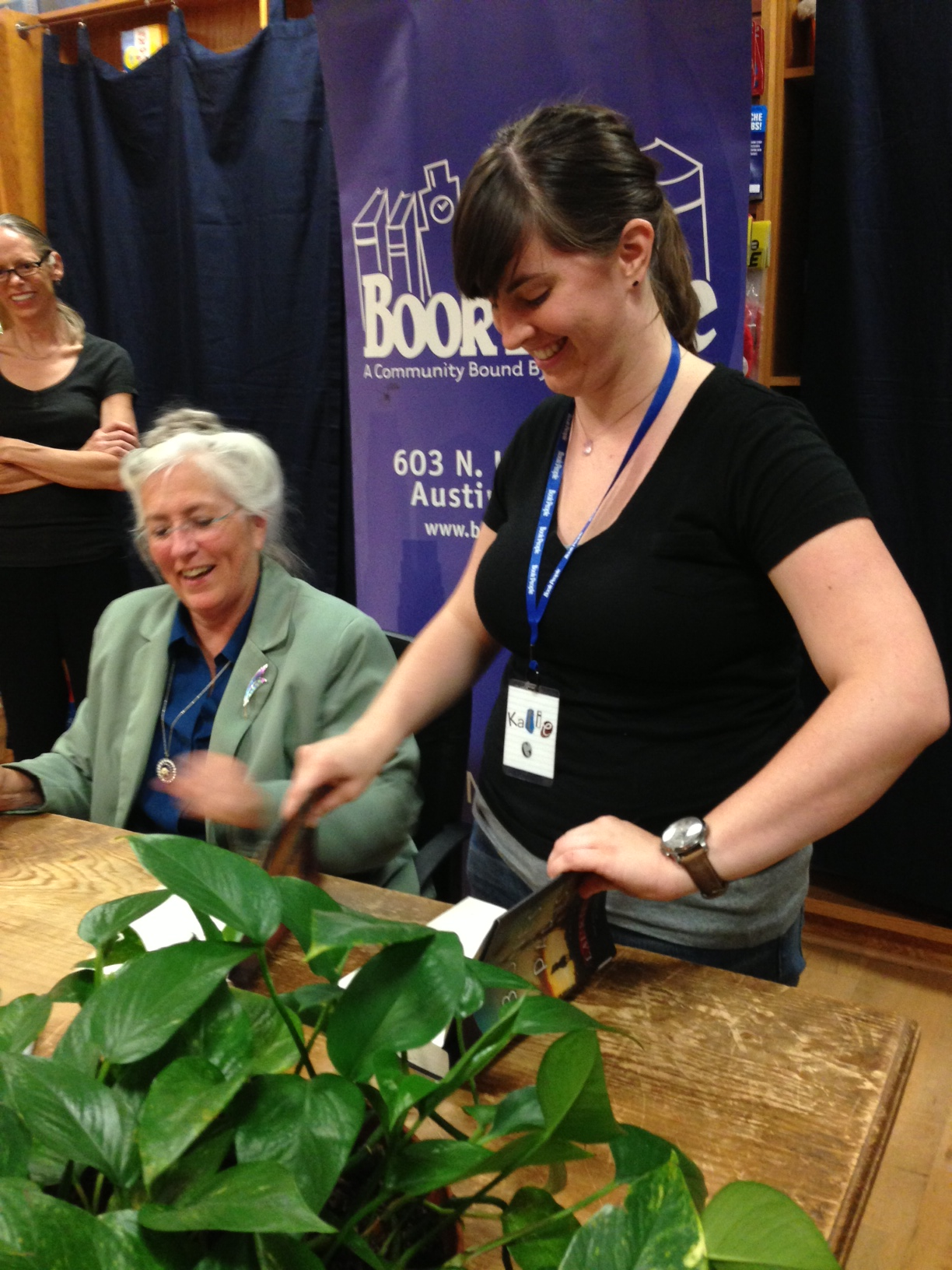
BookPeople in Austin, Texas, always has an impressive schedule of author events on the calendar, so it can be difficult to decide which ones to attend.   When Laurie R. King’s name appeared on the roster, I cleared my schedule for that evening (well, after hustling kids to soccer practice, helping with homework, cooking dinner, you get the idea) and made my way to Lamar Blvd.

laurieking2I had the pleasure of meeting Laurie at this year’s Malice Domestic conference in Maryland.  She was funny and kind and extremely gracious with her time.  As the conference’s chosen Guest of Honor for Malice Domestic 2013,  she still found a way to make time for every person hoping for a moment of her attention.   There are few things more wonderful than realizing a favorite author is also a gem of a human being.

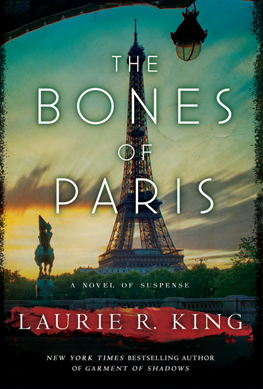
Laurie discussed her latest novel, The Bones of Paris,which is set in the City of Light at the end of the 1920’s.  When asked why she chose this particular time, Laurie said, “The end of the decade was when things began to fall apart, and I find that to be much more interesting for a crime writer.”

King book coverThe Bones of Paris received a starred review from Booklist and Publisher’s weekly was equally kind with its praise.  Exploring the dark underbelly of Paris’ Jazz Age through the eyes of Harris Stuyvesant will have readers up all night in anticipation of what he discovers next.  While Mary Russell remains a crowd favorite, it’s clear that Harris Stuyvesant will garner loyal readers as well.  After all, there’s room on our nightstands for more than one compelling King protagonist.

When asked by an audience member how she was able to juggle writing multiple series, she answered that she found herself easily bored and preferred switching from one project to an entirely different one.  Loyal King readers are thankful for this view as it gives us a broader range of stories from which to choose and affords us the opportunity to experience King’s storytelling prowess in numerous ways.

Laurie can’t speak in public without someone asking her about her decision to take on the character of Sherlock Holmes through her vision with Mary Russell.  She confesses that early on, she was surprised by the uproar from some Holmes fans.  She says that one message board started flaming her on the Internet, back in the early days of such boards, but that she wasn’t on the Internet so all their disparaging efforts went on without her knowledge, something that still brings a smile to her face.  “They were getting all worked up and I had no idea for the longest time,” she says with a grin.

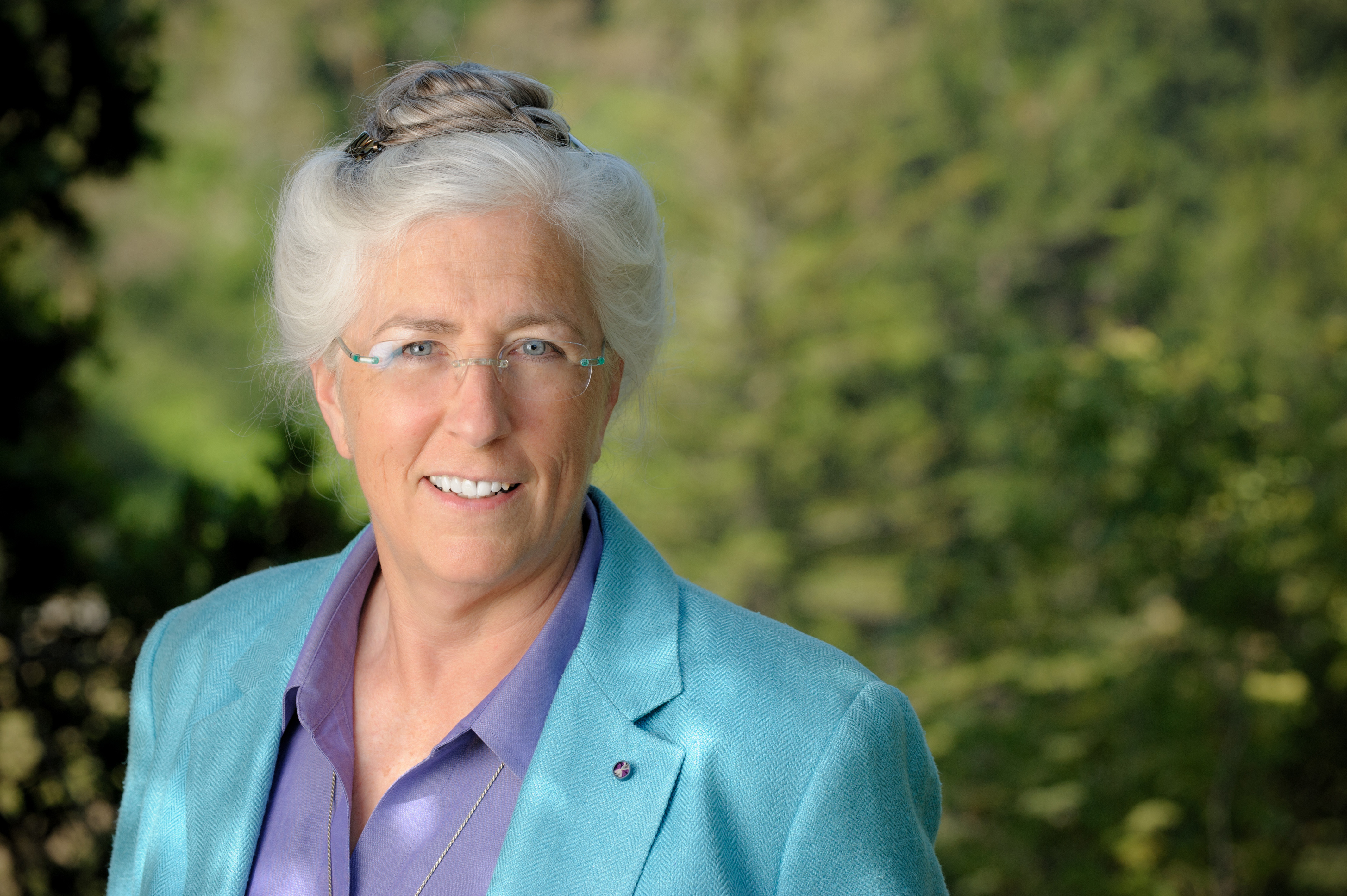
Laurie R KingIn truth, she was fascinated by the idea of taking many of Holmes’ traits and seeing how they would manifest in a young, intelligent woman who would stand as his peer.  She was interested in “how it would be the same and how it would be different.”   Needless to say, the success of The Beekeeper’s Apprentice captured the imagination of those who loved Sherlock Holmes as well as those who loved the idea that she would take the character and explore him through more current times and with compelling twists on the classic detective.

One question that often comes up at such events–from curious writers– involves the debate between being an ‘outliner’ or ‘pantser,’ which has since evolved into the ‘organized vs. organic debate.’  Want to know under which camp Laurie King falls?

While she does take notes on certain scenes or particular characters, Laurie finds it best to write organically.   In fact, she co-authored a book with Michelle Spring titled the Arvon Book of Crime and Thriller Writing, which details the two authors’ differing approaches to crafting a novel.

She says her first drafts are often “300 page outlines with characters disappearing and such.”  Struggling novice novelists will be grateful to hear that someone with King’s writing chops turns out a less than perfect first draft.  She does write 1,500-2,000 words per day until she hits a slowing point, which signals that she has more ‘back of the mind’ work to do in figuring out what happens next in the story.  She finds it best not to continue to force the writing and uses the slowed pace as a signal that more questions need to be answered before continuing.

When asked which authors she currently enjoys reading, King offers up Lyndsay Faye.  “She’s such a talented writer.  I loved the Gods of Gotham.” She also gives kind mention to Tony Broadbent, author of the Smoke series featuring Jethro, a jewel thief and cat burglar.

King is hard at work on her next projects and promises that we will see more of Mary Russell in the future as well as other characters that have captured her imagination (and ours).  King readers can rest assured that whatever the author brings next, it will be well worth the wait.

To learn more about Laurie R. King, visit www.laurierking.com.